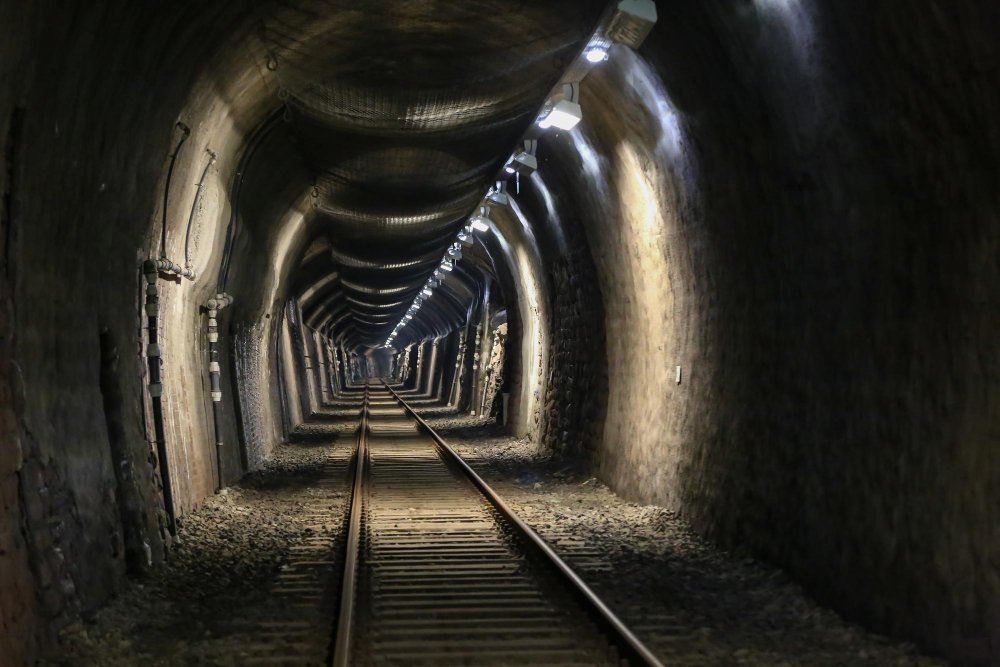
India’s infrastructure ambitions are no longer confined to highways and flyovers. Beneath the country’s busiest cities and most challenging terrains, a silent revolution is taking shape. Metro rail corridors, high-speed rail, road tunnels, hydropower projects, water conveyance systems and underground utility networks are driving unprecedented demand for Tunnel Boring Machines (TBMs)—among the most sophisticated engineering systems ever built.
For the gear manufacturing industry, this represents an emerging market that has received far less attention than automotive, wind energy or industrial automation. Yet every TBM depends on highly engineered gear systems capable of transmitting millions of Newton-metres of torque under some of the harshest operating conditions imaginable.
As India accelerates underground infrastructure development over the next decade, the question is no longer whether demand for TBM gears will grow—but whether Indian manufacturers will be prepared to capture it.
India is investing heavily in underground construction. Projects such as the Mumbai Metro expansion, Delhi Metro Phase IV, Pune Metro, Bengaluru Metro, the Mumbai Coastal Road tunnel, and the Mumbai–Ahmedabad High-Speed Rail corridor are pushing TBM deployment to record levels. Government initiatives focused on metro expansion, rail connectivity, highway tunnels and water infrastructure are expected to sustain demand well into the next decade.
Unlike conventional construction equipment, TBMs require exceptionally reliable power transmission systems. A single machine may weigh more than 2,000 tonnes and operate continuously for months underground without requiring major maintenance opportunities. Every component must deliver maximum reliability because even a minor drivetrain failure can halt an entire infrastructure project.
The cutterhead is the heart of a TBM. Rotating slowly—typically only a few revolutions per minute—it generates enormous torque to excavate rock and soil.
This requires multiple high-performance gear systems, including planetary gearboxes, large internal ring gears, heavy-duty pinions, helical and bevel gear stages, slewing drives, and auxiliary conveyor gearboxes.
Main drive gearboxes often deliver output torques exceeding 2–3 million Nm while maintaining precise load sharing among multiple planetary stages. Modern designs also integrate liquid cooling, overload protection and compact architectures to maximise power density.
These are among the most technically demanding gear applications outside mining and offshore industries.
India currently imports most TBMs or assembles them locally using imported critical components. The drivetrain, including main gearboxes, bearings and precision gears, continues to be dominated by global suppliers.
Companies such as SEW-EURODRIVE, Flender, David Brown Santasalo, Liebherr, Zollern, and Bonfiglioli remain the preferred partners for global TBM OEMs due to their decades of experience in heavy-duty planetary drive technology.
However, this dependence also highlights an opportunity.
Indian manufacturers have already demonstrated capabilities in producing large-diameter ring gears, wind turbine gearbox components, steel mill gears, mining gearbox components, cement industry gear systems and marine propulsion gears.
Many of these manufacturing capabilities overlap with the requirements of TBM gearing.
Companies such as Elecon Engineering, Premium Transmission, Bharat Gears and David Brown Santasalo India possess expertise in large industrial gearing that could potentially be extended into tunnelling applications through strategic partnerships and technology development.
Producing TBM gears is not simply a matter of machining larger components.
These gears demand extremely high load capacity, uniform load sharing across planetary systems, low vibration, exceptional fatigue resistance, advanced case carburising, precision profile grinding, stringent quality validation and long operational life under abrasive environments.
Reliability becomes more valuable than production speed because gearbox replacement inside an active tunnel can cost millions of dollars in downtime.
Consequently, qualification requirements are considerably higher than those of many conventional industrial gearbox applications.
Recent geopolitical disruptions exposed India’s dependence on imported TBMs and critical drivetrain components. Delays in securing specialised machines for major infrastructure projects highlighted the risks associated with global supply chains.
As policymakers continue to promote manufacturing self-reliance, the localisation of high-value TBM components, including gearboxes, gears, bearings, and drive assemblies, is expected to receive greater attention.
Rather than manufacturing complete TBMs immediately, India may first develop domestic capability in critical subsystems, where the gear industry can play a central role.
Future TBM gear systems will increasingly incorporate higher torque-density planetary drives, integrated condition monitoring sensors, digital twin technology, predictive maintenance algorithms, improved lubrication management, advanced surface engineering, lightweight yet stronger alloy steels and hybrid drive architectures.
Digital monitoring will become particularly important as infrastructure owners seek to maximise machine availability while reducing unplanned maintenance.
For gear manufacturers, this means moving beyond supplying components toward delivering intelligent transmission systems.
Several barriers remain before Indian companies can compete globally in this niche.
The sector demands significant investment in large-scale grinding, heat treatment, metallurgical validation, endurance testing and application engineering. Qualification cycles are long, while production volumes remain relatively low compared with automotive gears.
Global suppliers also possess decades of accumulated field experience, making technology partnerships and collaborative development essential for new entrants.
Nevertheless, India’s growing domestic demand provides an ideal testing ground for developing indigenous capabilities.
Tunnel boring machines represent more than another industrial application—they signal the emergence of a new market segment for precision heavy-duty gearing.
As India’s underground infrastructure pipeline expands, opportunities will extend beyond supplying replacement gears. OEM partnerships, aftermarket services, remanufacturing, digital monitoring and localised gearbox production could collectively create an entirely new business ecosystem.
For gear manufacturers seeking diversification beyond automotive and traditional industrial sectors, tunnelling offers an attractive combination of high engineering value, premium margins and long-term demand.
Companies that begin investing today in heavy-duty planetary technology, advanced metallurgy and application-specific engineering may well become tomorrow’s preferred partners for India’s underground infrastructure revolution.
GTI Outlook: While the TBM gear market will remain relatively niche compared with automotive or wind energy, it is strategically significant. As India moves towards greater self-reliance in critical infrastructure equipment, precision gear manufacturers have an opportunity to position themselves at the core of the nation’s next phase of underground development.
Stay tuned for the second part of the same!