A typical Indian OEM tends to opt for lower-cost abrasive tools, but in the bargain, the quality does not meet global standards. The machine cost (including labour, consumables, electricity, and coolant) is higher, and as a result, the company tends to lose major global contracts. Ultimately, despite purchasing cheaper abrasive tools, the production cost ends up being significantly higher. However, smart companies understand the difference and use smart grinding solutions, thus optimising costs.
India’s gear-manufacturing ecosystem is undergoing a decisive transformation. With the rapid expansion of EV platforms, export-oriented transmission programs, and the rising precision requirements of auto, wind, and industrial gear applications, manufacturers are under intense pressure to deliver higher throughput, tighter tolerances, and world-class surface finishing—all while managing cost pressures and workforce constraints.
In this environment, the grinding process has become a strategic differentiator. The ability to grind gears faster, cooler, and more consistently with better accuracy directly impacts:
Across global case studies—including Decrease Cycle Time to Meet Production Demands, Gaining Efficiency to Meet Customer Demands—Weiler Abrasives has demonstrated that the next leap in gear-grinding performance comes from Grinding force-stabilised abrasive technology, self-sharpening grains, engineered surface-finishing solutions, and intelligent process automation.
This article presents a deep technical and market-specific perspective on how Weiler Abrasives India is enabling this transformation.
1. Weiler Abrasives: A Global Surface-Finishing Leader Since 1879
Founded in 1879, Weiler Abrasives has evolved over nearly 150 years into one of the world’s most respected abrasive manufacturers. From its origins in Germany to establishing in the United States to its global footprint across Europe and Asia, Weiler has built a reputation for:
Today, Weiler supports industries such as:
Weiler in India: Technology + Application Engineering = Smart Grinding
Through Weiler Abrasives India and its technical partner network- Prativ Technology, Weiler brings:
This combination of global innovation + local engineering is enabling Indian manufacturers to achieve world-class grinding and finishing performance.
2. Surface Finishing & Accuracy: The New Competitive Advantage for Indian Gear Manufacturers
Surface finishing has become one of the most critical performance parameters in modern gear manufacturing.
Manufacturers must now deliver not only dimensional accuracy but also:
Why? Because surface finishing is now a functional requirement, not a cosmetic one.
EVs have eliminated engine masking noise. Even minor surface deviations on gear flanks now translate into tonal noise. Similarly, modern industrial drives operate at:
This increases sensitivity to:
A stable finishing process directly improves durability, efficiency, and NVH behaviour.
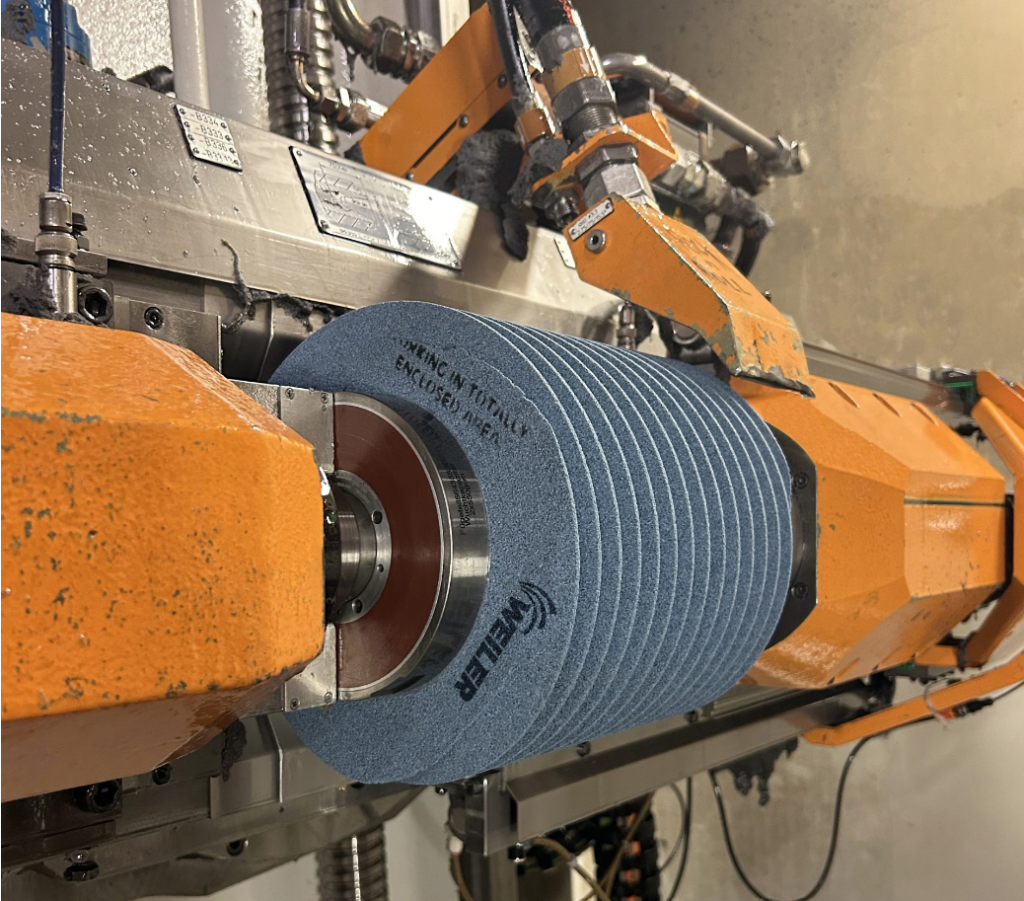
3. Weiler Abrasives: Engineering the Future of Gear-Grinding and Finishing = Smart Grinding
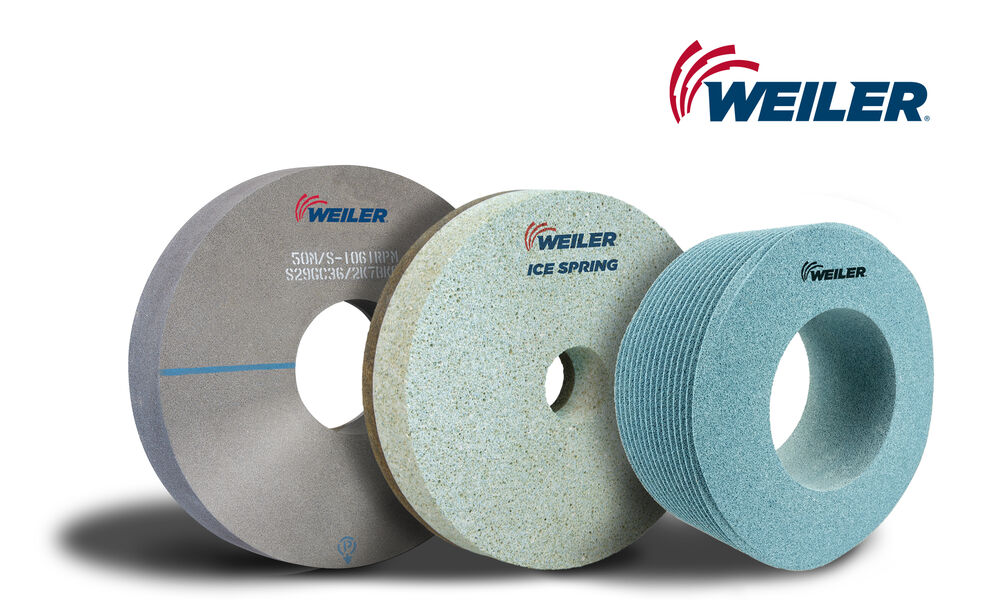
Weiler’s strength lies in combining advanced abrasive technology, precision bond systems, and application-specific engineering. The company’s 24 types of vitrified, resin, hybrid, metal-bonded, and electroplated super abrasive wheels deliver predictable, repeatable finishing performance across:
Innovation for India – for Indian EV gears, Weiler Abrasives has developed 150 grit gear grinding wheel, so instead of using a complicated sandwich wheel with 2 different grades, the job can be done by 1 grade only.
A message from Weiler India
“Surface finishing & accuracy is no longer just a process step; it is a competitive advantage. Our mission is to help Indian manufacturers achieve world-class grinding performance with accuracy, consistency, stability, and measurable productivity gains.”
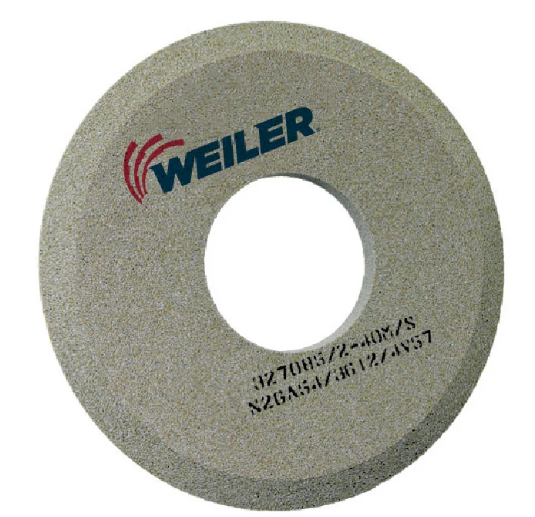
4. Why Force Stability Is the New Benchmark for Grinding Performance = Smart Grinding
In continuous grinding, the most critical variables are:
Increasing the feed rate increases Q’W, but also increases Fn and Ft.
If the wheel cannot maintain stable forces, the result is:
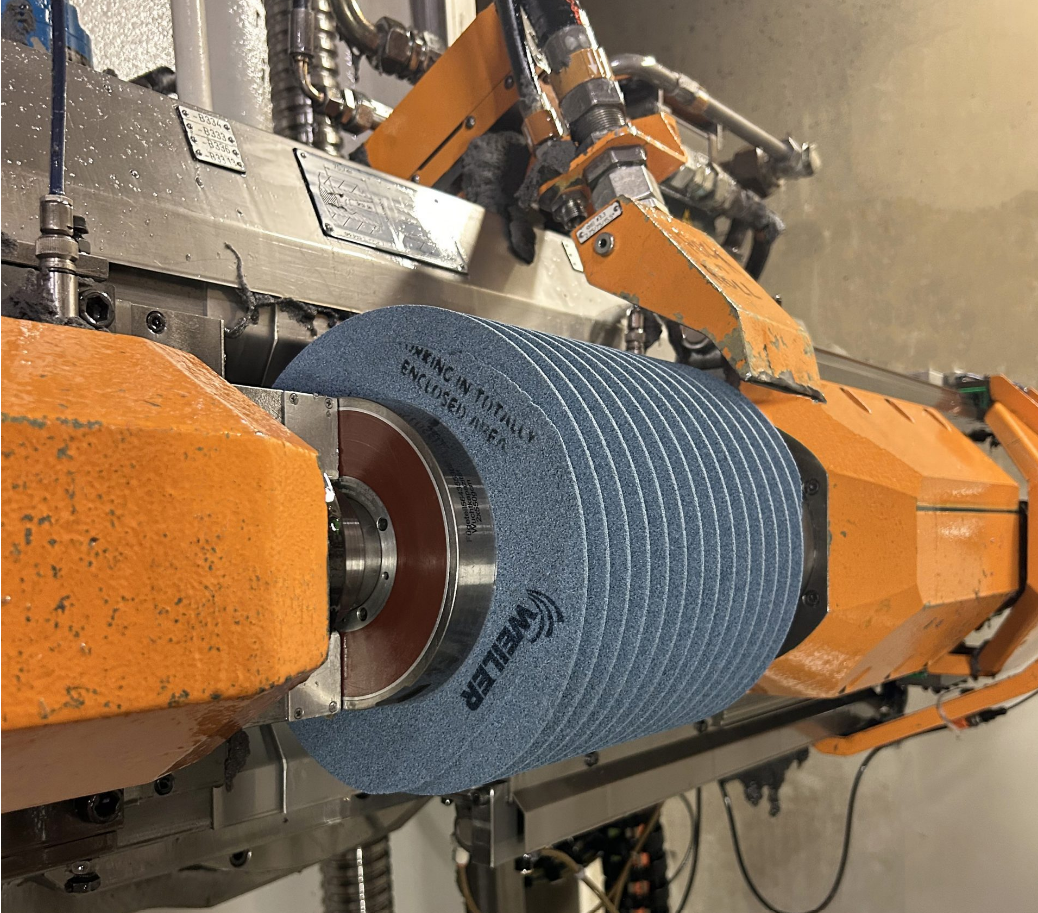
Weiler’s engineered vitrified ceramic wheels maintain stable forces across a wider Q’W range, enabling higher feed rates without thermal instability.
This is the foundation of Weiler’s performance advantage.
5. Inside the Wheel: How Weiler Engineers Abrasive Microstructure for India’s Needs
Weiler’s gear-grinding wheels are engineered systems designed around three pillars:
A. Advanced Ceramic Grain Technology
Weiler uses high-performance ceramic grains with controlled micro-fracturing behaviour.
Benefits include:
B. High-Stiffness, Thermally Stable Bond Systems
Weiler’s vitrified bonds are engineered to:
C. Engineered Porosity for Cool Cutting
Porosity is designed, not random.
Weiler’s pore architecture improves:
In a US Gear case study, engineered porosity reduced grinding forces by 12–15%, enabling higher feed rates without burn.
6. Dressing Optimisation: The Most Under-Leveraged Productivity Lever in India = Smart Grinding
Dressing directly influences:
Yet, in many Indian plants, dressing is treated as a fixed parameter rather than a process variable.
Common issues in India:
Weiler’s approach:
Weiler’s application engineers optimise:
In the Gaining Efficiency to Meet Customer Demands case study, optimising dressing alone delivered:
7. Process Automation: Moving India from Operator-Dependent to Data-Driven Grinding
Automation in grinding is not limited to robotic loading. The real gains come from process intelligence.
A. Adaptive Feed Control
Machines adjust feed rate based on real-time force feedback.
B. Force-Based Dressing Trigger
Dressing is triggered when Fn exceeds a threshold.
C. Closed-Loop Profile Compensation
Integrates:
D. Thermal Compensation Algorithms
Stabilizes:
Weiler’s role:
Weiler’s grinding force-stable wheels are designed to work seamlessly with these automation systems.
8. Case Study Insights: What Indian Manufacturers Can Learn
Case Study 1: Automotive Gear – Cycle Time Reduction
Case Study 2: Industrial Gear – Surface Finish Stability
Case Study 3: Atlantic Gear – High Stock Removal
9. CBN vs. Vitrified: Choosing the Right Technology for India
Vitrified Wheels
Best for:
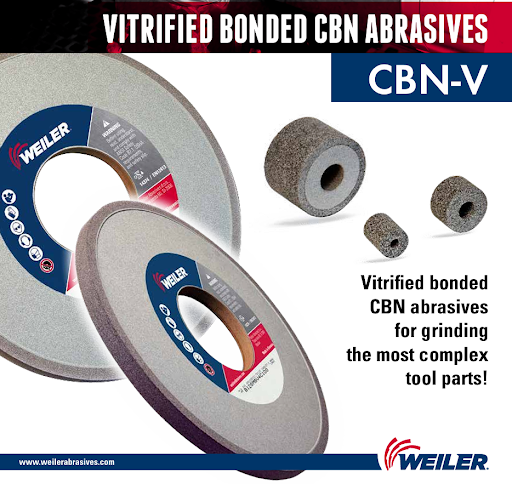
Vitrified CBN Gear grinding Wheels (A new in Gear grinding)
Best for:
Weiler’s CBN-V wheels deliver up to 80% reduction in dressing frequency.
10. The Weiler India Advantage: Technology + Application Engineering
Weiler Abrasives India brings:
Conclusion: Weiler Abrasives India Is Enabling the Next Productivity Leap
With Weiler’s 147-year legacy (est. 1879) and India’s manufacturing ambition, the next decade of gear-grinding and surface-finishing productivity will be defined here.
Key Learning for India
For heavy-duty gears, the bond stiffness and thermal stability of the wheel are more important than grain type alone.
Weiler’s engineered vitrified systems allow Indian manufacturers to:
Apart from Gear grinding wheel offerings, Weiler also has one of the widest ranges of Abrasives:
For those who value productivity-enhancing solutions for the toughest cleaning, grinding, cutting, deburring and finishing challenges – Weiler Abrasives is your Productivity Partner.
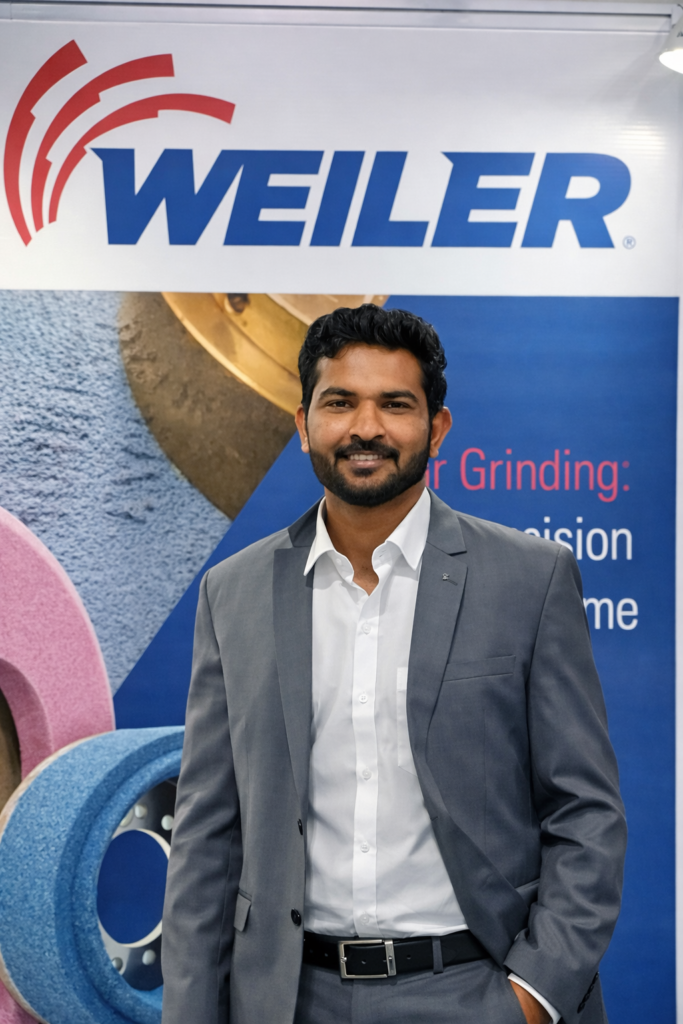
Nagesh Mhasal
Business Development Manager – India,
Weiler Pacific Abrasives
NEHA
SUDHANSHU
VIVEK
SUSHMITA