Workforce upskilling has become a strategic imperative for the gear design and manufacturing industry, especially in India, as it positions itself as a global hub for high-precision engineering and automotive systems. As gear-driven systems grow more complex—powering electric vehicles, aerospace platforms, industrial robots, and renewable-energy drivetrains—the gap between traditional workshop skills and contemporary design-engineering capabilities is widening fast. Without deliberate, structured upskilling, Indian gear manufacturers risk losing both competitiveness and talent to more digitally fluent ecosystems abroad.
Why upskilling is non-negotiable in gear design
Gear design sits at the intersection of deep mechanical theory, material science, and advanced CAE/CAD tools, yet many Indian workshops still rely heavily on legacy know-how passed down informally. Simultaneously, clients now demand optimised designs for NVH (noise, vibration, harshness), efficiency, and lightweighting, which require simulation-driven workflows rather than rule-of-thumb sizing. Upskilling the workforce—from design engineers to shop-floor technicians—ensures that companies can translate complex performance requirements into robust, cost-effective gear layouts and maintain tight tolerances during production.
Moreover, the global gear industry is already grappling with a “permanent” skilled-labour shortage, as experienced machinists retire and younger workers are drawn to less physically demanding, more digitally attractive roles. In India, this challenge is compounded by the uneven quality of technical education and limited exposure to real-world gear design problems in many engineering curricula. Continuous upskilling, therefore, is not merely a short-term training fix but a long-term talent-retention and capability-building strategy.
Emerging skill sets for gear engineers
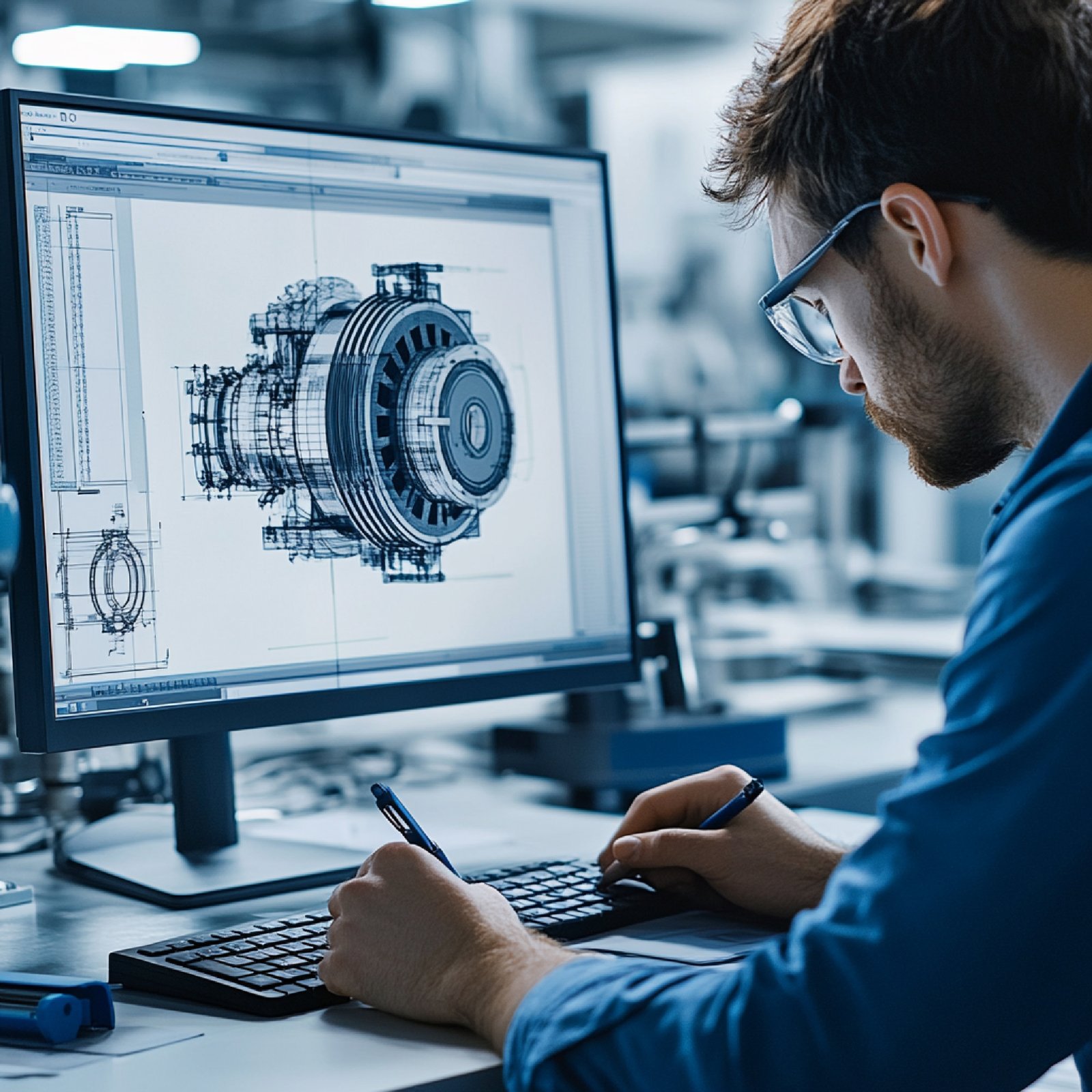
Modern gear design demands a blend of domain knowledge and digital fluency that many traditional mechanical engineers lack. Beyond basic strength and wear calculations, designers must now be proficient in gear geometry optimisation, load-distribution analysis, and micro-geometry corrections such as tip relief and crowning, all supported by CAE tools like KISSsoft, MASTA, or in-house FEA codes. Simultaneously, CAD skills must extend from creating simple 2D sketches to parametric 3D models, tolerance-stack analysis, and lightweight composite gear concepts, which are increasingly relevant in automotive and aerospace applications.
On the manufacturing side, upskilling focuses on advanced gear-cutting strategies, honing, grinding, and heat-treatment-simulation workflows that ensure predictable distortion and residual stress patterns. Metrology capabilities must also evolve, with operators understanding gear-measurement reports, CMM outputs, and functional inspection data to close the loop between design intent and as-built quality. Collectively, these skills shift the workforce from “just following drawings” to actively contributing to design-for-manufacturability and design-for-service-life decisions.
Industry-academia collaboration and training programmes
Several Indian institutions and industry bodies have begun to address this gap through targeted training programmes in gear engineering and product design. For example, institutes such as the Central Manufacturing Technology Institute (CMTI) and specialised training providers like IMTMA and Tech Cluster offer short-term courses that cover gear-design fundamentals, gearbox development, simulation, and manufacturing troubleshooting. These programmes are designed for practising engineers and technicians, enabling them to upgrade their skills without taking long breaks from active projects.
In parallel, government-led skilling initiatives and Centre-of-Excellence programmes are increasingly emphasising advanced manufacturing, including gear-intensive domains such as EVs, aerospace, and defence. By aligning these skilling frameworks with industry-specific competency maps for gear design and drivetrain engineering, India can systematically build a pipeline of mid-level and senior gear specialists. Such collaborations also help universities and polytechnics redesign their syllabi to include more hands-on gear projects, simulation labs, and industry-internship components.
Practical upskilling models for gear companies
Gear manufacturers in India can adopt several proven upskilling models tailored to their scale and technology base. One effective approach is structured internal training, where experienced designers and technologists mentor junior engineers through project-based workshops, real-world case studies, and troubleshooting sessions. This “learn-on-the-job” model, common in leading global gear shops, ensures that theoretical knowledge is immediately applied and reinforced in live production environments.
Blended-learning and e-learning platforms are another powerful lever, especially for dispersed teams and small- and medium-sized enterprises. Modular online courses on gear fundamentals, gearbox design, and CAE workflows allow employees to progress at their own pace while companies track progress and outcomes. Some manufacturers also partner with certification bodies such as AGMA or regional technical institutes to validate competence through formal exams and credentials, which in turn improves motivation and career-progression clarity for the workforce.
Overcoming barriers to upskilling adoption
Despite the obvious benefits, many Indian gear companies face practical barriers to upskilling adoption, including cost constraints, production pressure, and a lack of HR-driven learning-and-development frameworks. Training budgets are often cut during downturns, even though the need for upskilling is greatest when market conditions are volatile. To counter this, enterprises can integrate upskilling into capital-investment plans—treating advanced training as part of the ROI for new machines and software—rather than as a separate overhead.
Another critical barrier is the misalignment between training content and actual job roles, which leads to low engagement and limited impact. To address this, companies should co-develop curricula with design heads, manufacturing managers, and quality leads, ensuring that every module resolves a concrete problem such as premature gear-tooth failure, excessive noise, or post-heat-treatment distortion. Regular feedback loops, performance-based rewards, and visible career-path links to upskilling can further strengthen participation and retention of newly acquired skills.
Creating a culture of continuous learning
Ultimately, the long-term success of upskilling initiatives depends less on individual courses and more on embedding a culture of continuous learning within gear-design organisations. This means normalising peer-review of designs, sharing simulation and test-data lessons across teams, and encouraging engineers to stay updated on emerging gear-material technologies, coating systems, and digital-twin concepts. For shop-floor staff, it implies recognising and rewarding those who contribute innovative ideas for process improvements, tooling enhancements, or quality-control refinements.
In India’s context, such a culture aligns well with national missions like Make in India, Atmanirbhar Bharat, and the broader push toward high-value manufacturing. As gear systems become central to electric mobility, wind-turbine drivetrains, and robotic transmissions, the demand for skilled Indian gear engineers will grow sharply. By making workforce upskilling a core strategic pillar rather than an occasional activity, the gear design and manufacturing ecosystem in India can secure not only short-term productivity gains but also long-term leadership in global precision engineering.