Electric powertrains are no longer a niche curiosity; they are rapidly becoming the dominant force reshaping the design, materials, and manufacturing practices of the gear industry worldwide. Unlike traditional internal-combustion drivetrains, which rely on multi-ratio gearboxes to manage torque and speed, electric powertrains push gear engineers toward compact, high-speed, high-efficiency single-or two-stage gear systems that operate under very different thermal and loading conditions. For India’s gear-design and manufacturing ecosystem, this shift is not just a product change—it’s a transformation of the entire value chain, from R&D and materials to metrology and lubrication.
New design demands for e-gearboxes
Electric motors deliver peak torque from standstill and can spin at 15,000 rpm or higher, which forces gearbox designers to rethink gear-ratio strategies, tooth geometry, and micro-geometry. Instead of wide-range, multi-clutch gearboxes, many EVs now use single- or two-speed gear units with specially optimised helical or spur gears to minimise noise and vibration while maximising efficiency. This means higher pitch-line velocities, thinner oil films, and more demanding NVH targets, pushing gear designers toward advanced simulation-driven workflows that model gear-tooth contact, load distribution, and thermal growth simultaneously.
Lubrication and cooling strategies also differ significantly in electric powertrains. In many EVs, the same oil or coolant must serve both the gearbox and the motor or power electronics, calling for lubricants with excellent electrical insulation properties and low particle content to avoid arcing and contamination. At the same time, higher rotational speeds and continuous high-load operation increase the importance of managing friction, micro-pitting, and surface fatigue—making tribology a central pillar of the next-generation e-gearbox.
Materials, manufacturing, and integration
To meet the weight and efficiency targets of electric vehicles, gearbox casings and gear components are increasingly fabricated from lightweight alloys, hollow shafts, and sometimes hybrid structures that combine metal gears with polymer or composite elements. Advanced heat-treatment processes, surface-hardening techniques, and precision grinding are being applied more rigorously to ensure that high-speed gears can withstand prolonged high-torque operation without compromising reliability. Metrology practices are also tightening, with tighter run-out tolerances, crown and tip-relief control, and more frequent functional inspection of gear-meshing quality to guarantee smooth NVH performance.
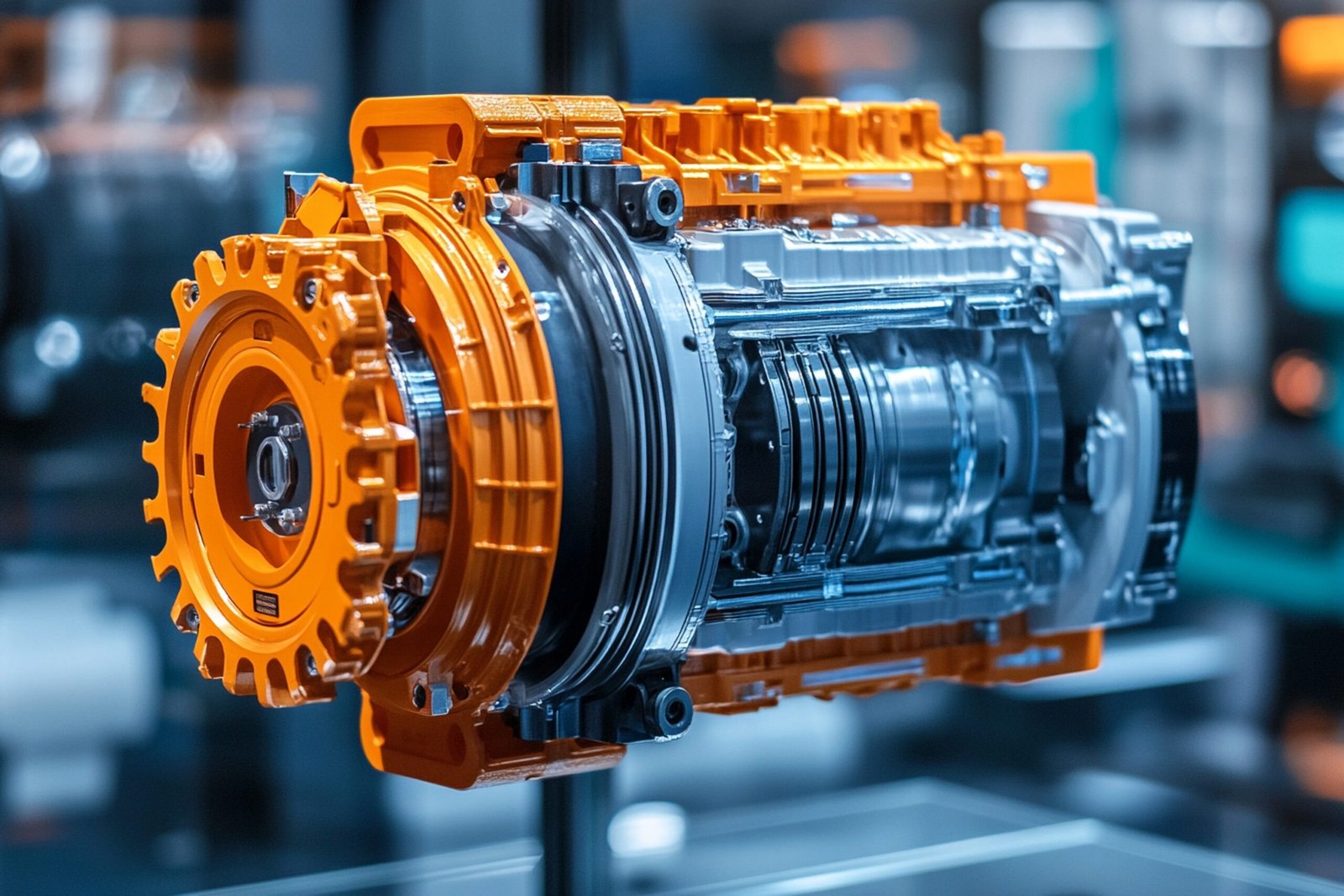
Integration is another key theme in the electric-powertrain era. Many OEMs now adopt “e-axle” or “e-drive” architectures, where the motor, inverter, gearbox, and sometimes even the differential are packaged into a single compact unit. For gear manufacturers, this demands a systems-thinking mindset: gears must be designed not in isolation, but in intimate coordination with electromagnetic and thermal models of the motor and power electronics. Such integrated units place a premium on thermal management, structural stiffness, and sealing integrity, all of which influence gear-tooth loads, bearing life, and overall drivetrain longevity.
A snapshot of key changes in e-powertrain gears
The table below highlights some of the key technical and operational differences between conventional ICE-based gear systems and modern electric-powertrain gearboxes.
| Aspect | Conventional ICE gearbox | Electric-powertrain e-gearbox |
|---|---|---|
| Typical speed range | Lower motor speeds, stepped ratios | Very high motor speeds, often 10,000–18,000 rpm |
| Number of ratios | 4–10 speeds common | Often 1–2 speeds; some 3-speed concepts emerging |
| Lubrication focus | Load-carrying, wear protection | Efficiency, electrical insulation, and motor cooling |
| NVH requirements | Moderate noise targets | Extremely low noise/vibration for cabin comfort |
| Integration level | Separate gearbox, engine, clutch | Integrated e-axle or e-drive units with motor and gearbox |
| Thermal loads | Transient, combustion-cycle-driven heating | Continuous high-speed, high-torque operation |
| Key design driver | Torque-range coverage and fuel economy | Overall efficiency, weight, and packaging compactness |
Implications for the Indian gear industry
For India’s gear manufacturers, electric powertrains open a window to move beyond cost-driven, commodity-type production and into higher-value engineering roles. Companies that invest early in e-gearbox design competence, advanced simulation tools, and lightweight-manufacturing capabilities can become strategic partners to global EV OEMs and Tier-1 suppliers rather than just gear-cutting vendors. Collaborations with research institutes, universities, and regional EV clusters can accelerate the development of indigenous know-how in e-axle design, lubricant selection, and durability-validation protocols.
Upskilling is also critical, as electric powertrain gears demand a workforce fluent in multiphysics simulation, digital twins, and advanced metrology. Engineers need to understand not only gear-geometry fundamentals but also electromagnetic losses, thermal-stress interactions, and the impact of manufacturing variations on NVH and efficiency. Training programmes, in-plant academies, and partnerships with gear-technology institutes can help Indian firms accumulate the deep, cross-disciplinary expertise that electric powertrains require.
The road ahead
As the automotive and off-highway sectors accelerate their transition to electric and hybrid powertrains, the gear industry must evolve from a support player to a core enabler of efficiency, range, and driving experience. Electric powertrains do not diminish the role of gears; they redefine it, demanding smaller, faster, quieter, and more integrated gear systems that operate at the very edge of material and tribological limits. For Indian gear manufacturers willing to embrace this shift, the electrified future offers not just a change in product lines but a once-in-a-generation opportunity to become technology leaders in the global mobility ecosystem.