In most Indian gear shop floors, inspection is a well-established, precision-driven process. CMMs, profile testers, and surface measurement instruments ensure that gears are within strict dimensional tolerances. In terms of geometry, the industry is extremely capable and conforms to worldwide standards.
However, the precision gear industry is facing a challenge that extends beyond geometry. Conventional inspection technologies do not always detect micro-defects such as grinding burns, micro-cracks, or early-stage pitting. These are surface-level, pattern-based anomalies that are typically found by eye inspection rather than organised measurement. And that’s where the variation comes in.
In many setups, detection still depends on:
This leads to an inconsistency that machines alone have not yet solved.
At the same time, manufacturing realities are constantly increasing pressure. Most gear makers in India use sampling-based inspection rather than 100% tests due to volume and time restrictions. While economical, this approach implies consistent quality across batches, which micro-defects do not always adhere to. What makes this more important today is the shift in application expectations. EV drivetrains, increased operating speeds, and export-driven quality requirements all reduce tolerance for tiny surface flaws. Despite these expanding expectations, AI-driven vision systems for gear inspection are still in their early stages in India. Adoption remains low, not due to a lack of understanding, but due to practical constraints such as data availability, integration issues, and uncertain ROI.
This results in a distinct industry gap. Inspection techniques are precise, but not yet scalable or consistent in detecting micro-level flaws. And, while AI vision is frequently presented as a solution, its role in the Indian gear industry is still evolving, not entirely proven, but also difficult to neglect.
What AI Vision Systems Actually Bring to Gear Inspection
If traditional inspection defines what to measure, AI vision adds a layer of what to notice. An AI vision system fundamentally follows an approach. There are only four characteristics that dominate and govern this system. High-resolution cameras scan gear surfaces; controlled lighting exposes subtle imperfections; machine learning algorithms are trained to detect problem patterns; and the system classifies parts in real time as defective or acceptable.
Notice how the system focuses on the pattern that produces the issue rather than the defect itself. This system does not alter the purpose of inspection but rather allows it to be performed on a vast scale.
In a usual gear shop, visual inspection is primarily dependent on the operator’s attention span, experience, and consistency across shifts. AI removes that variability. It doesn’t get exhausted, does not miss patterns, and doesn’t see problems differently from batch to batch.
This brings three immediate shifts on the shop floor:
More importantly, AI vision allows for 100% inspection without slowing down production, which is a challenge for traditional systems. But it’s important to remain grounded here.
AI does not replace CMMs or profile testers. It does not change inspection standards. It fills a very specific need: standardising surface-level fault detection at scale. In that sense, AI vision is less about “automation” and more about giving consistency to what was previously changeable.
Where It Works and Where It Doesn’t
The application of AI vision in gear inspection in India is not universal. It is extremely dependent on where and how it is used. It shows clear value in high-volume manufacturing settings, particularly automotive and EV components. These setups work with repeating geometries and common defect patterns, making them ideal for training and deploying vision models. In such production lines, inspection often creates a bottleneck, delaying throughput or limiting the transition to 100% inspection. AI systems can improve speed, uniformity, and constant monitoring without increasing the number of people.
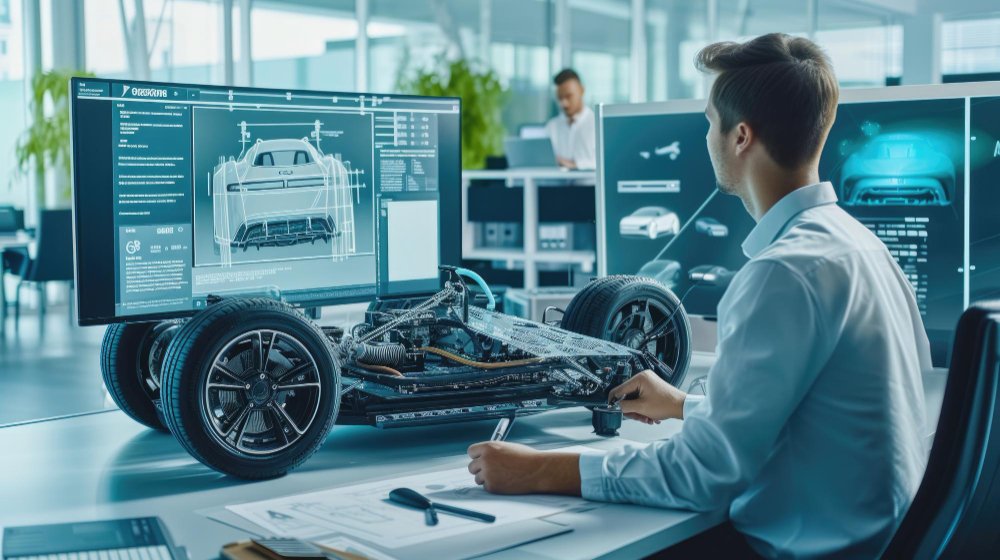
The case becomes stronger for export-driven gear shops, where traceability and documented quality are non-negotiable. AI vision enables image-based records and standardised defect detection, helping reduce variability across batches and inspectors.
However, this relevance drops sharply in other parts of the industry. In low-volume or job-shop environments, where each gear may differ in size, geometry, or application, defect patterns are not consistent enough for AI systems to learn effectively. Similarly, many gear shops in India still operate under limited digital infrastructure, where data collection itself is a challenge, making AI deployment impractical.
Cost also plays a decisive role. In operations where rejection rates are already low and inspection is not a constraint, the return on investment for AI vision remains unclear. The takeaway is straightforward: AI vision is not a one-size-fits-all solution for gear inspection in India; rather, it is a focused tool that is only effective in certain production contexts.
The Reality Check: ROI, Challenges & The Way Forward
While AI vision is at times viewed as the next step in gear inspection, its adoption in India is dictated less by technology than by practical constraints on the factory floor.
The first barrier is data. Most manufacturers do not have structured, labelled image collections for problems. Without this, AI systems cannot be properly trained. The difficulty of integration is closely linked. A major part of the gear manufacturing industry still relies on old machinery with minimal digital connectivity, making it challenging to integrate vision systems into existing processes. On top of that, there is a talent gap not just in using AI tools, but also in understanding how to install and maintain them effectively.
Because of these factors, ROI becomes the deciding factor in the integration of AI vision in the Indian gear industry. To increase the relevance of AI vision in India, some factors must align first. The cost of defects or rejections is high, production runs are large and repetitive, and customers demand consistent, traceable quality.
In contrast, for smaller operations with stable processes and low rejection rates, the investment may not justify itself. The way forward, therefore, is not large-scale adoption but focused applications. Leading manufacturers are shifting to a more focused and practical strategy, focusing on specific defect types such as grinding burns or surface cracks, launching pilot projects on certain production lines, and progressively building useful data and internal capabilities.
This planned evolution reduces implementation risk while allowing AI systems to demonstrate their worth in real-world settings.
The direction is becoming clear, even if the speed is slow. The future of gear inspection does not remove human skill but rather adds it with machine consistency.