Modern manufacturing is evolving at a rapid pace. The integration of high-power robotics with laser-based technologies—such as cutting, welding, and 3D printing—is now standard in the automotive, aerospace, and electronics sectors. For robotics integrators and plant safety engineers, this convergence creates a new responsibility that is often underestimated: laser safety.
While robotic automation enhances precision and throughput, it does not neutralise the optical physics of laser radiation. In many facilities, the focus is heavily placed on mechanical guarding and light curtains, while the more complex task of optical hazard containment is under-evaluated. Laser eye safety must be treated as a system-level engineering problem—not merely a PPE checkbox.
The Hidden Danger: It’s Not Just the Direct Beam
In a manual operation, the worker and the laser source are usually in fixed positions. However, in an automated robotic cell, safety is more complicated. Robot arms move, beam paths change, and high-energy lasers interact with complex part geometries.
The Problem of Reflections
One of the biggest technical challenges in automated cells is specular reflection. When a high-power laser (e.g., a fiber laser used for welding) hits a shiny metal surface, it can bounce off like a mirror. This reflected beam often carries the full power of the original source and can travel in unexpected directions, escaping the primary work area and posing a severe risk to maintenance staff or engineers working nearby.
Hazard Amplification in Robotic Integration:
Even in enclosed robotic cells, engineering realities increase risk probability:
· Specular reflections from polished metal surfaces
· Diffuse reflections during high-power cutting
· Maintenance mode interlock bypass
· Beam path misalignment during calibration
· Optical fiber failure or connector degradation
· Protective housing removal during troubleshooting
Laser Classification & Exposure Risk
Industrial robotic laser systems typically operate in Class 3B (direct beam hazardous to the eye) and Class 4 (direct, reflected, and scattered radiation hazardous). Common wavelengths in robotics and automation environments include:
· 1064 nm (Nd:YAG / fiber lasers)
· 1070–1080 nm (fiber laser cutting/welding)
· 532 nm (frequency-doubled systems)
· 355 nm (UV micromachining)
Retinal injury thresholds are governed by Maximum Permissible Exposure (MPE) values. For nanosecond or continuous wave industrial systems, retinal thermal damage can occur in microseconds when MPE is exceeded. This is particularly dangerous with fiber lasers (1064 nm), as the beam is invisible; your eye’s natural blink reflex does not work, meaning damage can occur before you are even aware of a hazard.
Optical Density (OD) & Wavelength-Specific Protection
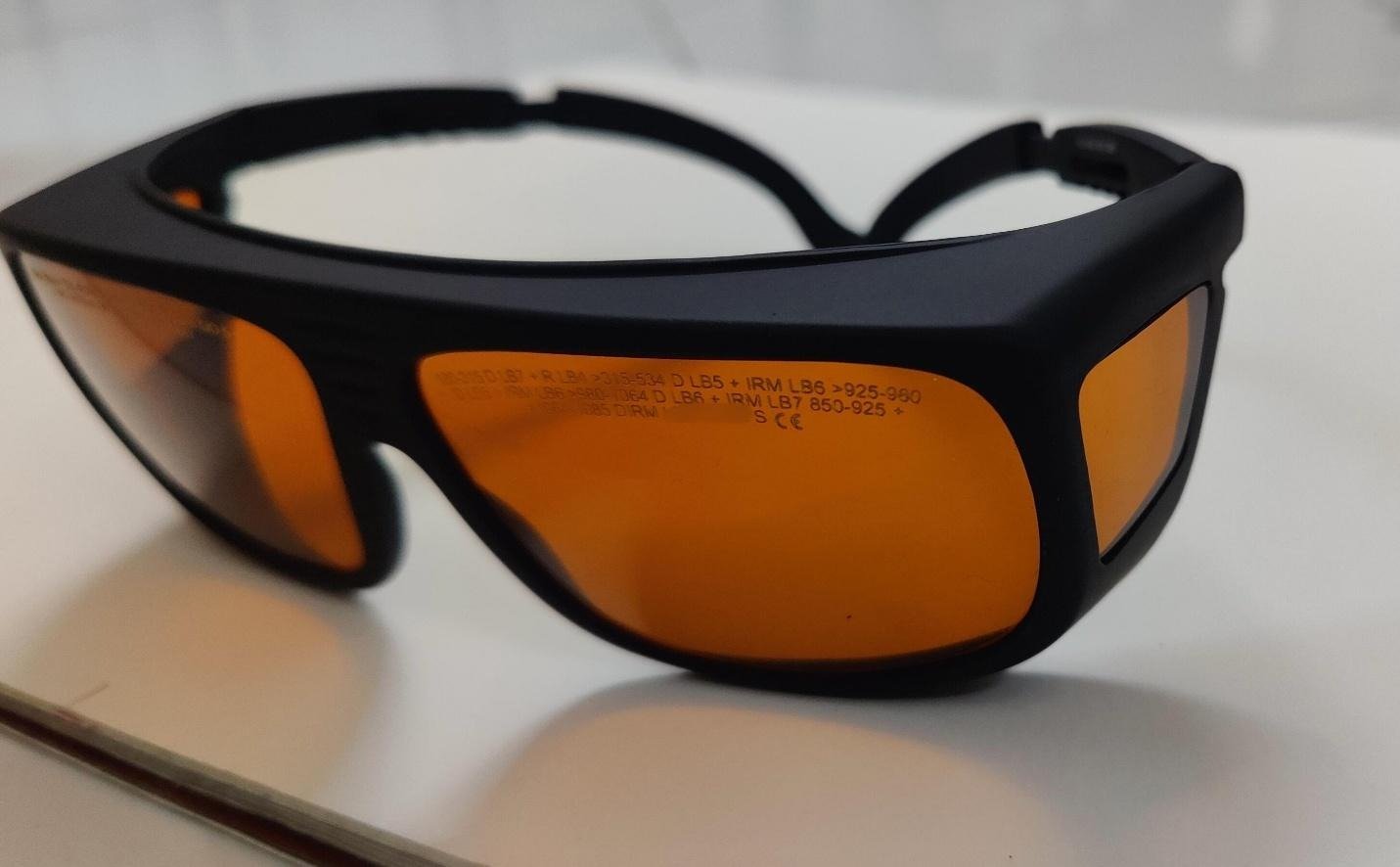
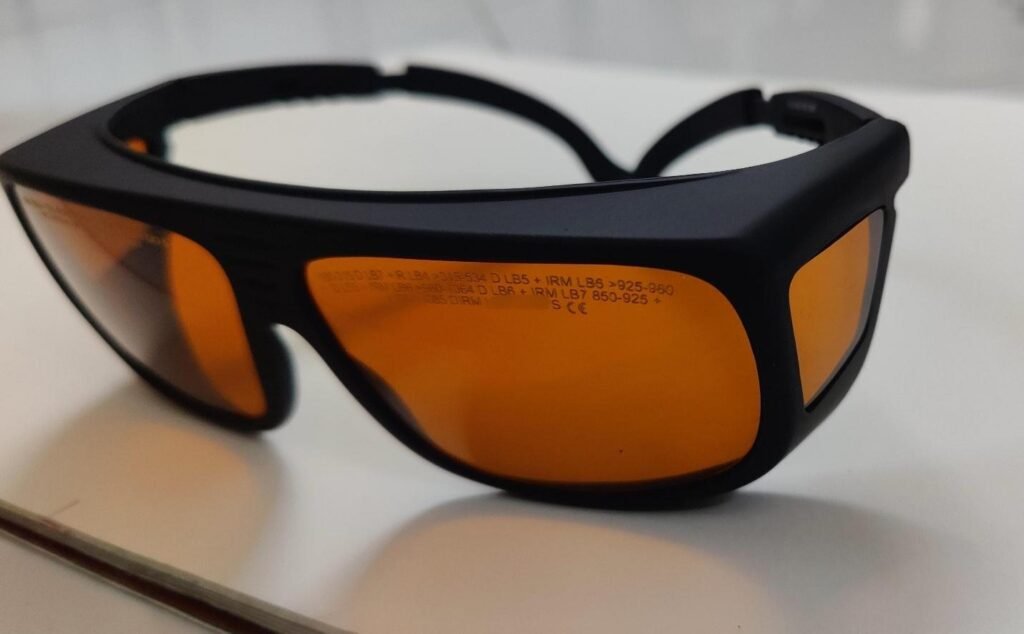
A recurring compliance gap in Indian facilities is the use of generic tinted eyewear rather than wavelength-rated laser filters. General safety glasses will not work against laser radiation.
Laser eyewear selection must be based on:
· Exact operating wavelength
· Power output (W) or energy per pulse (J)
· Required Optical Density (OD)
Optical Density is logarithmic: OD = log10 (Incident Power / Transmitted Power)
For example, if a 4000W fiber laser requires OD7 at 1064 nm, the eyewear must attenuate the beam by a factor of 10 million. Using non-certified filters without EN 207 or ANSI Z136 compliance documentation introduces severe liability risk.
Engineering vs. Administrative Controls: Getting the Hierarchy Right
In many automation environments, the safety hierarchy is inverted, with PPE becoming the first line of defence rather than the last. A safe robotic cell requires a structured approach:
1. Engineering Controls (Most Effective)
· Fully enclosed beam paths
· Interlocked access panels
· Proper shielding materials that absorb rather than reflect energy
· Laser safety windows for viewing that block harmful rays while maintaining visibility
2. Administrative Controls
· Laser Safety Officer (LSO) designation
· Standard operating procedures for alignment and calibration
3. Personal Protective Equipment (PPE – Final Layer)
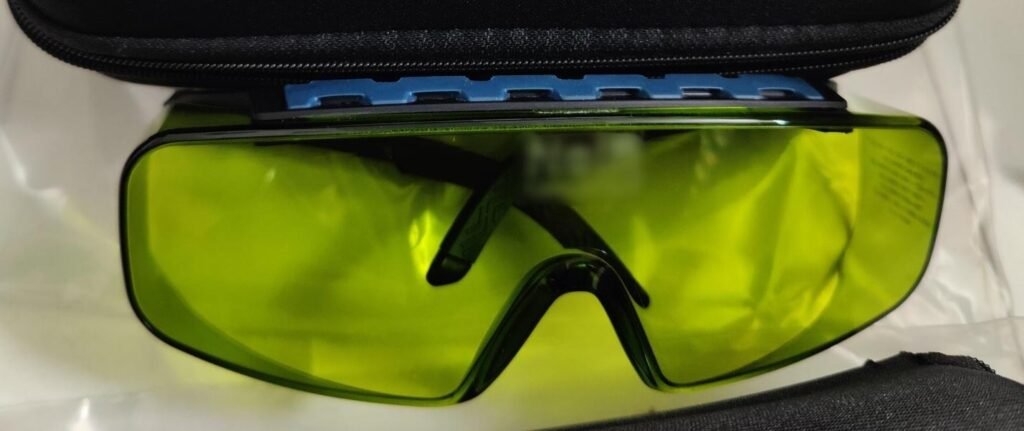
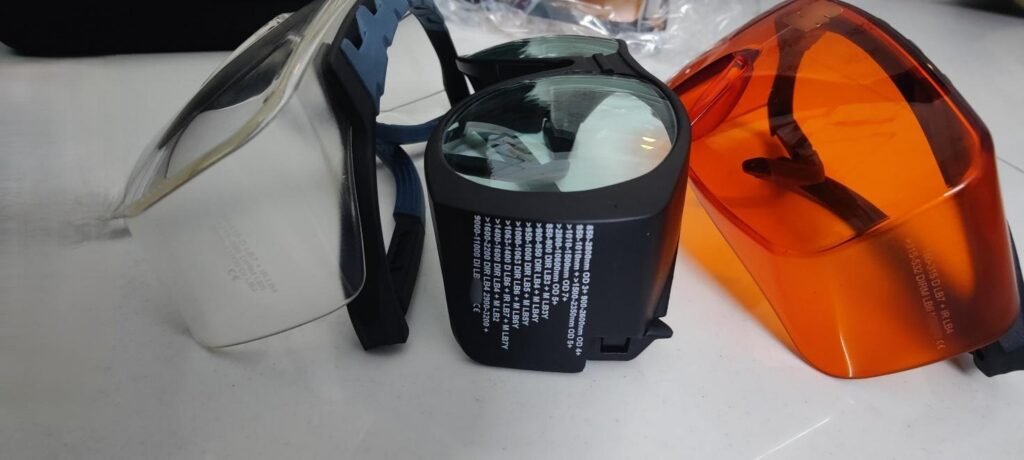
· Wavelength-specific, certified laser safety eyewear
· Periodic inspection for filter degradation
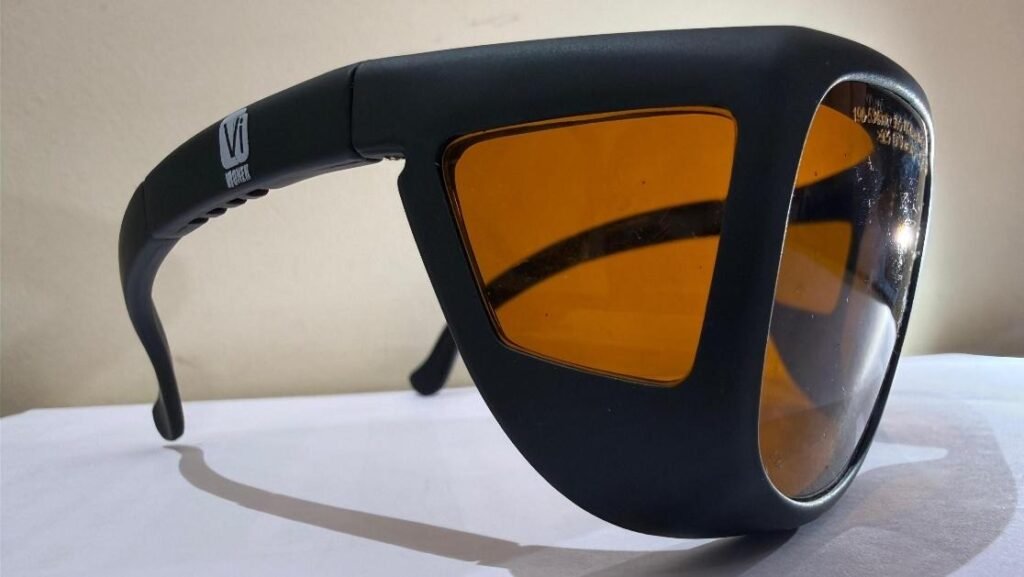
The Comfort Factor: In a busy factory, if safety goggles are heavy or uncomfortable, workers will find excuses to remove them. This is why choosing certified laser safety goggles that meet EN207 and ANSI Z136.1 standards—while still being lightweight and comfortable—is so important. Suppliers like VIONEK TECH focus on providing protection that encourages compliance through practical design, ensuring that safety gear is worn consistently.
Compliance & Documentation Gaps
During industry assessments, common observations include:
· Lack of documented hazard evaluation
· No recorded OD calculation methodology
· Imported laser systems installed without localized safety review
· No periodic revalidation after process modification
As robotics cells evolve with upgrades or reprogramming, original safety assumptions become invalid. Laser risk assessment must be revisited whenever process parameters change.
Strategic Importance for Integrators
For robotics system integrators, laser safety compliance is not merely regulatory—it is reputational and contractual. Global OEM clients increasingly require ANSI/EN compliance documentation and audit traceability. Proactive safety integration, supported by reliable partners like VIONEK TECH, strengthens tender eligibility and reduces long-term liability exposure.
Conclusion
Robotic laser processing represents a convergence of automation engineering and high-energy photonics. As India accelerates industrial automation, embedding laser safety into robotics integration frameworks is essential. Protecting your team’s eyesight is not just about checking a box; it is about building a safe, productive workplace. To protect your investment and your people, always choose reliable, certified protection.
Author
Madhurie ( VIONEK Team)
Laser Eye Safety Awareness Initiative – India
VIONEK TECH