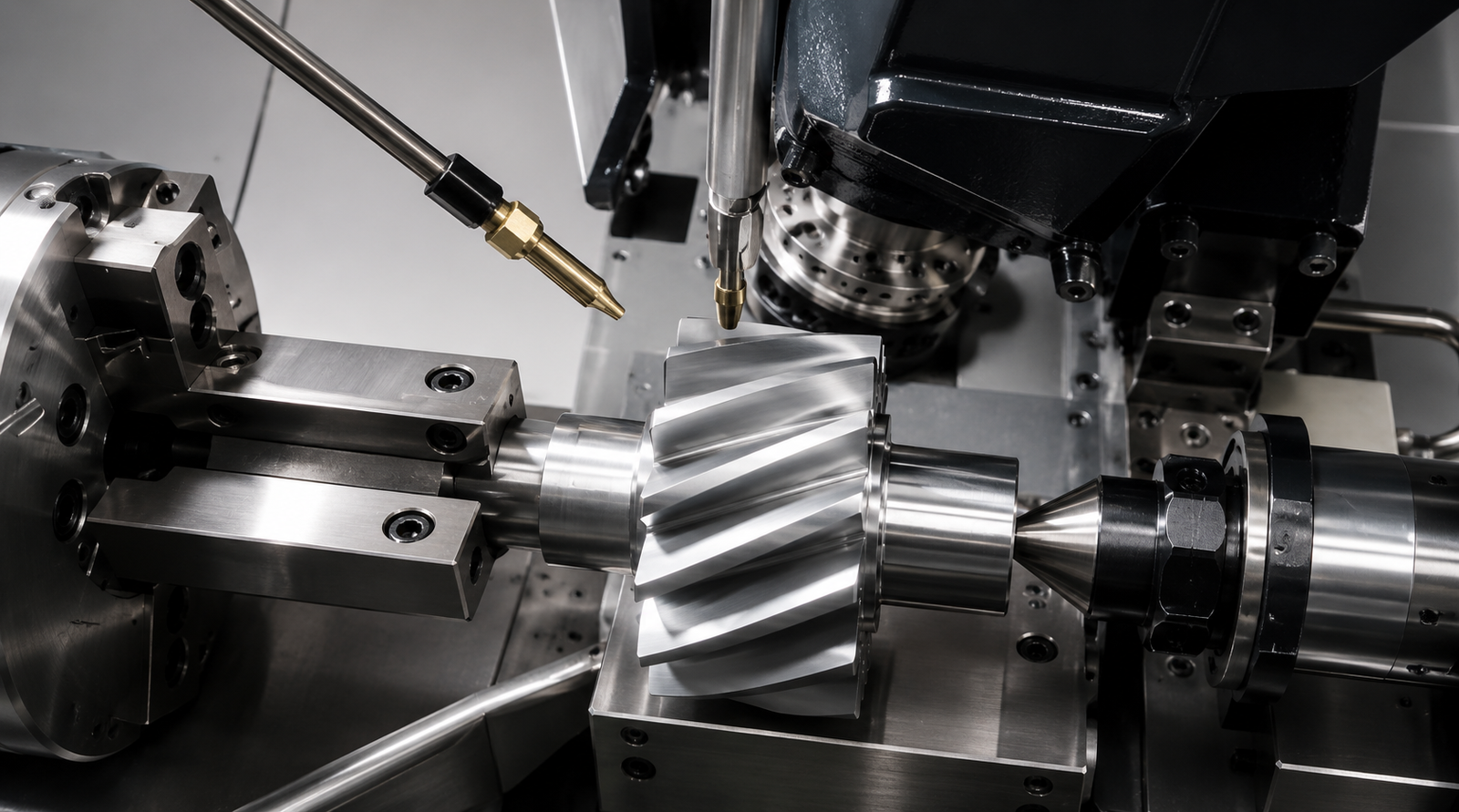
As global industries accelerate toward electrification, automation, and energy-efficient operations, the demand for high-performance transmission components is growing at an unprecedented pace. From electric vehicle drivetrains and industrial automation systems to heavy lifting equipment and fluid power applications, manufacturers are under increasing pressure to deliver greater precision, efficiency, and reliability while remaining cost-competitive. This shift is exposing the limitations of traditional manufacturing models that depend heavily on imported, application-specific machine tools. In response, indigenous innovation is emerging as a strategic enabler, allowing manufacturers to achieve world-class quality with greater flexibility and lower operational costs. The development of advanced domestic machine tool platforms such as the WM 40100 Universal Worm and Gear Milling Machine represents a significant step in redefining the economics of transmission manufacturing and strengthening self-reliance in high-precision engineering.
The global power transmission sector is experiencing a period of unprecedented transformation. Driven by structural shifts—including the rapid rise of electric vehicles (EVs) with a projected segment growth rate of 6.9% CAGR, the intense automation of material handling corridors, and clean-energy tracking infrastructure —the demands placed on transmission components have reached a critical bottleneck. Modern gearboxes, actuators, and speed reducers must deliver higher torque density, minimise mechanical backlash, and operate extremely quietly.
For manufacturing shop floors, this technical evolution presents a tough dual challenge: achieving stringent, micron-level tooth profiles while aggressive global competition forces a reduction in capital expenditure. Historically, Tier-1 automotive suppliers and heavy industrial OEMs have had their hands tied. High-precision manufacturing of specialised components, particularly worm shafts and heavy-duty gear profiles, has been completely dominated by expensive imported machinery from Europe, China, or Taiwan.
A breakthrough in domestic machine tool engineering is disrupting this reliance on imports. Developed on a highly stable, field-proven industrial platform, the introduction of the WM 40100 Universal Worm and Gear Milling Machine marks a significant milestone in ground-up indigenisation. By matching the stringent performance benchmarks of international manufacturers while introducing unparalleled structural flexibility, this new platform is poised to rewrite the operational economics of the transmission industry.
The Single-Application Trap vs. The Universal Solution
In traditional transmission manufacturing layouts, rigidity has been a costly norm. European and Asian machine tool manufacturers typically design their equipment to be highly specialised and application-specific. If an industrial gear factory needs to produce high-lead worm shafts for automated elevator winches, it must invest in a dedicated worm milling machine. If that same factory receives an order for medium-sized spur gears, helical gears, or splines, they are forced to route those components to entirely separate Hobbing or shaping lines.
This single-application approach ties up enormous capital in fixed, single-purpose machinery, introduces massive material handling overheads, and leaves the floor vulnerable to under-utilised machine capacity during market shifts. The WM 40100 completely shatters this paradigm by introducing a universal architecture. Engineered specifically to serve as a multi-application hub, it handles diverse roughing and semi-finishing operations on a single unified asset.
At the heart of this agility is a uniquely designed, heavy-duty swivel milling head featuring automatic orientation. With a remarkably versatile cutter orientation angle of -30° to 210° relative to the horizontal plane, and a maximum helix angle capacity of 45° Left Hand (LH) & Right Hand (RH), the machine can transition effortlessly between radically different gear geometries.
Rather than maintaining isolated production lines, a manufacturer can utilise the same machine to mill a high-reduction worm shaft in the morning, and pivot to a high-speed helical gear, a transmission spline shaft, or a dual-screw compressor rotor in the afternoon. This structural flexibility directly addresses the fast-evolving product portfolios of modern transmission suppliers.
Cross-Sector Applications: From Automotive EVs to Heavy Industrial Lifters
The technical versatility of the WM 40100 translates directly into specialised solutions across a wide array of high-growth transmission verticals. Because different industries prioritise distinct mechanical characteristics, a truly universal machine must adapt its cutting performance accordingly.
1. Automotive and Next-Generation EV Drivetrains
The automotive segment demands extreme geometric consistency and exceptional surface finishes, particularly as the industry pivots toward electric vehicles. EV transmission systems operate at much higher rotational speeds than internal combustion engines, meaning any microscopic pitch error translates into unacceptable cabin noise and accelerated mechanical wear. The WM 40100 provides the precision torque and rigid multi-axis synchronisation required to cut steering systems, power transfer mechanisms, and precision actuators with repeatable accuracy.
2. Heavy Material Handling, Cranes, and Elevators
For construction hoists, winches, industrial cranes, and urban elevators, transmission components are defined by three absolute mandates: massive torque transfer, rapid speed reduction, and critical self-locking safety capabilities. Manufacturing these massive worm drives and large-module spur or helical gears requires immense structural rigidity. The WM 40100 delivers the raw cutting power needed to process these substantial profiles without inducing structural deflection or tool chatter.
3. Fluid Power, Compressors, and Industrial Pumps
The industrial pump and compressor sectors rely heavily on specialised transmission profiles, including precision twin rotors, supercharger screws, vacuum screws, and progressive cavity pump shafts. Machining these complex, interlocking helical shapes requires complex, continuous multi-axis pathing. The four-axis simultaneous motion control of the WM 40100 enables high-speed, uniform metal removal along these continuous profiles, eliminating the production bottlenecks that often stall pump component manufacturing.
Deep-Dive into Engineering Architecture and Scale
A closer look at the technical specifications of the WM 40100 reveals why it stands toe-to-toe with elite global counterparts while maintaining a highly optimised footprint and lower energy consumption.
The machine accommodates substantial industrial components, offering a maximum workpiece diameter capacity of 400 mm and a generous maximum cutting length of 1000 mm, alongside a total distance between centres of 1300 mm. The work head spindle (C-Axis) is configured with an A2-11 nose, boasting a large 105 mm bore through the spindle and a maximum bar capacity of 90 mm. This allows long transmission shafts to be passed securely through the work head, supported by a heavy-duty hydraulic quill tailstock that delivers up to 1180 kg of programmable quill thrust to prevent deflection during heavy cuts.
When it comes to raw metal removal, the cutting capacity spans an impressive range of modules. The system cleanly cuts a 0.5 to 6 module profile in a single pass and can scale up to module 22 for spur/helical gears and module 16 for worm shafts using multi-pass programming. This is made possible by a high-capacity cutter spindle motor that delivers 26 to 35 kW of continuous power, paired with a BBT-40 taper tool interface that ensures zero tool slippage under maximum load.
A key highlight of this data is the machine’s efficiency. Operating at a highly optimised 50 kW of total connected power, the WM 40100 cuts energy demand in half compared to European models requiring 100–120 kW, dramatically slashing daily utility costs on the shop floor. Furthermore, with a rapid X-axis travel speed of 20,000 mm/min, it doubles the positioning speeds of its Western competitors, vastly reducing non-cutting cycle times.
Optimising Shop Floor Economics: The Grinding Allowance Advantage
Beyond raw specifications, the machine delivers a profound financial advantage directly to the bottom line of transmission manufacturers: it fundamentally alters post-processing workflows.
In traditional gear lines, conventional rough milling or shaping leaves a relatively large, uneven margin of stock material on the gear teeth. This large grinding allowance must be laboriously removed on specialised gear grinding machines to correct errors and achieve final accuracy tolerances. Gear grinding is notoriously slow, capital-intensive, and generates high consumable wheel costs.
Controlled by a high-resolution Fanuc 0i TF Plus system with precise rotary encoder feedback (Fanuc 1024iCZ), the WM 40100 achieves a high level of rough-machining precision. It holds a Class 7 to 8 Lead & Pitch accuracy while maintaining an excellent workpiece surface quality of Ra 1.6 μm.
By delivering a highly consistent tooth profile straight off the milling tool, transmission shops can significantly reduce their grinding allowance or eliminate post-milling grinding operations entirely for medium-tolerance industrial gearboxes. This optimisation slashes cycle times, decreases grinding wheel wear, and effectively removes a classic production bottleneck.
Additionally, this level of CNC automation directly solves a looming demographic crisis on the shop floor. The transmission industry has long relied on ageing, highly specialised artisans to operate conventional gear shaping and Hobbing machinery. As these skilled workers retire, factories face a severe operational vacuum. Migrating to a streamlined CNC gear milling environment allows a single trained operator to manage multiple automated cells, protecting production continuity from skilled labour shortages.
Conclusion
The future of transmission manufacturing will be defined not only by precision and productivity but also by adaptability and economic efficiency. By combining multi-application capability, high machining accuracy, energy-efficient operation, and reduced dependence on imported technologies, the WM 40100 demonstrates how indigenous machine tool innovation can address the evolving needs of modern manufacturers. Beyond delivering technical performance, it enables transmission producers to optimise capital investment, streamline production workflows, and overcome skilled labour challenges. As global markets continue to demand greater agility and competitiveness, such homegrown engineering solutions are poised to play a pivotal role in strengthening manufacturing resilience and positioning India as a significant contributor to the global transmission industry.
– By Murali R. (Head – Product Management – Emerging Sectors)
Ace Designers Ltd.,
Ace Designer’s – Universal Worm & Gear Milling Machine – WM 40100
Worm Shaft being machined on WM 40100
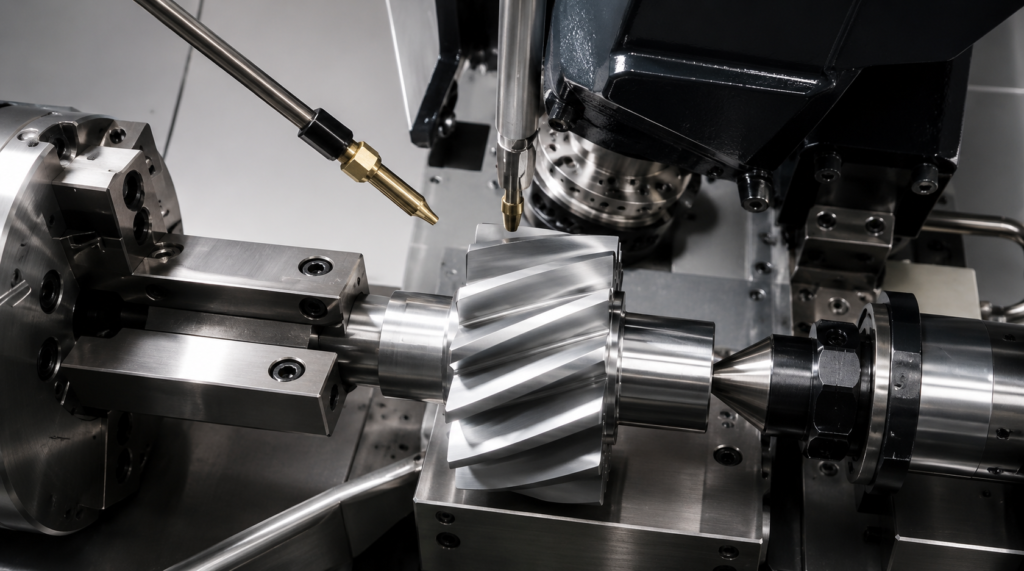
Helical Gear being gashed on WM 40100

Murali .R
Product Management for Emerging Sectors,
Ace Designers Ltd
Murali R is a seasoned Sales & Marketing Strategist with over two decades of experience in the machine tool industry, having built expertise across Application Engineering, Service, Sales, Marketing, Market Development, and Product Management. A graduate of the specialised Machine Tool Technology program at C.M.Kothari Technological Institute (CMKTI), he has consistently driven business growth, product innovation, and customer-centric manufacturing solutions. Currently heading Product Management for Emerging Sectors at Ace Designers Ltd, he plays a pivotal role in shaping product strategy and developing productivity-enhancing solutions for customers. One of his most notable achievements is spearheading the development of India’s first indigenous Worm Milling Machine for the transmission industry, creating a successful import substitute through extensive market research and customer engagement. Passionate about mentoring, he has guided more than 100 young professionals throughout his career and remains committed to developing future industry leaders. A dedicated machine tool professional, he is also working on his autobiography with the vision of inspiring and shaping the next generation of machine tool engineers.