What is the first thing that comes to our mind when we are falling short of hobbing capacity? Most likely, it will involve adding new machines and then starting the process of procuring them, allocating space and manpower, as well as other regular expenses such as oil and power.
Have we ever given a thought to the ideal capability of our existing CNC hobbing machines? It could be a possibility that we might be under-utilising the machine capacities.
You would be surprised when you look at the maximum spindle RPM that the machine can run in comparison to what is running on the machine.
We find such gaps where the review process of machine capability is missing. Another part of the story is that, at times, users are not aware of the availability of better tool materials to support the increased cutting speed. With the ever-increasing volatility in business due to various unknown factors, we must find ways to avoid the huge capital investments, if the objective can be achieved with the involvement of all stakeholders by changing the tool specifications.
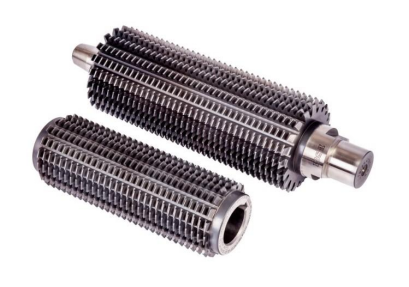
We at ESGI have two ranges of special series called ES-Cut hobs for Modules 1 to 7 & and ES-H for modules more than 7. The different grades of ES_40, ES-65 & ES-90 are chosen based on the machine capability, component specifications and customer targets.
ES-Cut hobs are used for the automotive sector with components of mass volume and are used for new CNC Hobbing Machines, where cutting time has been reduced substantially by not only changing the tool material but also optimising the hob specifications like outside diameter, overall length, number of starts and number of gashes.
While undertaking the study, the foremost parameters to be considered are chip thickness, feed marks on the component, the desired accuracy level of the component, the spindle, & Cutting load.
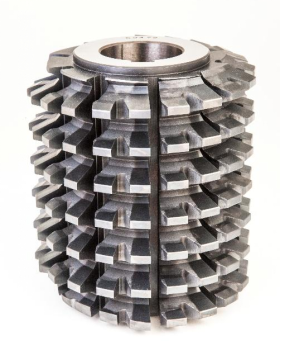
ES-H hobs are designed for higher modules—typically above 7—and are suitable for use on manual machines as well. They feature an increased number of cutting edges, making them specially engineered tools that are also critical and challenging to manufacture.
Then the next critical part of the exercise is the implementation by conducting the trials. The process of trials is as important as the first part of supplying the right tool. The user conducting the trial must interact with the tool supplier on a regular basis on the actual results and feedback. Since the process also includes key machine settings like Spindle RPM, Axial feed rate, shifting amount and V-offset to obtain the judicial mix of improved cutting time and better life per sharpening.
We are sharing below a few case studies for the successful trials conducted:
| Module | 2.14 | 4.8 | 1.75 | |||
| PA | 15˚ | 22.5˚ | 20 | |||
| Z | 135 | 39 | 69 | |||
| Hob Material | ASP2052 | ES65 | S390 | ES65 | MAC7 | ES90 |
| Coating | Al Pro | Al Pro | Al Pro | Al Pro | Al Pro | Al Pro |
| Hob Size (mm) | 90X180X40 | 90X180X40 | 100X130X32 | 90X180X32 | 70x180x32 | 70x180x32 |
| Cutting speed (metre per minute) | 115 | 150 | 90/100 | 160/180 | 157 | 230 |
| Axial Feed (mm/work revolution) | 1.5 | 2 | 1.5/1.8 | 2.8/3.0 | 1.2 | 1.3 |
| Cutting time (Seconds) | 420 | 286 | 282 | 165 | 88 | 59 |
| Life per sharpening | 750 | 1505 | 600 | 950 | 2500 | 3600 |
| Time Reduction | -32% | -41% | -33% | |||
| Life Increase | 101% | 58% | 44% | |||
As is evident from the data, the results are encouraging with the reduction in cutting time as well increase in life per sharpening.
Multiple benefits
Considering the above, we must encourage such engineered study-based activity to improve production efficiency and, at the same time, reduce the cost per component and avoid capital investment.
Sanjay Gupta | Director |ESGI Tools Pvt. Ltd. | India |
www.esgitools.com
esgi@esgitools.com