In the world of precision engineering, gears remain one of the most critical mechanical components powering industries ranging from automotive and aerospace to wind energy, robotics, railways, mining, and industrial automation. As transmission systems evolve to meet demands for higher efficiency, quieter performance, and longer operational life, gear manufacturing technologies have also undergone significant transformation. Among all finishing processes, gear grinding stands at the pinnacle of precision manufacturing.
Gear grinding is no longer viewed merely as a finishing operation. Today, it has become a strategic manufacturing process that determines gear quality, operational reliability, energy efficiency, and overall drivetrain performance. With the rise of electric vehicles, Industry 4.0, automation, and AI-driven production systems, gear grinding technology is witnessing rapid innovation.
This cover story explores the importance of gear grinding, its evolution, latest technological trends, process types, challenges, and the future shaping the global and Indian gear manufacturing industry.
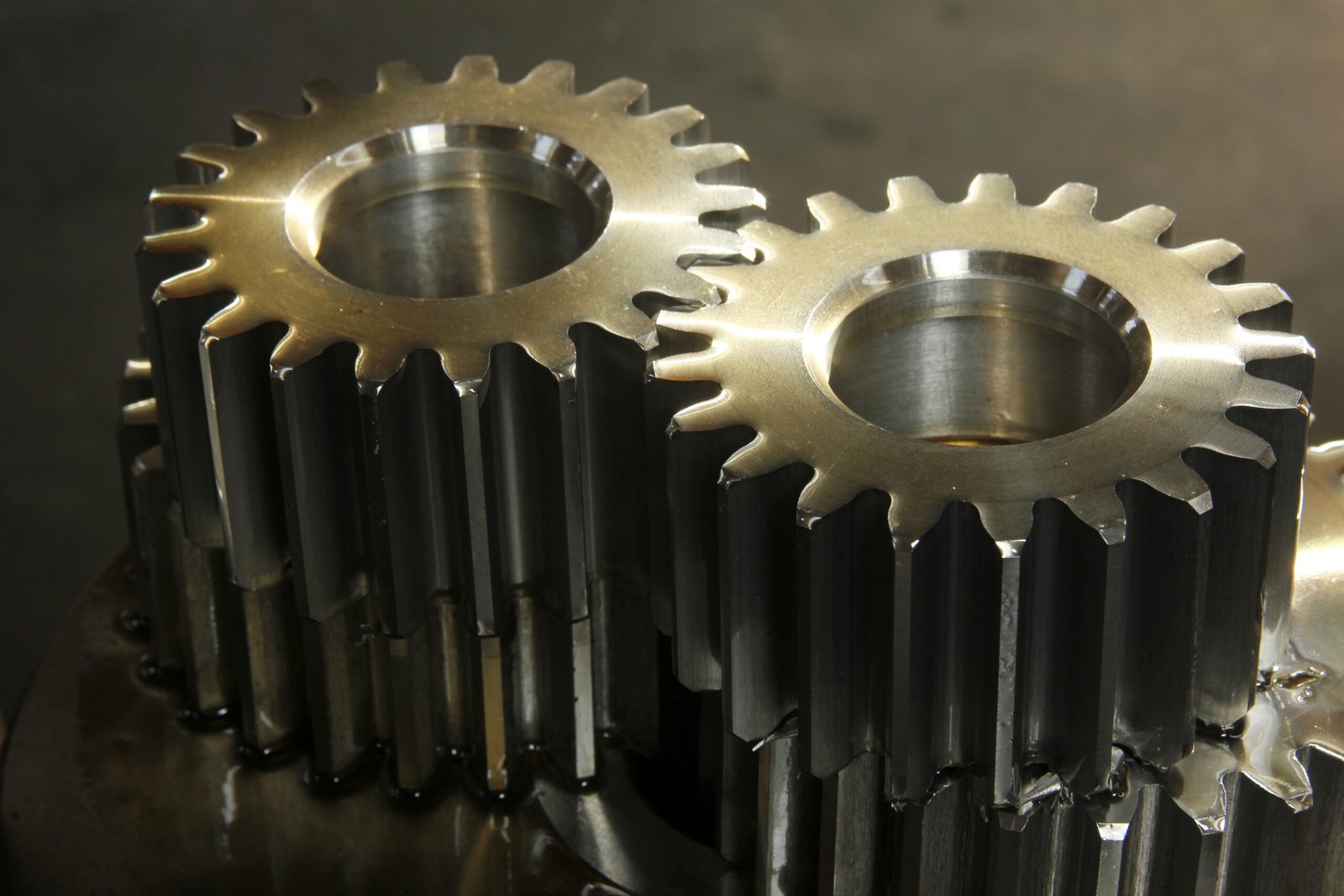
Gear grinding is a precision finishing process used to improve the dimensional accuracy, tooth geometry, surface finish, and noise characteristics of gears. It is generally performed after heat treatment because hardening often causes distortion in the gear profile.
The process involves removing small amounts of material from hardened gear teeth using abrasive grinding wheels. This enables manufacturers to achieve extremely tight tolerances, accurate involute profiles, and superior surface integrity.
Gear grinding is especially essential in applications where precision and durability are critical, such as:
As powertrain systems become more compact and efficient, the role of gear grinding becomes increasingly indispensable.
Modern industries demand gears that are quieter, stronger, lighter, and more efficient. Traditional machining methods alone cannot achieve the required level of precision after heat treatment. Gear grinding bridges this gap.
Gear grinding enables manufacturers to achieve micron-level accuracy in tooth geometry and profile correction. This improves meshing characteristics and transmission efficiency.
A high-quality surface finish reduces friction, wear, and heat generation during operation.
Ground gears significantly reduce vibration and transmission noise, a critical requirement in electric vehicles where drivetrain noise is more noticeable.
Improved tooth contact and surface integrity increase load-carrying capacity and fatigue life.
Grinding compensates for distortions caused during carburizing, nitriding, or induction hardening processes.
The journey of gear grinding has evolved from manually operated machines to highly sophisticated CNC-controlled systems integrated with digital intelligence.
Earlier gear grinding machines relied heavily on operator skill and manual setup. Productivity was limited, and repeatability remained a challenge.
The introduction of CNC gear grinders transformed the industry by enabling:
Modern gear grinding machines now incorporate:
The combination of precision engineering and smart manufacturing has elevated gear grinding into a highly data-driven process.
Different grinding methods are used depending on gear geometry, production volume, and accuracy requirements.
In form grinding, the grinding wheel profile matches the shape of the gear tooth space. The wheel grinds one tooth gap at a time.
Generating grinding uses the meshing principle between the grinding wheel and gear. Multiple teeth are ground simultaneously.
Generating grinding is currently the most widely used process in high-volume gear manufacturing.
This process is used for grinding internal gears commonly found in planetary gear systems.
Internal gear grinding demands extremely high machine rigidity and precision due to limited accessibility.
Worm grinding utilises threaded grinding wheels to generate gear tooth geometry continuously.
This process is particularly effective for hardened gears requiring large production volumes.
One of the biggest growth drivers for gear grinding today is the electric vehicle revolution.
Unlike internal combustion engine vehicles, EVs operate with significantly lower background noise. This means even minor gear whine becomes highly noticeable. Consequently, EV gears require:
Manufacturers are increasingly investing in advanced grinding technologies to meet these stringent NVH (Noise, Vibration, and Harshness) requirements.
Additionally, EV transmissions often operate at higher rotational speeds, placing further emphasis on grinding quality and thermal stability.
The performance of gear grinding heavily depends on grinding wheel technology.
Traditional aluminium oxide wheels remain widely used for standard applications.
Cubic Boron Nitride (CBN) wheels have revolutionised gear grinding due to their:
CBN grinding is particularly preferred in the automotive and aerospace industries.
Despite its advantages, gear grinding remains a complex and demanding process.
Excessive heat generation can lead to grinding burn, affecting gear hardness and fatigue life.
Grinding wheels gradually lose their cutting efficiency, requiring dressing and monitoring.
Even slight machine vibration can affect profile accuracy.
Programming, setup, and process optimisation require specialised expertise.
Advanced CNC gear grinders involve substantial investment, making process optimisation crucial for profitability.
Artificial Intelligence is now entering the gear grinding domain at an accelerated pace.
Modern grinding systems use AI for:
Machine learning algorithms can analyse vibration, acoustic signals, and spindle behaviour in real time to optimise grinding performance.
This shift toward intelligent grinding is helping manufacturers reduce scrap, improve productivity, and minimise downtime.
Automation has become central to modern gear production facilities.
Robots are increasingly integrated for the automatic loading and unloading of gears.
In-process gauging systems enable automatic profile correction and compensation.
Grinding machines now communicate directly with inspection systems, creating fully closed-loop manufacturing environments.
This ensures consistent quality with minimal human intervention.
Precision grinding is incomplete without accurate measurement and inspection.
Modern gear metrology systems measure:
Advanced analytical software provides detailed feedback for process correction.
As gear tolerances tighten further, metrology integration is becoming increasingly critical.
Sustainability is emerging as a major focus area in gear manufacturing.
Grinding machine manufacturers are now developing systems with:
Energy-efficient grinding not only reduces environmental impact but also lowers operational costs.
India’s gear manufacturing sector is rapidly expanding due to growth in:
Indian manufacturers are increasingly upgrading from conventional gear finishing methods to advanced CNC grinding systems.
Government initiatives such as “Make in India” and localisation programs are also encouraging domestic production of high-precision gears.
Several Indian gear manufacturers are now supplying globally competitive gears to international OEMs, requiring world-class grinding capabilities.
The future of gear grinding is being shaped by digitalisation, automation, and high-performance manufacturing demands.
Future machines will combine multiple operations, such as grinding, skiving, and inspection into a single platform.
Self-learning grinding systems will automatically optimise process parameters.
Virtual simulation models will predict machine behaviour and process outcomes before actual production.
As industries demand tighter tolerances, nano-level precision grinding technologies will gain importance.
Environmentally conscious grinding systems will become standard across global manufacturing facilities.
Even with advanced automation, skilled manpower remains crucial.
Gear grinding requires expertise in:
Training and upskilling will play a vital role in supporting the next generation of precision manufacturing professionals.
Industry-academia collaboration and technical training institutes must focus more on advanced gear manufacturing technologies.
Gear grinding has evolved into one of the most sophisticated and indispensable processes in precision manufacturing. As industries move toward higher efficiency, quieter systems, electric mobility, and intelligent automation, the importance of ground gears will continue to grow.
From EV transmissions and aerospace systems to industrial robotics and renewable energy applications, the demand for ultra-precise gears is driving innovation in grinding technologies at an unprecedented pace.
Today’s gear grinding machines are no longer standalone production units; they are intelligent manufacturing systems integrated with AI, automation, analytics, and real-time quality control. The future belongs to manufacturers who can combine precision engineering with digital intelligence.
For India, the ongoing transformation presents a major opportunity. With increasing investments in advanced manufacturing, automation, and skill development, the country is well-positioned to become a global hub for precision gear production.
In the coming decade, gear grinding will not simply remain a finishing operation—it will define the competitive edge of next-generation manufacturing.