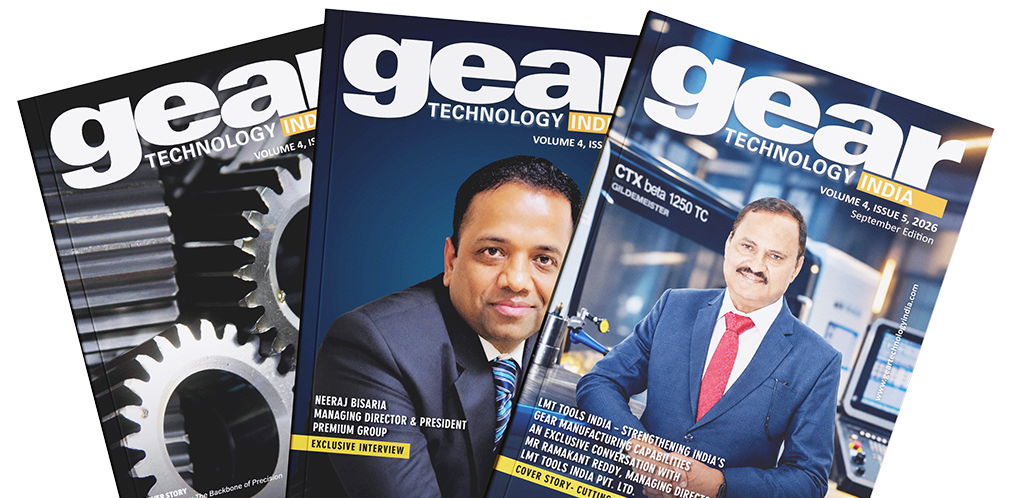
As gear manufacturers move toward higher precision, automation, and consistency, deburring has emerged as a critical determinant of final gear performance. In this interview, Sushmita Das, Editor of Gear Technology India, engages with Prasad Deshpande, Founder & Managing Director of Mii Robotics Pvt. Ltd., a subsidiary of Patil Automation Limited, to examine how robotic automation is reshaping gear finishing.
The discussion highlights the shift from manual intervention to autonomous, data-driven processes, addressing challenges such as repeatability, tool life, workplace safety, and sustainability—key factors shaping the future of advanced gear manufacturing.
We have redefined deburring as a critical “edge-conditioning” phase. Modern power transmissions, especially in EVs, demand extreme precision to minimise noise and maximise power density. Our technology ensures that the edge geometry is treated with the same importance as the tooth profile itself, making it a foundational element of the gear’s final performance rating.
Human variability is the primary enemy of precision. In our systems, we decouple the operator from the process by utilising robotics exclusively for high-precision loading and unloading. This ensures the gear is seated with 100% repeatability, while the machine’s dedicated deburring logic dictates the pressure and contact time. By removing the physical strain of handling heavy or sharp components, we eliminate the ‘fatigue factor,’ allowing the machine to maintain a CPK (Process Capability Index) that manual processes cannot match.
The ROI is found in three areas: the immediate elimination of manual labour costs, a drastic reduction in scrap and rework, and, most importantly, the prevention of catastrophic field failures caused by loose burrs. Most of our clients see full capital recovery within 12 to 18 months through these efficiency gains alone.
Manual operators often apply uneven pressure, which “glazes” or destroys abrasive media prematurely. Our systems maintain the “Golden Zone” of optimal cutting force. This precise engagement extends tool life by up to 40%, significantly reducing the cost-per-part and minimising downtime for tool changes.
Absolutely. We are moving toward “self-optimising” machines. Future systems will use AI to analyse tool wear and surface finish results, automatically adjusting their own parameters to maintain peak quality without human intervention. The machine will essentially “learn” the most efficient way to finish any alloy it encounters.
Not anymore. We have replaced complex coding with “Parametric Programming.” Now, an operator simply selects a part profile from a library or enters a few basic measurements. The system automatically calculates the new path. This slashes changeover time from several hours to just a few minutes, making “one-click” setups a reality.
We have engineered ultra-compact, high-speed carbide tools that can fit into very tight spaces. By combining these with advanced technology, our machines can navigate complex geometries that used to require hours of tedious manual work. We’ve turned a “handwork only” job into a fast, automated process.
Excessive friction creates “grinding burn,” which can soften the metal. Our machines use “cool-cut” logic, which carefully manages the speed and pressure of the tool. By optimising these contact intervals, we remove the burr while keeping the gear’s hardness and metallurgical integrity perfectly intact.
Safety is a major driver for automation. Our machines are fully enclosed, which keeps hazardous metal dust and debris contained within a filtration system rather than in the operator’s breathing zone. Additionally, the sound-dampening enclosures significantly reduce shop noise.
Efficiency and sustainability go hand-in-hand. By automating the deburring process, we significantly reduce the amount of energy wasted on “re-work” and scrap parts. Furthermore, our precise control over the deburring tools ensures that we only remove the exact amount of material necessary, extending the life of consumables and reducing industrial waste.
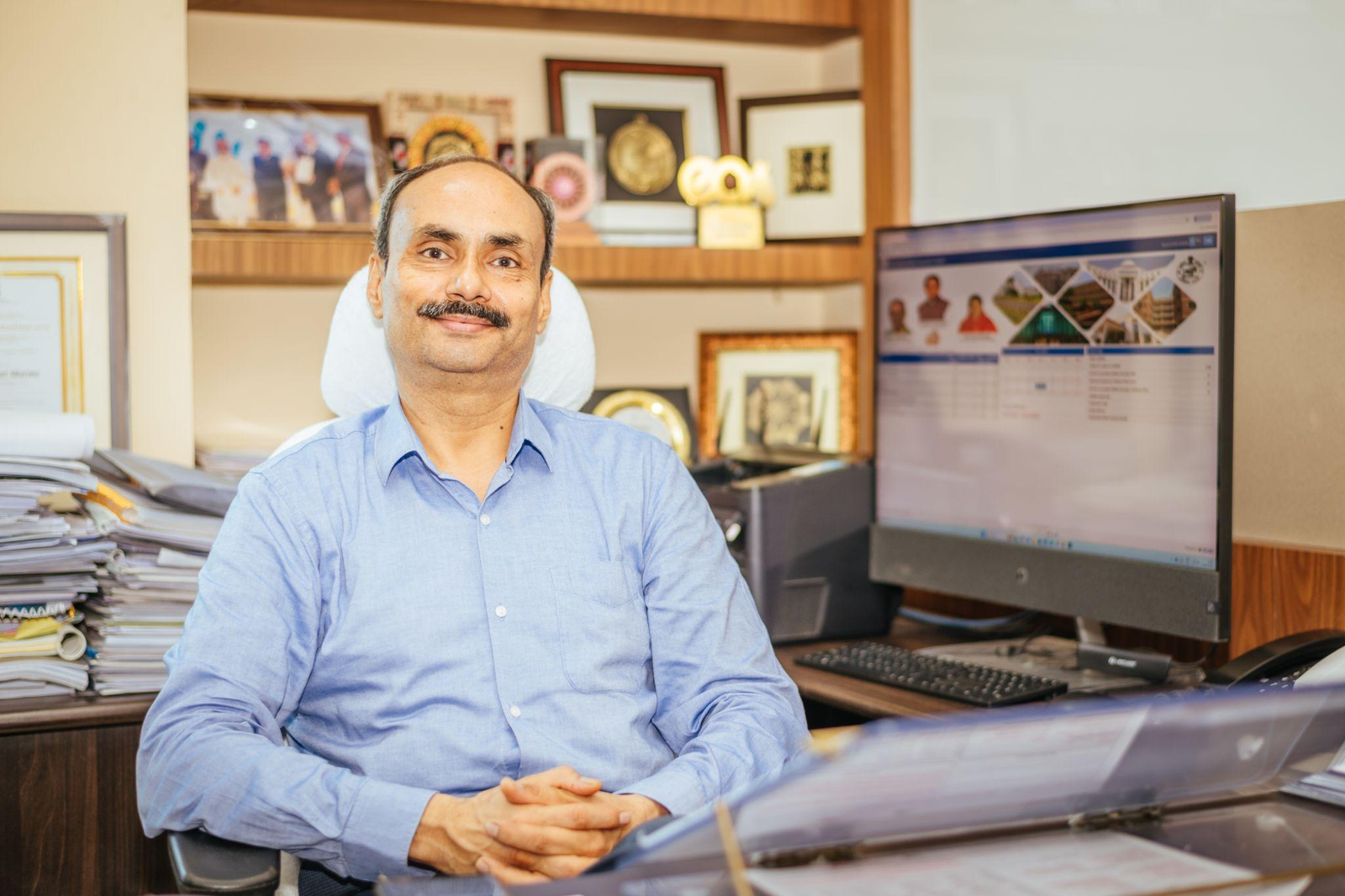
Prasad Deshpande is the Founder and Managing Director of Mii Robotics Group, an Indian organisation specialising in advanced robotics and automation solutions for the defence, aerospace, and high-precision manufacturing sectors. With over 25 years of experience, he has positioned Mii Robotics as a trusted partner for sensitive defence and strategic applications.