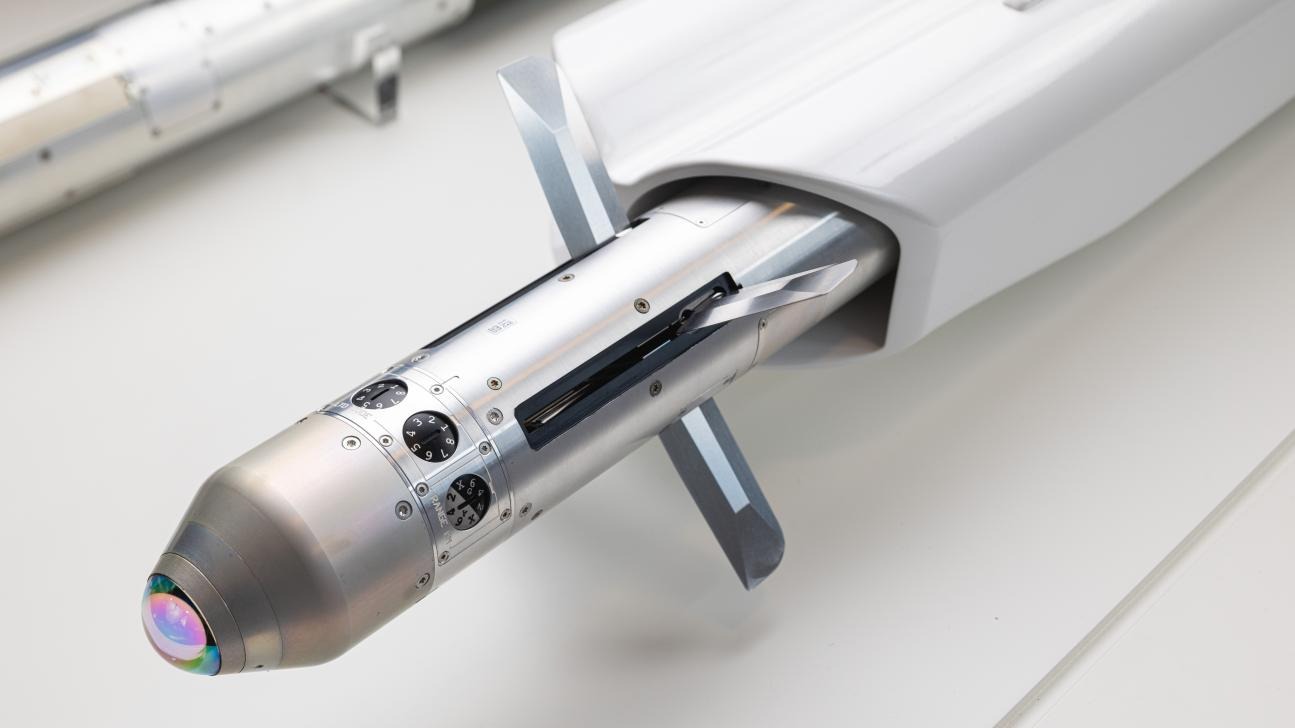
New Delhi, India: During the Belgian state visit to India, Thales and Kalyani Strategic Systems Limited (KSSL), the wholly owned defence subsidiary of Bharat Forge Limited, have signed a Strategic Alliance Agreement to explore collaboration on both unguided and laser-guided variants of Thales’ 70-mm rocket systems.
The 70-mm rocket systems are already in service with the Indian Armed Forces. The new partnership aims to establish an indigenous capability for manufacturing and integrating these systems in India, while also creating opportunities to serve international markets.
The agreement marks a significant development in India-Belgium defence cooperation and supports India’s ambition to build a globally competitive defence manufacturing ecosystem. By combining Thales’ expertise in 2.75-inch/70-mm rocket systems and launchers with KSSL’s capabilities in defence manufacturing, system integration and industrialisation, the companies intend to strengthen local production and technology capabilities.
Under the proposed collaboration, Thales will contribute its expertise in 70-mm rockets and launchers developed in Belgium, along with components from its qualified global supply chain. KSSL will leverage its local manufacturing, engineering and testing infrastructure to support production and system integration in India, with a focus on meeting international quality standards.
Commenting on the partnership, Ankur Kanaglekar, Vice-President – India, Thales, said, “Thales has partnered with India for decades and this collaboration with KSSL is a testament to our deep and long-standing engagement with the local defence ecosystem. By combining our combat-proven 70mm rocket expertise from Belgium with KSSL’s engineering and manufacturing strengths, we are co-creating capabilities that will enhance India’s operational readiness and advance its vision of self-reliance in critical defence technologies.”
Neelesh Tungar, CEO, Kalyani Strategic Systems Ltd., said the partnership would create a foundation for indigenous production of next-generation rocket systems.
“By combining Thales’ proven technologies with Kalyani Strategic Systems’ advanced industrial ecosystem, including our upcoming Energetics facility in Andhra Pradesh, this strategic partnership lays the foundation for indigenous production of next-generation rocket systems. Beyond strengthening the operational readiness of the Indian Armed Forces, it advances the vision of ‘Make in India for the World,’ positioning India as a globally competitive hub for advanced defence technologies,” he said.
Thales’ 70-mm rocket solutions are reportedly in service with 70 armed forces across 55 countries. Designed for multi-role missions and multi-platform integration, the systems can be deployed across air, land and maritime applications. In India, the rockets are used with rotary-wing platforms including the Advanced Light Helicopter (ALH-WSI) and Light Combat Helicopter (LCH).
The companies also see emerging applications for advanced 70-mm rocket variants in counter-drone operations. With asymmetric warfare increasingly involving unmanned aerial threats, such systems can provide an additional option for addressing evolving aerial targets.
Strengthening India’s Defence Manufacturing Ecosystem
The alliance is expected to contribute to India’s broader defence industrialisation objectives through technology transfer, local value creation and workforce skill development. By combining international technology expertise with domestic manufacturing and testing capabilities, the partnership aims to expand India’s role in the global defence supply chain.
KSSL, a wholly owned subsidiary of Bharat Forge, is the defence business of the Kalyani Group. The company draws on more than six decades of expertise in engineering, metallurgy and advanced manufacturing, with capabilities spanning artillery systems, armoured and protected vehicles, small arms, ammunition, marine systems and unmanned platforms.
The Thales-KSSL agreement further reinforces the growing India-Belgium defence relationship while aligning with the objectives of Atmanirbhar Bharat and Make in India for the World. It also reflects the increasing emphasis on building sovereign defence capabilities while developing India as a reliable manufacturing and technology partner for global defence markets.