Metallurgical Excellence Through Precision Vacuum Heat Treatment for Consistent Cutting-Tool Performance
The performance of a cutting tool is determined by far more than its geometry and cutting-edge design. Material selection, tool manufacturing processes, heat treatment, surface engineering and application conditions collectively determine how a tool performs in production.
As machining operations move towards higher cutting speeds, increased material removal rates, tighter dimensional tolerances and more demanding workpiece materials, the metallurgical condition of the cutting tool becomes increasingly critical.
For high-speed steels, hot-work tool steels and other tool materials, vacuum heat treatment is not simply a supporting manufacturing operation. It is a performance-defining process that determines hardness, toughness, dimensional stability, wear resistance and ultimately tool life.
For cutting-tool manufacturers, the challenge is therefore not only to achieve the required hardness, but to establish a controlled metallurgical structure that delivers repeatable performance from batch to batch.
This is where advanced vacuum heat treatment and plasma nitriding technologies can make a significant difference.
Why cutting tools demand controlled vacuum heat treatment
Cutting tools operate under a combination of mechanical, thermal and tribological stresses. During machining, the cutting edge is exposed to high contact pressure, friction, elevated temperatures and cyclic loading.
A tool that is excessively hard may offer good wear resistance but can become susceptible to chipping or premature failure. Conversely, insufficient hardness can result in accelerated flank wear, deformation and loss of cutting-edge geometry.
The objective of heat treatment is therefore to achieve the right balance between:
For high-speed steel (HSS) tools in particular, achieving the required secondary hardness and controlling retained austenite are important aspects of the heat-treatment cycle. Variations in heating, soaking, quenching or tempering can translate directly into variations in tool performance.
The same principle applies to dies, punches, forming tools and other tooling used in cutting-tool manufacturing and related applications.
Vacuum heat treatment: Clean processing with Metallurgical control
Conventional heat treatment methods can expose tools to oxidation and decarburisation. These effects can be particularly undesirable for precision cutting tools, where surface condition and dimensional accuracy are critical.
Vacuum heat treatment provides a controlled processing environment with minimal exposure to atmospheric contaminants.
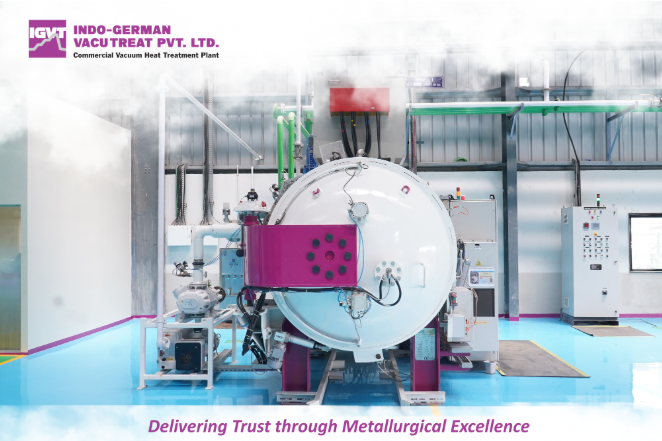
During vacuum hardening, the tool is heated under controlled conditions and subsequently quenched using a suitable gas-quenching cycle. The absence of an oxygen-rich atmosphere helps minimise oxidation and decarburisation, while precise control of temperature and cooling parameters supports repeatable metallurgical results.
For cutting-tool manufacturers, this offers several important advantages:
1. Repeatable metallurgical properties
Accurate control of the thermal cycle helps achieve consistent hardness and microstructure across batches.
2. Cleaner surfaces
Reduced oxidation helps maintain the condition of the tool surface and cutting geometry, reducing the need for extensive post-treatment cleaning or correction.
3. Better dimensional control
Precision tooling often requires tight dimensional tolerances. Controlled heating and gas quenching can help reduce distortion compared with less controlled heat-treatment methods.
4. Reduced surface contamination
The controlled vacuum environment is particularly beneficial for high-value tooling where surface quality is critical.
Modern vacuum heat-treatment systems can also employ controlled gas-quenching strategies to manage cooling rates according to component geometry and material requirements. This is particularly relevant for complex cutting tools where uncontrolled cooling can generate distortion or residual stresses.
Hardness alone does not define tool performance.
One of the common misconceptions in tool heat treatment is that higher hardness automatically means better tool life.
In reality, cutting-tool performance depends on the interaction between hardness, toughness, microstructure, retained austenite, carbide distribution and residual stresses.
A well-designed vacuum heat-treatment cycle therefore has to address comprehensive metallurgical aspects.
For example, excessive retained austenite can affect dimensional stability and hardness development. Proper control of austenitising, quenching and tempering conditions is essential to achieve the required transformation and stabilise the final structure.
Multiple tempering cycles, where specified by the tool material and application, are often an important part of establishing the desired combination of hardness and toughness.
The heat treater gives due importance to not just the required hardness specification, but also the tool material, geometry, manufacturing route and final application. That’s why vacuum heat treatment cycles are designed at IGVT.
Plasma nitriding: surface engineering beyond bulk hardness
While vacuum hardening establishes the core mechanical properties of the tool, surface engineering can further enhance performance in applications where wear, friction and surface loading are dominant concerns.
Plasma ion nitriding is one such technology.
The process introduces nitrogen into the surface of suitable ferrous materials, producing a hardened surface layer while retaining the properties of the underlying substrate.
For appropriate cutting-tool applications, plasma nitriding can provide:
The key advantage is that the treatment is focused on the surface rather than changing the bulk hardness of the entire tool.
This makes plasma nitriding particularly relevant for tooling where the substrate needs to retain sufficient toughness while the surface requires enhanced resistance to wear.
IGVT provides plasma ion nitriding as part of its vacuum and surface-engineering capabilities, supporting tooling applications where surface performance is a critical requirement.
Heat treatment must be designed around the tool—not treated as a standard batch process
Cutting tools come in many forms: drills, milling cutters, reamers, broaches, form tools, hobs, shaper cutters and specialised tooling.
Even when two tools are manufactured from the same steel grade, their heat-treatment requirements may differ because of variations in geometry, cross-section, edge thickness, tolerance and end application.
A robust heat-treatment approach therefore begins with understanding the complete process chain.
Material
The exact steel grade and its chemical composition influence the required austenitising temperature, quenching strategy and tempering cycle.
Geometry
Thin sections and sharp edges respond differently to heating and cooling than larger cross-sections. Complex geometries can also increase the risk of distortion.
Pre-treatment condition
The condition of the material before hardening—including prior annealing, machining and residual stresses—can influence final dimensional stability.
Heat-treatment cycle
Heating rate, austenitising temperature, holding time, quenching pressure and tempering parameters must be controlled according to the material and application.
Final requirements
Hardness, dimensional tolerances, surface condition and subsequent coating or finishing requirements should all be considered while developing the process.
This application-oriented approach is particularly important for precision cutting tools because a small dimensional change at the heat-treatment stage can influence the final cutting geometry.
The connection between heat treatment and PVD coating
Modern cutting tools increasingly combine metallurgical heat treatment with advanced surface coatings.
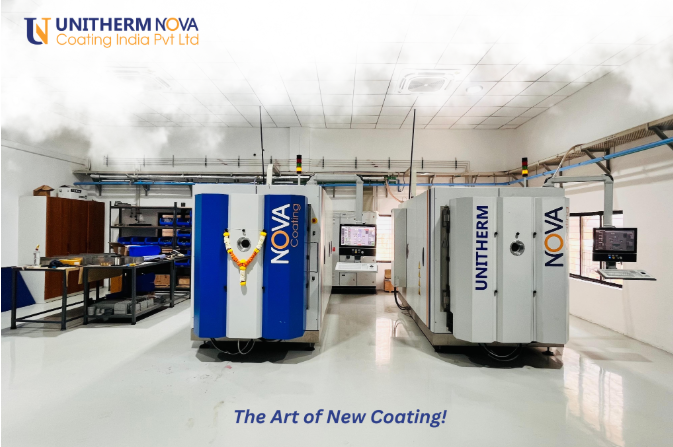
PVD coatings such as NOVA TiN, MultiNOVA(TiAlN), AltiNOVA(AlTiN) and other engineered coating systems can improve resistance to wear, oxidation and thermal loading. However, coating performance is influenced by the condition of the substrate.
A properly heat-treated substrate provides the foundation for a reliable coating system.
The sequence therefore matters:
Tool steel selection → machining → stress relief/pre-treatment → vacuum hardening → tempering → finishing → surface preparation → PVD coating
Each stage contributes to the final performance of the cutting tool.
An improperly treated substrate can compromise the benefits of even a high-performance coating. Conversely, a correctly engineered substrate and surface treatment can work together to deliver longer and more consistent tool life.
This is why cutting-tool manufacturers increasingly need heat-treatment partners who understand the complete tooling ecosystem rather than simply processing components against a hardness specification.
Managing distortion: a critical requirement for precision tooling
Distortion remains one of the most important concerns in heat treatment.
Cutting tools are often characterised by slender geometries, sharp edges, holes, slots and varying cross-sections. These features can respond differently during heating and quenching.
Residual stresses originating from material production or machining can further influence dimensional changes during heat treatment.
Vacuum processing combined with controlled gas quenching provides an effective route for managing these challenges. However, equipment alone does not eliminate distortion.
Process development, loading orientation, fixturing, heating strategy, quenching parameters and tempering practices all need to be considered.
At IGVT, customer-specific process development and optimisation form an important part of the technical support provided for vacuum heat-treatment applications. The company’s capabilities include development and qualification of new vacuum heat-treatment cycles and process-improvement solutions.
Beyond hardness: measuring what actually matters
For cutting-tool manufacturers, successful heat treatment should be evaluated through more than a hardness reading.
A comprehensive quality approach can include:
These controls help connect the heat-treatment process with actual tool performance.
The objective should be process capability and repeatability—not simply achieving a number on a hardness tester.
The value of a commercial heat-treatment partner
For tool manufacturers, outsourcing heat treatment to a specialised commercial processor can provide access to dedicated equipment, metallurgical expertise and established process-control systems without the capital investment associated with developing an in-house facility.
For IGVT, this role goes beyond processing.
Indo-German Vacu Treat Pvt. Ltd. is a joint venture between Unitherm Engineers Limited and Systherms GmbH, Germany. Established in 2007, the company has developed capabilities in commercial vacuum heat treatment and surface engineering, with facilities strategically located in Pune, Bengaluru and Chennai. Its portfolio includes vacuum hardening, vacuum brazing, plasma ion nitriding, solution annealing and ageing.
Its focus on tool and die manufacturing makes the company relevant to cutting-tool manufacturers looking for controlled, repeatable and application-oriented heat-treatment solutions.
The company also operates with a qualified metallurgical and technical team and provides customer-specific process support, including development and qualification of vacuum heat-treatment cycles.
Building the next generation of cutting-tool performance
As machining technology continues to evolve, cutting tools will face increasing demands for higher productivity, longer tool life, tighter tolerances and improved consistency.
The response cannot come from tool geometry or coating technology alone.
Performance must be engineered across the complete manufacturing chain.
Precision heat treatment provides the metallurgical foundation. Surface engineering can further enhance wear performance. Advanced coatings can add another layer of protection. Together, these technologies can enable cutting tools to operate more reliably under increasingly demanding machining conditions.
For manufacturers of precision cutting tools, the right question is therefore not simply:
“What hardness should the tool achieve?”
The more important question is:
“What metallurgical and surface condition will allow this tool to deliver the required performance throughout its service life?”
Answering that question requires a combination of material knowledge, process control, heat-treatment expertise and application understanding.
That is where precision vacuum heat treatment becomes more than a manufacturing process—it becomes an integral part of cutting-tool engineering.
About Indo-German Vacu Treat
Indo-German Vacu Treat Pvt. Ltd. (IGVT) is a commercial vacuum heat-treatment and surface-engineering service provider in India, established as a joint venture between Unitherm Engineers Limited and Systherms GmbH, Germany. IGVT offers vacuum hardening, plasma ion nitriding, vacuum brazing, solution annealing and ageing services, supported by facilities in Pune, Bengaluru and Chennai. The company serves tooling, automotive, aerospace and other precision engineering applications with a focus on controlled processes, metallurgical expertise and customer-specific solutions.
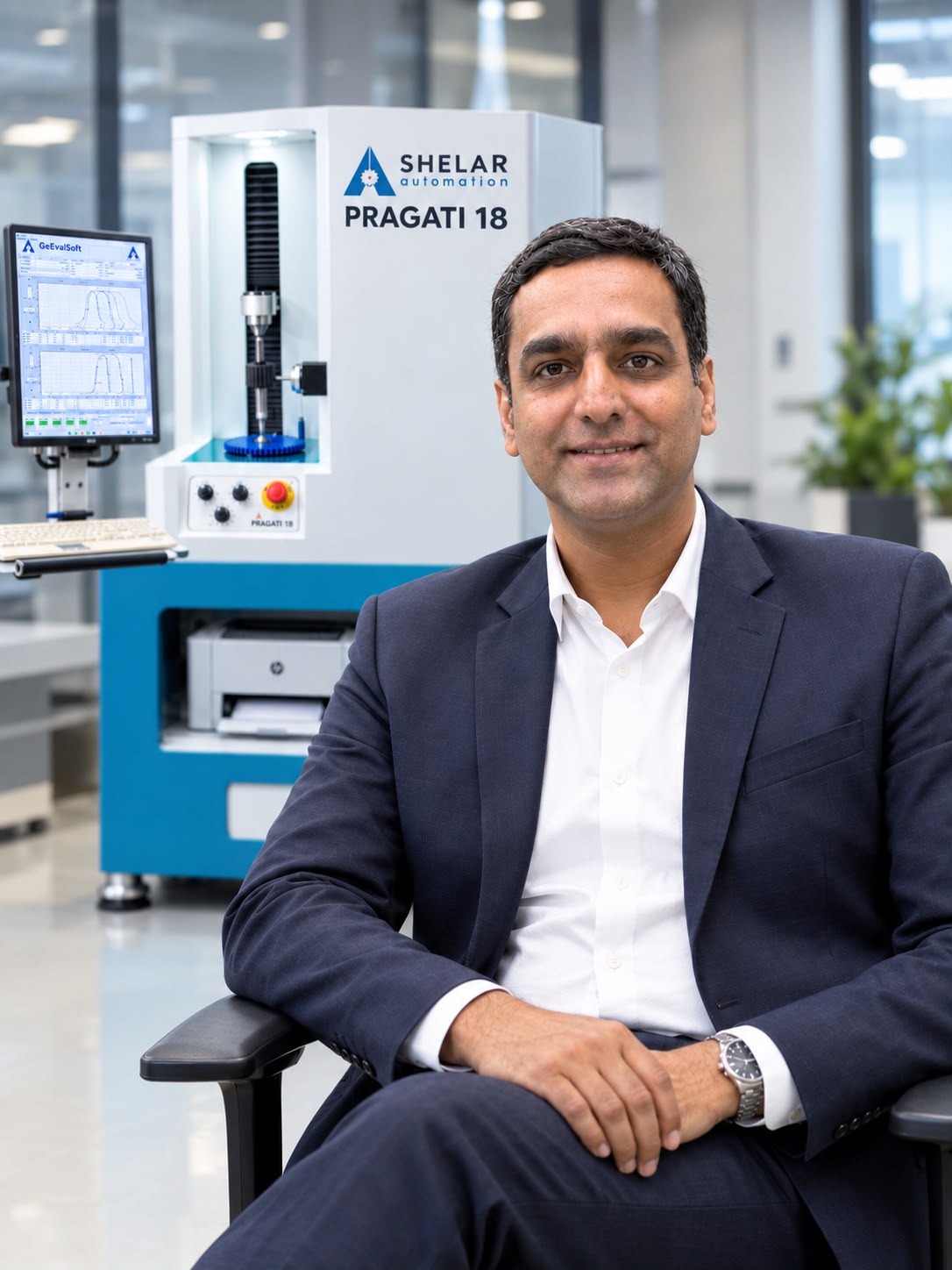
Nitin Chaudhari
CEO, Indo German Vacu Treat Pvt. Ltd.
About the Author
Nitin Chaudhari is a seasoned business leader with over three decades of experience in the manufacturing and industrial sector, including more than 12 years in senior general management roles. As Chief Executive Officer of Indo German Vacu Treat Pvt. Ltd. (IGVT), he leads the organisation’s strategic growth with a strong focus on customer-centricity, operational excellence, technology, and sustainable business development.
With extensive experience in manufacturing, operations, business transformation, and leadership, Nitin brings a strategic and hands-on approach to building high-performance teams and long-term customer partnerships. His leadership philosophy emphasises reliability, consistency, continuous improvement, and creating sustainable value for customers.
At IGVT, he is focused on strengthening the company’s position as a trusted provider of advanced vacuum heat treatment and metallurgical solutions, while driving innovation and supporting India’s evolving precision manufacturing ecosystem.
For more details, visit: www.igvtvacutreat.com
LinkedIn: https://www.linkedin.com/company/indo-german-vacu-treat-pvt-ltd