Every year on 15 September, in India, we celebrate Engineer’s Day to recognise the contribution of engineers to technological progress, industrial development and nation building. The day commemorates the birth anniversary of Sir M. Visvesvaraya, who was one of India’s most respected engineers and statesmen, whose work reflected the importance of technical knowledge, innovation and engineering-led development.
For the gear and mechanical power transmission industry, engineering is not simply one function among many. It is the foundation on which the entire sector has been built. From the design of a gear tooth and selection of materials to heat treatment, machining, grinding, inspection, lubrication and assembly, engineers are involved at virtually every stage of the process.
Without engineering expertise, the precision, reliability and efficiency expected from modern gears and power transmission systems would not be possible.
Gears may appear to be relatively simple mechanical components, but their performance depends on highly precise engineering decisions. Some of the parameters, such as tooth geometry, profile modification, pressure angle, helix angle, material properties, surface finish, hardness, load capacity and operating conditions, must be carefully evaluated before a gear reaches production.
Mechanical, manufacturing, metallurgical, electrical, automation and design engineers collectively contribute to this process.
A gear designed for an automotive transmission, industrial gearbox, wind turbine, aerospace system or heavy-duty machinery must withstand specific loads, speeds, temperatures and operating environments. Engineers translate these requirements into designs and manufacturing processes that deliver the required strength, accuracy, durability, efficiency and service life.
This engineering expertise extends beyond the gear itself. Gearboxes and mechanical power transmission systems must work as integrated systems, where gears, shafts, bearings, seals, lubrication systems and other components operate together.
The modern gear manufacturing process demonstrates how deeply engineering is embedded in the industry.
Design engineers develop gear geometries and transmission concepts based on application requirements. Manufacturing engineers convert these designs into efficient and repeatable production processes. Metallurgical and heat treatment engineers determine material and treatment parameters to achieve the required hardness, toughness and fatigue resistance.
Meanwhile, cutting tool and process engineers optimise hobbing, shaping, milling and other machining operations, while grinding engineers work towards the high levels of accuracy and surface quality demanded by today’s transmissions.
Inspection and metrology engineers ensure that gears meet stringent dimensional and functional specifications. Automation and controls engineers integrate machines, sensors and production systems, increasingly connecting individual manufacturing operations into digitally monitored production environments.
This multidisciplinary engineering ecosystem is what allows the gear industry to move from a basic mechanical concept to a highly precise and dependable power transmission solution.
The role of the engineer is evolving rapidly in 2026.
The gear industry is increasingly adopting digitalisation, automation, artificial intelligence, advanced simulation, connected machines, predictive maintenance and data-driven quality control. These technologies are changing how gears are designed, manufactured, inspected and maintained.
Digital engineering tools enable manufacturers to simulate gear behaviour, optimise designs and identify potential problems before physical production. Machine data can be analysed to monitor process stability, while connected inspection systems can provide faster feedback to manufacturing operations.
Artificial intelligence and machine learning are also emerging as tools for identifying patterns in production data, predicting tool wear, detecting quality deviations and improving process parameters.
However, technology does not replace engineering expertise. It increases the importance of engineers who can interpret data, understand manufacturing processes and make informed technical decisions.
The engineer of 2026 therefore needs to combine mechanical knowledge with digital skills, creating a new generation of professionals capable of bridging conventional manufacturing with Industry 4.0.
Sustainability is another area where engineers are playing a critical role.
In gear manufacturing, improved engineering can contribute to lower energy consumption, reduced material usage, longer component life and more efficient production processes. Gear designers are working to improve transmission efficiency, reduce power losses and optimise component weight without compromising reliability.
Manufacturers are also exploring more efficient machining and grinding processes, improved lubrication strategies, advanced materials and energy-efficient heat treatment technologies.
For end-user industries such as automotive, electric mobility, renewable energy, aerospace, defence, mining, agriculture and industrial machinery, these improvements can have an impact well beyond the factory floor.
A more efficient gear or transmission system can contribute to improved overall system efficiency and reduced energy consumption during operation.
The transition towards electric vehicles, renewable energy, automation and advanced manufacturing is creating new engineering requirements for the gear industry.
Electric mobility, for example, has introduced new demands related to high-speed operation, noise and vibration, compact transmission systems, efficiency and lightweighting. Engineers are developing solutions capable of meeting these requirements while maintaining the precision and reliability associated with modern power transmission.
The renewable energy sector presents another major engineering challenge. Wind turbines and other power generation systems rely on highly engineered transmission systems that must operate reliably under demanding conditions for extended periods.
At the same time, India’s growing focus on defence and aerospace manufacturing is increasing the demand for high-precision gears and transmission components manufactured to stringent quality standards.
These developments demonstrate that the gear industry is not static. It continues to evolve alongside the industries it serves, with engineers at the centre of this transformation.
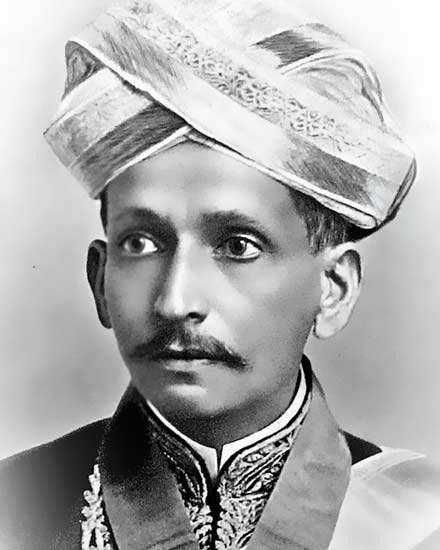
Engineer’s Day is particularly significant because it commemorates Sir M. Visvesvaraya, whose legacy represents the role engineering can play in national development.
His contributions to engineering and public administration continue to serve as an example of how technical knowledge can be applied to solve practical challenges and improve infrastructure and society.
More than a century later, the challenges facing engineers have changed, but the fundamental purpose remains the same: to solve problems through knowledge, innovation and practical application.
For the gear and mechanical power transmission industry, this philosophy is reflected in every improvement in gear design, every increase in machining accuracy, every advancement in heat treatment, every automated inspection system and every effort to make manufacturing more sustainable.
The mechanical power transmission industry is often recognised through its machines, gears, tools, materials and technologies. Yet behind every successful innovation are engineers who design, calculate, test, troubleshoot, optimise and continuously improve these systems.
From the engineer developing a new gear profile to the process engineer reducing cycle time, from the metallurgist improving fatigue performance to the automation engineer connecting a production line, their collective contribution makes modern gear manufacturing possible.
As the industry moves towards smart factories, digital twins, AI-assisted manufacturing, advanced materials, electrification and sustainable production, the engineering profession will become even more central to its progress.
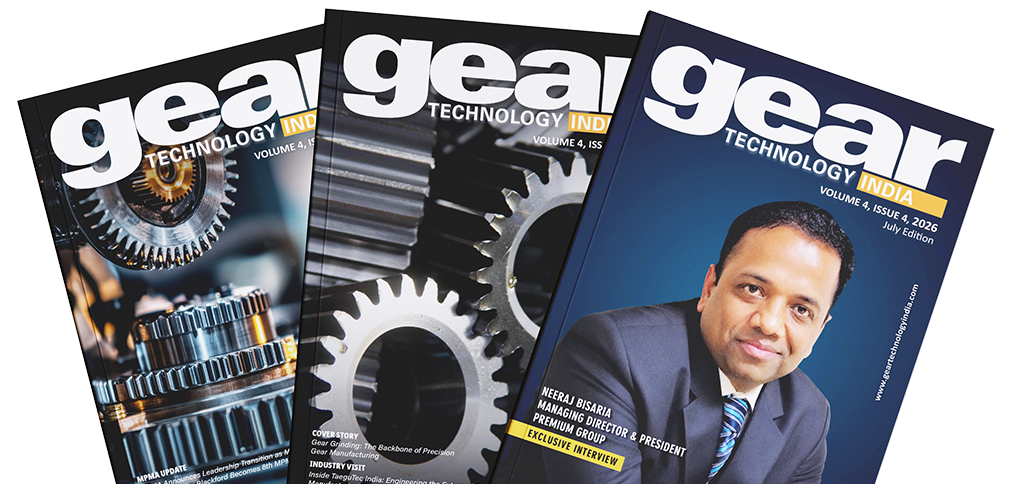
On Engineers’ Day 2026, Gear Technology India recognises the engineers whose knowledge, precision and innovation keep the gears of industry moving.
Their work may often remain behind the scenes, but without engineering, the modern gear and mechanical power transmission industry would simply not exist in the form we know today.
Happy Engineers’ Day 2026!