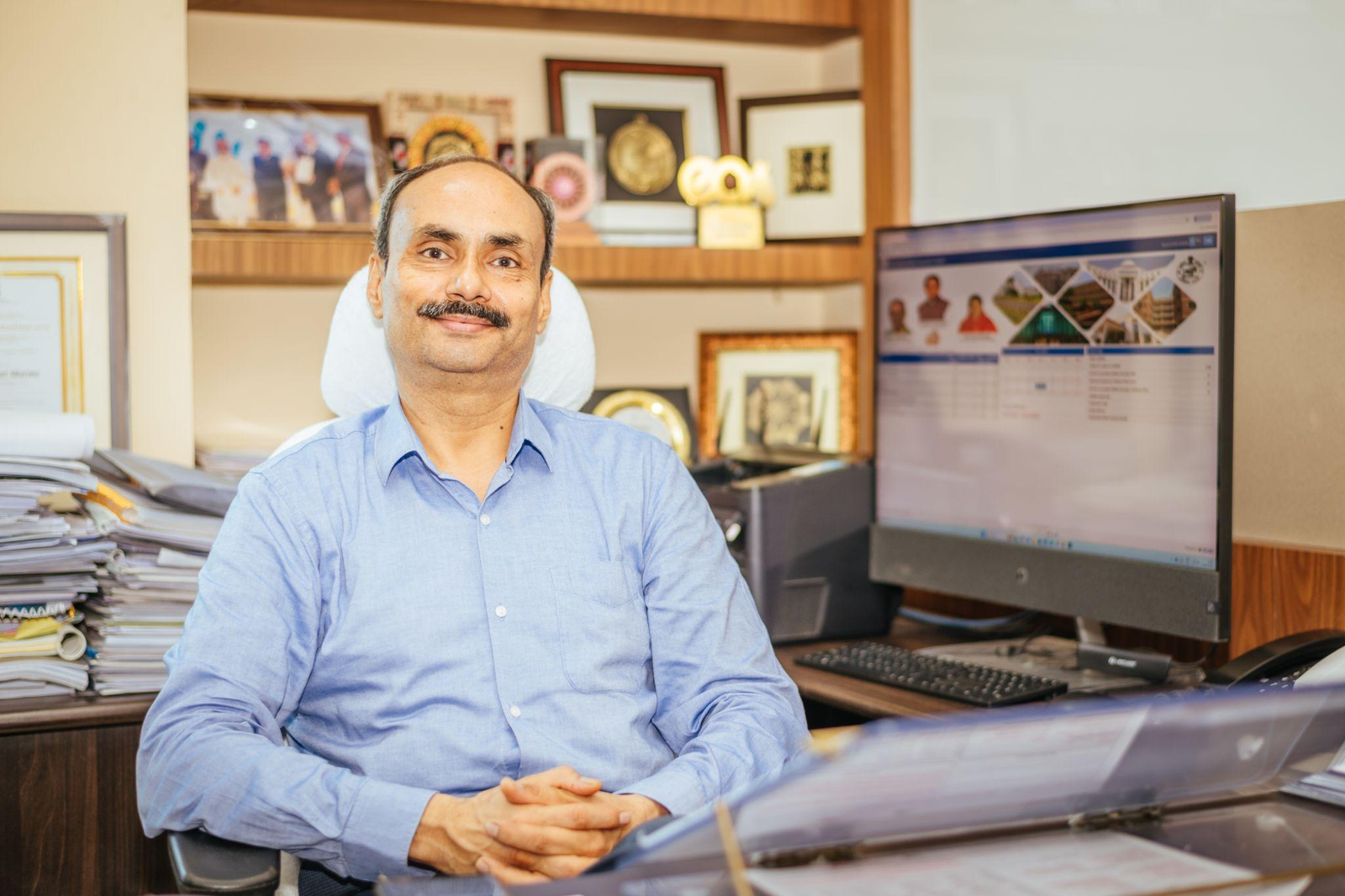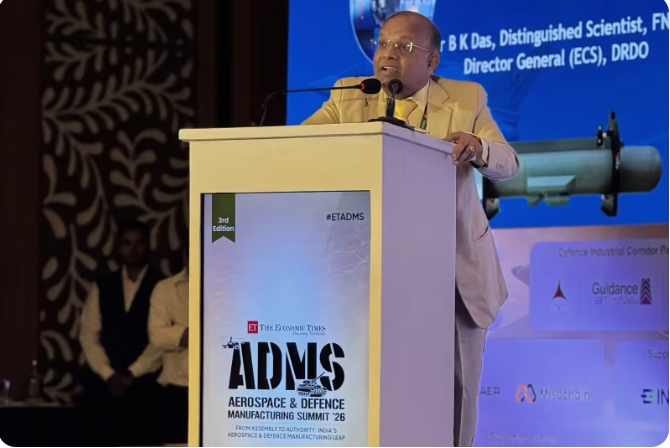
\Dr B.K. Das, Director General (Electronics & Communication Systems), Defence Research and Development Organisation (DRDO). Image Courtesy: ET Manufacturing
Bengaluru, India. India’s journey toward becoming a self-reliant defence manufacturing powerhouse will depend heavily on deeper collaboration between research institutions, industry, and policymakers, according to Dr B.K. Das, Director General (Electronics & Communication Systems), Defence Research and Development Organisation (DRDO).
Speaking at the *The Economic Times Aerospace & Defence Manufacturing Summit 2026* in Bengaluru, India, Dr Das highlighted the critical role of indigenous technology development in strengthening the country’s strategic autonomy and reducing its dependence on foreign defence imports. He emphasised that India’s defence ecosystem has witnessed significant progress in recent years, driven by the government’s Atmanirbhar Bharat initiative and a growing focus on homegrown innovation.
According to Dr Das, the next phase of India’s defence transformation will require greater participation from private industry, MSMEs, startups, and academia. He noted that while DRDO has developed several advanced defence technologies, large-scale manufacturing, supply-chain development, and commercialisation will require strong industry partnerships. This collaborative approach is essential for converting research breakthroughs into deployable military capabilities.
India has made notable strides in indigenous defence development across missiles, combat aircraft, air defence systems, electronic warfare, autonomous platforms, and advanced materials. Programmes such as the Light Combat Aircraft, Akash missile system, BrahMos, and emerging next-generation technologies have demonstrated the country’s growing technological capabilities.
Dr Das emphasised that technological sovereignty has become increasingly important in an era of evolving geopolitical challenges and rapidly advancing warfare technologies. He pointed out that indigenous development not only enhances national security but also creates opportunities for economic growth, high-value manufacturing, and exports. India’s defence manufacturing sector has expanded significantly over the past decade, supported by policy reforms aimed at boosting domestic production and encouraging private-sector participation.
The DRDO official also underscored the importance of emerging technologies such as artificial intelligence, autonomous systems, advanced electronics, and next-generation communication networks in shaping future defence capabilities. He encouraged industry stakeholders to invest in research, innovation, and advanced manufacturing to support the nation’s long-term defence objectives.
India’s push toward defence indigenisation has gained momentum through initiatives such as positive indigenisation lists, procurement reforms, and increased opportunities for domestic manufacturers. The government’s emphasis on local sourcing and technology development is helping create a more robust and globally competitive defence industrial base.
As India seeks to strengthen its position as a global defence manufacturing hub, experts believe that closer collaboration between DRDO and industry will be instrumental in accelerating innovation, enhancing technological capabilities, and achieving the nation’s vision of self-reliance in defence production.
News Source: ETManufacturing