At a time when precision, reliability, and adaptability define the future of gear manufacturing, few voices capture the industry’s evolving realities as clearly as Krishnan Sreenivasan, CEO of INDWEL Precision Gears Private Limited. In this insightful interaction with Gear Technology India, he offers a ground-level yet strategic perspective on how manufacturers are navigating increasing complexities—from supply chain disruptions and material transitions to ultra-tight tolerances demanded by defence, aerospace, and electric vehicle applications.
Drawing from years of hands-on experience in precision gear production, Sreenivasan highlights a clear shift in the industry’s mindset—where process discipline, data-driven decision-making, and rigorous validation protocols are no longer optional but essential. Whether it is adapting to stricter aerospace specifications, maintaining DIN 2/3 accuracies in CNC hobbing and grinding, or managing distortion through advanced heat treatment processes, the conversation reflects a sector that is steadily moving towards higher accountability and technological maturity.
The interview also sheds light on the human side of this transformation. Upskilling the workforce, redefining operator roles, and building technical expertise around machine behaviour and inspection analytics have become critical to sustaining competitiveness. At the same time, evolving customer expectations—especially from global markets—are pushing Indian manufacturers to deliver not just precision components, but also robust, repeatable processes backed by statistical confidence.
From large-diameter gear manufacturing to micro-geometry control in aerospace pinions, and from hydraulic applications to high-speed EV gears, this discussion captures the breadth of challenges and innovations shaping the gear ecosystem today. It is a compelling read for industry professionals looking to understand how experience, discipline, and forward-thinking leadership are coming together to redefine precision engineering in India.
Q1. What strategies are helping the gear sector handle supply chain disruptions for carburised blanks right now?
The most significant change has been reducing dependence on a single source. Alternate suppliers, particularly local ones, have been developed to avoid long lead times. For critical blank sizes, buffer stock is maintained, and production planning has become more flexible so that operations continue smoothly even if one delivery is delayed.
Q2. How is the industry adapting production to stricter defence and aerospace specifications for helical gears?
Defence and aerospace requirements have compelled the industry to adopt far greater discipline in production. There is now a stronger focus on profile and lead control, case depth consistency, and managing post-heat-treatment distortion. Closed-loop machining and detailed gear inspection have become standard practices. Furthermore, any change, whether in process, tooling, or machinery, must undergo re-validation to ensure compliance with these stringent specifications.
Q3. What leadership approaches are shaping responses to lighter material trends in hydraulic gears across India?
Material changes are never rushed. Leadership decisions are primarily data-driven, with FEM analysis, fatigue life assessments, and NVH studies conducted before any material is introduced into production. New materials are phased in gradually, an approach that reduces risk while still achieving weight reduction targets.
Q4. How are gear manufacturers prioritising upskilling for advanced CNC hobbing amid demands for DIN 2/3 precision?
In the past, operators were primarily responsible for running machines. Today, the requirements are far more advanced. Operators must understand machine kinematics, electronic gearbox accuracy, and hob shifting. They are also expected to interpret inspection reports and make lead or profile corrections accordingly. Training now places significant emphasis on the thermal behaviour of machines, which has become a critical factor in achieving DIN 2/3 precision.
Q5. How do manufacturers balance capacity growth for large-diameter gears with quality in high-volume production?
Roughing and finishing are usually separated, which helps control deflection and cumulative error. Fixtures are reviewed thoroughly, and inspection processes are strengthened before increasing production volumes. Automation is introduced, where it enhances consistency, particularly in handling, but quality remains the highest priority at every stage.
Q6. What key lessons from scaling precision gear production apply to meeting defence sector demands today?
One clear lesson is the importance of process discipline. Once a process is qualified, it is frozen. Statistical process control on profile, lead, and runout is carried out continuously rather than on a sample basis. Any change in the 4Ms, i.e., man, machine, material, or method, triggers full re-validation. This level of rigour is exactly what defence customers expect.
Q7. How do years in gear manufacturing influence decisions on adopting sealed quench heat treatment for distortion control?
Experience has shown that sealed quench provides far better distortion control. Ovality, lead distortion, and size variation become more predictable under this process. The choice of sealed quench is not driven by the pursuit of higher hardness, but by the need for dimensional stability, which is far more critical in precision gear manufacturing.
Q8. What challenges from hydraulic pump gear projects stand out in balancing 5-axis hobbing with quality tolerances?
The primary challenge lies in maintaining flank accuracy. Even minor axis synchronisation errors can lead to waviness in the lead or pitch issues, both of which directly impact pump noise and efficiency. As a result, precise calibration and thorough tool path validation become critically important to ensure quality tolerances are consistently met.
Q9. How has experience with large-diameter gears up to 500 mm informed approaches to aerospace pinion customisation?
Work on large gears highlights the critical importance of stiffness and deflection control. The same principles apply to aerospace pinions. Although these components are smaller, alignment and rigidity matter more than size. Customisation in this context is primarily about precise micro-geometry control, which ensures performance and reliability under demanding aerospace conditions.
Q10. What shifts in workforce training for CNC gear grinding have you observed over your career in the sector?
Workforce training in gear grinding has undergone a complete transformation. Operators today are expected to focus on dressing strategies, burn prevention, and avoiding thermal damage. They must also be able to analyse inspection data and manage stock effectively. Importantly, grinding is now treated as a true finishing operation rather than a corrective step, reflecting the higher precision and discipline demanded in modern gear manufacturing.
Q11. How do supply chain realities in South India impact raw material choices for high-volume spur gear runs?
Material consistency is the most critical factor. Variations in chemistry or poor cleanliness are immediately reflected as a distortion in the finished component. In many cases, reliable local suppliers outperform imports in terms of stability. For high-volume production, consistency and reliability take precedence over material cost, ensuring quality remains uncompromised.
Q12. What common pitfalls arise in profile shifting during high-helix gear shaving for automotive transmissions?
A frequent mistake is poor alignment between the cutter geometry and the required profile shift. Another common oversight is underestimating elastic deformation during the shaving process. Both issues can compromise flank form and lead to increased transmission noise. Once these errors occur, correcting them later becomes extremely difficult, making careful planning and validation essential from the outset.
Q13. How are export demands from European hydraulics clients influencing tolerance specifications below 5 microns?
At tolerance levels below 5 microns, every factor becomes critical. Temperature control, machine repeatability, and tool wear must all be managed with precision, as none can be overlooked. European customers place emphasis not only on results but also on process capability. In many cases, a Cpk value above 1.67 is expected, underscoring the need for consistent, high-quality production standards.
Q14. What role does vibration control play in achieving Ra 0.02 finishes on spur gears post-grinding?
At Ra 0.02, vibration control becomes absolutely critical. It is no longer limited to aerospace applications; even non-aerospace customers now demand such finishes. Spindle condition, wheel balance, dressing consistency, and fixture rigidity all play decisive roles. These controls must be applied consistently across customer programs to ensure the required surface quality is achieved.
Q15. How has the rise of electric vehicle gears changed module ranges in recent production planning?
Electric vehicle gears operate at much higher speeds, which has led to finer module ranges in production planning. Micro-geometry control and NVH considerations have become critical factors. Bias grinding is increasingly adopted to manage contact patterns and reduce gear whine, ensuring smoother performance and meeting the stringent requirements of EV applications.
Q16. What daily calibration routines on Kapp Niles machines help sustain DIN 3 accuracy over long runs?
Daily routines include checking master gears, verifying backlash compensation, and aligning dressing rolls. Machines are allowed to thermally stabilise before extended production runs, and probes are carefully calibrated. These practices are essential to sustaining DIN 3 accuracy consistently over long cycles.

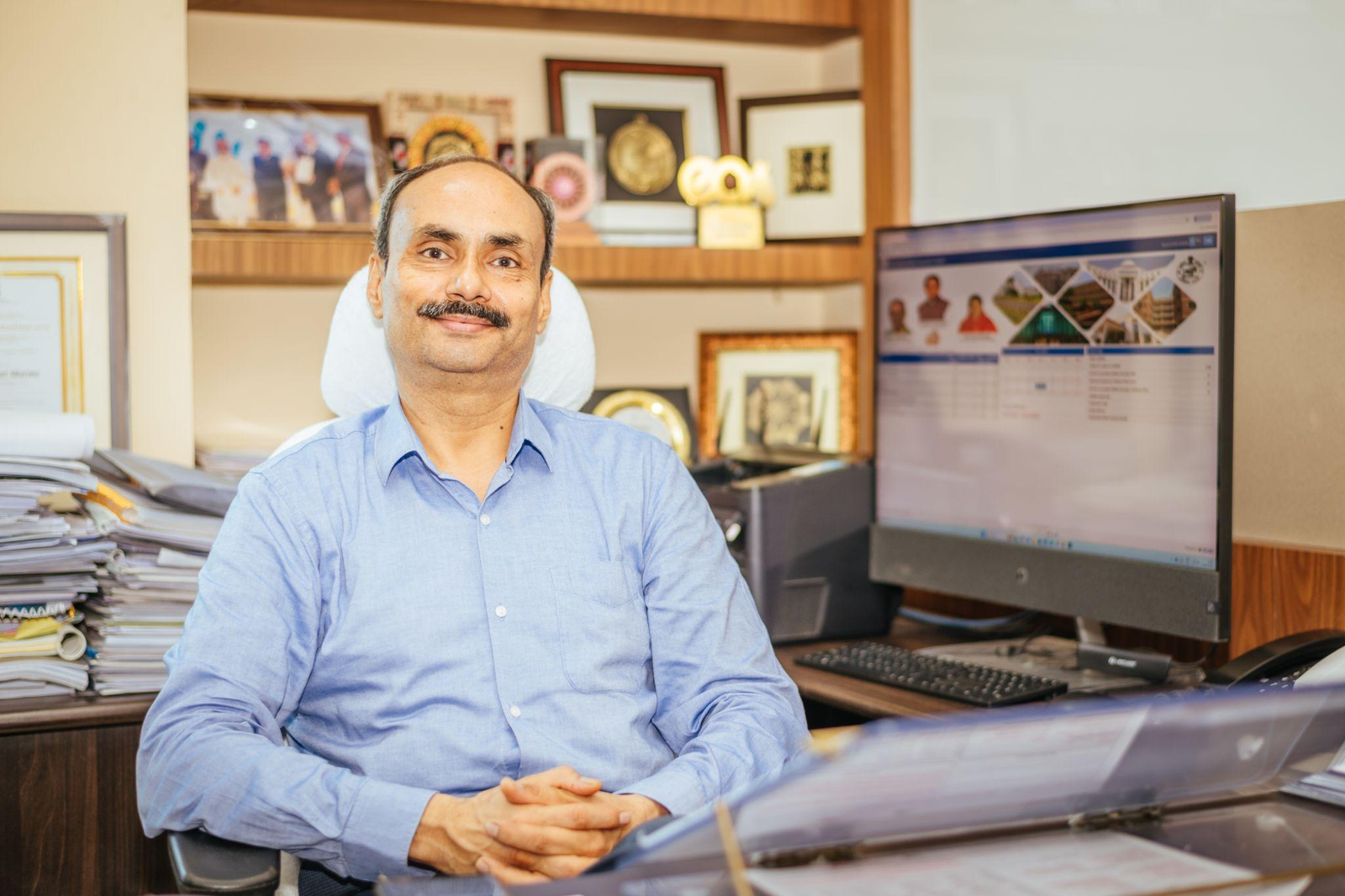
Krishnan Sreenivasan
CEO,
INDWEL Precision Gears Private Limited