In high-volume gear manufacturing, few tools influence productivity, quality, and cost as directly as the gear hob. A single unexpected hob failure can halt production, trigger a cascade of downstream quality issues, and inflate manufacturing costs by thousands of dollars within hours. As gear designs evolve toward higher load capacity, tighter tolerances, and quieter operation, particularly in automotive and electric drivetrain applications, the demands placed on hobs have increased dramatically.
At the same time, manufacturers face rising raw material costs, pressure to reduce tool inventories, and an increasing need to maximise machine uptime. In this environment, simply buying “better” hobs is no longer enough. Competitive advantage now lies in understanding how tool coatings, edge preparation, and regrinding strategies interact, and how these technical choices translate into long-term economic performance.
Gear hobs are complex cutting tools that operate under severe mechanical and thermal stress. Their performance is governed not only by base material and geometry, but also by the condition of the cutting edge, the suitability of the coating for the application, and the strategy used to restore the tool after wear. A well-coated and properly prepared hob can deliver significantly longer tool life, better surface quality, and more predictable wear behaviour. Conversely, poor coating selection or aggressive regrinding can lead to premature failure, excessive downtime, and rising cost per gear.
This article explores the technical and economic foundations of hob performance, focusing on failure modes, coating and edge preparation strategies, and cost models for regrinding versus replacement. The goal is to equip manufacturing professionals with practical insights and decision-making frameworks that move beyond intuition and toward data-driven optimisation.
Fundamentals of Gear Hob Design and Maintenance
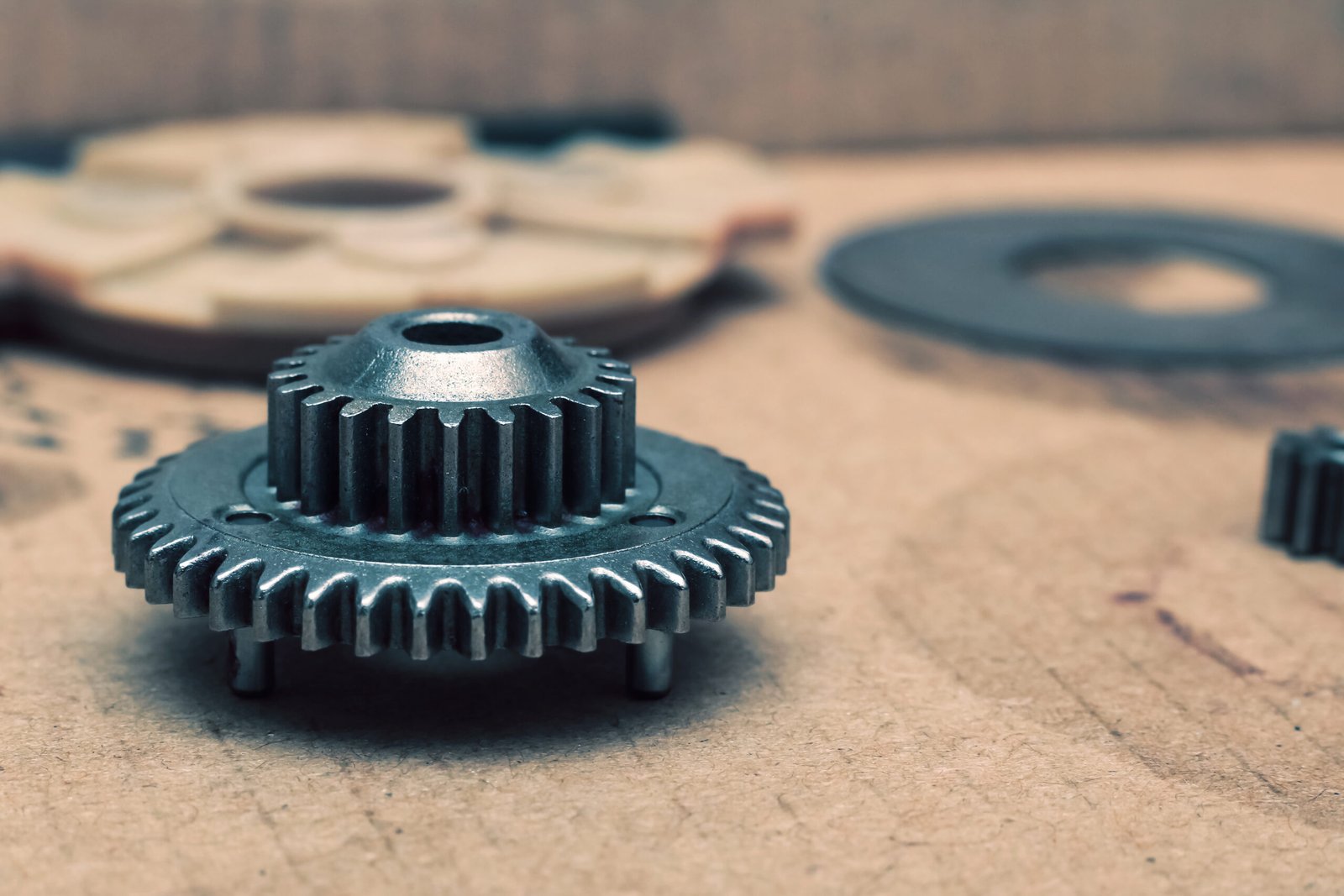
Before diving into coatings and economics, it is essential to understand the basic elements that govern hob performance. A gear hob is a multi-tooth cutting tool with helical flutes, designed to generate gear profiles through a continuous hobbing process. Each cutting edge experiences cyclic loading, thermal shock, and abrasive contact with the workpiece material.
Most gear hobs are manufactured from high-speed steel (HSS) or powder metallurgy HSS, while carbide hobs are used for high-speed or high-volume applications. Regardless of material, the cutting-edge geometry plays a decisive role in tool life. The sharpness of the edge, the rake and clearance angles, and the consistency of the edge along the flute determine how cutting forces are distributed during operation.
This is where edge preparation becomes critical. Unlike theoretical “perfectly sharp” edges, real cutting edges benefit from controlled micro-modification. Techniques such as edge honing, chamfering, brushing, or micro-blasting are used to remove micro-chips and irregularities left by grinding. Proper edge preparation reduces stress concentration at the cutting edge, stabilises chip formation, and significantly lowers the risk of premature chipping.
Equally important are tool coatings, which serve as the first line of defence against wear, heat, and adhesion. Coatings alter the tribological behaviour at the cutting interface, reducing friction and acting as thermal barriers. When correctly selected, coatings can extend tool life by 50–200% depending on the application.
From a maintenance perspective, these fundamentals directly affect regrinding outcomes. A hob with consistent edge preparation and a well-matched coating will exhibit predictable wear patterns, making regrind timing easier to control. In contrast, tools with poor edge integrity or mismatched coatings often fail unpredictably, complicating regrind planning and increasing scrap risk.
Understanding these basics sets the stage for analysing how and why hobs fail and how those failures should guide regrind and replacement decisions.
Common Failure Modes in Gear Hobs
Gear hobs rarely fail randomly. In most cases, failure follows identifiable wear mechanisms that develop gradually and can be monitored. Recognising these failure modes is essential for determining optimal regrind cycles and avoiding catastrophic tool breakdown.
The most common failure mode is flank wear, caused by abrasive interaction between the hob and the workpiece. Over time, the cutting edge becomes dull, increasing cutting forces and heat generation. While flank wear is relatively predictable, excessive wear reduces cutting efficiency and can degrade gear surface quality by 30–50% before the tool visibly “fails.”
Crater wear occurs on the rake face of the cutting edge due to high temperatures and chemical interaction with the workpiece material. This is especially common in dry or high-speed cutting of alloy steels. If left unchecked, crater wear weakens the cutting edge and accelerates chipping.
Edge chipping and fracture are more sudden and dangerous failure modes. These typically result from high mechanical loads, interrupted cutting, or insufficient edge preparation. Chipping can occur early in the tool’s life if the edge is too sharp or if the coating does not provide adequate toughness. Once chipping begins, tool life becomes unpredictable, and the risk of sudden failure increases sharply.
Another problematic mechanism is build-up edge (BUE), where workpiece material adheres to the cutting edge. This is common when machining ductile or low-alloy steels under inadequate cutting conditions. BUE leads to fluctuating cutting forces, poor surface finish, and accelerated coating failure.
Thermal cracking, though less common, can occur in high-speed or poorly cooled operations. Repeated thermal cycling causes micro-cracks in the coating and substrate, eventually leading to edge failure.
These failure modes are not merely technical concerns; they directly inform regrind decisions. For example, controlled flank wear is ideal for regrinding, as material removal restores edge geometry effectively. In contrast, severe chipping or thermal cracking may render a hob unsuitable for further regrinds.
In practice, many manufacturers use measurable thresholds such as flank wear, land width of 0.2–0.3 mm or a defined increase in cutting torque to trigger regrinding. Ignoring these indicators often leads to yield loss, gear quality issues, and higher total tooling costs.
Coating Choices and Edge Preparation Strategies
Once failure mechanisms are understood, coating and edge preparation strategies can be selected to mitigate them proactively. There is no universal “best” coating for gear hobs; performance depends heavily on workpiece material, cutting parameters, and lubrication conditions.
Titanium Nitride (TiN) remains a popular general-purpose coating due to its low cost and moderate wear resistance. It provides good adhesion resistance and is suitable for low- to medium-speed cutting of standard steels. However, its thermal stability is limited, making it less effective in high-speed or dry applications.
Titanium Aluminium Nitride (TiAlN) and Aluminium Chromium Nitride (AlCrN) are better suited for high-temperature environments. These coatings form protective oxide layers at elevated temperatures, reducing crater wear and thermal cracking. While they carry a higher upfront cost, they often double the tool life in demanding applications, making them economically attractive in high-volume production.
For non-ferrous or adhesive materials, DLC (Diamond-Like Carbon) coatings offer extremely low friction and excellent resistance to build-up edge. Although less common in traditional steel hobbing, DLC plays a growing role in specialised applications.
Edge preparation must be matched to both coating and application. A lightly honed edge may be ideal for fine-pitch gears where cutting forces are lower, while a heavier hone or chamfer improves robustness in roughing or high-load operations. Proper edge preparation can extend regrind intervals by multiple cycles, significantly improving overall tool economics.
Re-coating after regrinding is another critical decision. Most PVD coatings perform optimally within a thickness range of 2–5 microns. Once the coating wears below a critical threshold, friction and heat rise sharply. Recoating restores performance but adds cost and lead time, making it essential to integrate recoating decisions into broader economic models.
Economic Analysis: Cost Models, Regrind Cycles, and Replacement Thresholds
The true value of coatings and edge preparation becomes clear only when viewed through the lens of total cost of ownership (TCO). Tool purchase price is just one component of TCO; regrind, recoating, downtime, scrap, and lost production capacity often outweigh the initial cost of the hob itself.
A simplified TCO model can be expressed as:
TCO = Tool Purchase Cost + (Regrind + Recoat Costs) + Downtime Costs + Quality Loss Costs
Consider a hypothetical HSS hob with an initial cost of $500. If regrinding costs $100 per cycle and recoating costs $80, a single regrind-and-recoat cycle costs $180. If that cycle restores 70–80% of original tool life, the economics quickly favour regrinding, provided the tool has not exceeded its geometric or structural limits.
In many operations, hobs can undergo 5 to 10 regrind cycles before replacement. However, diminishing returns eventually set in. Each regrind reduces tool diameter, alters cutting geometry, and increases the risk of vibration or edge fragility. A common replacement threshold is reached when the cumulative regrind cost exceeds 50–60% of the cost of a new hob, or when dimensional reduction exceeds 5% of the original size.
Downtime costs are often underestimated. If a hob change or unexpected failure stops a high-volume hobbing line, the lost production can dwarf tooling costs. Predictable wear and scheduled regrinds reduce this risk, making stable coating and edge prep strategies economically critical.
Case studies from automotive gear production frequently show 20–30% reductions in tooling cost per gear when regrind cycles are optimised and aligned with coating performance. In one example, extending average hob life from four to eight regrind cycles using AlCrN coating reduced annual tooling expenditure by 25%, despite higher upfront costs.
Ultimately, the optimal strategy balances technical feasibility with economic thresholds. Not every hob should be re-ground to its theoretical maximum; the goal is to minimise cost per good gear, not maximise tool usage at all costs.
Implementation and Best Practices
Translating theory into practice requires systematic monitoring and disciplined execution. Tool wear should be tracked using a combination of visual inspection, microscopy, and process indicators such as cutting force, power consumption, and surface finish trends.
Selecting regrind vendors is equally important. Consistency in edge preparation, coating quality, and turnaround time directly affects production stability. Poor regrinds can negate the benefits of even the best original tool design.
From a sustainability perspective, regrind and recoating significantly reduce material waste and energy consumption compared to manufacturing new tools. As sustainability metrics gain importance in manufacturing decisions, optimised regrind strategies offer both economic and environmental benefits.
Common pitfalls include over-grinding tools beyond safe limits, inconsistent edge prep across regrind cycles, and ignoring early warning signs of failure. Avoiding these mistakes requires clear standards, data-driven thresholds, and close collaboration between production, tooling, and suppliers.
Conclusion
Optimising gear hob performance is no longer a matter of choosing a good tool—it is about managing a system. Tool coatings, edge preparation, and regrind economics are deeply interconnected, influencing not only tool life but also product quality, machine uptime, and overall manufacturing cost.
By understanding failure modes, selecting coatings strategically, and applying robust cost models, manufacturers can achieve 30–50% savings in tooling-related costs while improving process stability. The most successful operations treat hobs as assets to be managed, not consumables to be replaced reactively.
For manufacturers willing to audit their current practices and embrace data-driven decision-making, the opportunity is clear: longer tool life, lower cost per gear, and a more resilient production process.