Timken’s strategic vision for the coming decade is to enable efficient and reliable power transmission as the world electrifies and automates. Building on more than 125 years of bearing expertise, Timken is expanding into integrated motion and power-transmission solutions; combining advanced alloys, surface engineering, chip-to-detect condition sensing, and cloud analytics to meet rising EV and automation demand while reducing lifecycle cost and emissions.
Timken bearings and assemblies are deployed across diverse sectors. In automotive and EVs, wheel-hub bearings, e-motor support bearings and precision gearbox bearings reduce friction and thermal losses to improve range and reliability. In commercial transportation (trucks, rail, off-highway), heavy-duty tapered roller bearings increase load capacity and service life.
Coupled with remanufacturing, aftermarket services and digital condition monitoring, Timken’s materials and sensor investments position the company as a systems partner for a more efficient, durable, and sustainable future.
At Timken, bearings are designed and validated as core components of complete gear and power-transmission systems with optimised geometry, metallurgy and surface technologies that reduce friction, heat and vibration. This system-level is strengthened by capabilities from Philadelphia Gear, enabling optimised interaction between gears and bearings to improve load-carrying capability, enhance reliability, and extend service life in demanding industrial environments.
In heavy industry mining, steel, pulp and paper, robust roller bearings and sealed assemblies resist shock, contamination and high axial loads in crushers, conveyors and mills. For heavy-duty transportation, tapered roller bearings enhance durability under high loads and frequent duty cycles, reducing downtime and lifecycle cost. In industrial gearboxes and marine propulsion, precision-graded bearings and engineered clearances reduce noise and vibration while improving gear mesh life. In aerospace and defence applications, speciality materials and tight-tolerance bearings meet strict safety and certification standards for accessory drives and actuation systems.
Paired with lubrication engineering and condition-monitoring sensors, Timken’s system approach enables predictive maintenance, spare-parts optimisation, and sustainability gains through extended component life and reduced energy losses.
Timken’s innovation strategy is anchored in deep expertise in materials science and application engineering, supported by global R&D centers and full-scale testing facilities. Metallurgical capabilities include proprietary alloy design, vacuum-degassing and tailored heat-treatment processes that increase fatigue resistance, toughness and dimensional stability for rolling-element and plain bearings. Timken advances hybrid bearings, case-hardened steels and surface engineering to improve wear performance, corrosion resistance and high-temperature operation.
Timken also integrates digital tools such as embedded condition sensors, signal processing and cloud analytics to enable predictive maintenance and continuous product improvement. Sustainability targets guide material selection and remanufacturing programs that lower lifecycle carbon and scrap.
Combined, these capabilities let Timken deliver next-generation bearing and motion-system solutions that reliably withstand extreme loads, variable lubrication and harsh environments across automotive, energy, heavy industry and aerospace markets.
Timken’s innovation model centers on close, early-stage collaboration with OEM partners to embed bearing and drivetrain expertise into system designs. Timken engages at concept and validation phases, providing application engineering, bearing selection, finite-element analysis, NVH optimisation, and thermal management studies to ensure components meet packaging, weight and performance targets. Co-development activities include joint labs, hardware-in-the-loop testing, full-scale dynamometer trials and on-site field pilots that accelerate time-to-market and de-risk new vehicle and equipment programs.
Through design-for-manufacturability reviews and supply-chain integration, Timken aligns production tolerances, material sourcing and logistics with OEM program to support stable ramp-up and volume production. Customised solutions range from e-motor support bearings with integrated sealing and sensor interfaces to heavy-duty tapered roller assemblies engineered for higher dynamic load ratings and longer mean time between failures. Timken also provides tailored aftermarket strategies; spare part kits, remanufacturing, warranty analytics and condition-based service contracts, for making customers realise lower total cost of ownership.
With the added expertise of Philadelphia Gear, the company delivers integrated drivetrain solutions, combining gears, bearings, and services that improve performance, reduce downtime, and deliver measurable value throughout the equipment lifecycle.
Timken’s manufacturing operations are founded on precision, repeatability and a culture of continuous improvement supported by standardised global quality systems. The company uses ISO aligned processes, Six Sigma methodologies and statistical process control (SPC) across machining, heat treatment and assembly lines to ensure consistent tolerances and surface finishes. Advanced process controls, CNC machining with closed-loop feedback, automated grinding, induction hardening, and robotic assembly cells reduce variation and improve throughput while maintaining micron-level dimensional accuracy for rolling elements and raceways.
Supply-chain quality is managed through approved-supplier programs, PPAP (Production Part Approval Process) documentation, and vendor audits to secure material consistency for proprietary alloys and lubricants. Environmental, health and safety protocols and energy-efficiency initiatives further standardise operations and support sustainability goals. By combining global standards with localised execution and data-driven controls, Timken reliably produces high-precision bearings and assemblies that meet strict industry specifications and customer performance requirements.
Aftermarket support is a core element of Timken’s value proposition, extending far beyond spare-parts supply to a full suite of lifecycle services that improve reliability and lower total cost of ownership. Timken offers engineered replacement bearings, seals and assemblies alongside remanufacturing and repair services that restore components to OEM tolerances, while reducing material waste and procurement lead times. Field services include on-site inspections, vibration analysis, oil and grease analysis, laser alignment and balancing to diagnose root causes and recommend corrective actions.
Digital offerings embedded with condition sensors, wireless monitors, and cloud-based analytics enable predictive maintenance programs that shift customers from time-based to condition-based servicing, typically reducing unplanned downtime by measurable margins. Timken’s reliability engineers deliver application audits, bearing selection reviews and tailored lubrication strategies that increase mean time between failures and improve energy efficiency through lower friction losses. Spare-parts optimisation tools and consignment inventory programs help customers reduce working capital while ensuring rapid access to critical components. By combining parts, diagnostics, digital monitoring and engineering services, Timken helps customers maximise uptime, extend asset life and achieve predictable operational performance.
Timken balances global integration with local responsiveness through a diversified manufacturing and supply-chain network spanning around the world. Global engineering standards, centralised product lifecycle management and common digital systems ensure consistent design data, process controls and traceability across facilities. Timken employs dual-sourcing strategies, safety-stock policies, and regional distribution centers to maintain service levels; strategic inventory locations and consignment programs further reduce customer lead times. Cross-regional manufacturing flexibility, qualified tooling, transferable work instructions and trained multi-skilled teams allow capacity shifts during demand surges or supply interruptions.
Continuous improvement initiatives and supplier quality development raise local execution to global standards. This integrated yet localised model strengthens supply-chain reliability and enables Timken to support customers with speed, stability and adaptability across markets.
Developing future-ready engineering talent is a strategic priority at Timken, supported by structured programs across recruitment, training and career development. Timken partners with universities and technical schools for co-op programs, internships and sponsored research to attract early-career engineers with expertise in materials science, mechatronics and controls.
Mentorship, knowledge-capture tools and communities of practice preserve institutional know-how while accelerating skill transfer. Performance metrics, i.e., certification rates, time-to-competency, reduced failure-rates on first-article parts and internal promotion rates, measure program effectiveness. By investing in continuous learning, practical experience and cross-functional exposure, Timken builds engineering teams capable of innovating and delivering high-value bearing and motion solutions for electrification, automation and heavy-duty applications.
Timken advances sustainability by designing products and processes that reduce energy use, material waste and lifecycle emissions across power-transmission systems. Low-friction bearing geometries, advanced alloys, ceramic hybrid rolling elements and precision surface treatments lower frictional losses in rotating equipment, translating directly into improved motor and drivetrain efficiency and measurable energy savings over operating life. Extended service intervals achieved through optimised materials, seals and lubrication decrease maintenance frequency, reduce spare-parts consumption and cut associated logistics emissions.
Timken’s remanufacturing and repair programs restore bearings, diverting components from landfill and lowering embodied carbon compared with new production. Product design for serviceability and modular assemblies simplifies field repairs, further reducing downtime and resource use. In manufacturing, Timken applies energy-efficiency initiatives, waste-reduction programs and water-conservation measures in plants, alongside supplier engagement for responsible sourcing of proprietary steels and lubricants.
Digital condition monitoring enables customers to operate assets closer to peak efficiency and plan interventions that minimise unplanned outages and emergency repairs, reducing idle energy and spare inventory needs. Timken tracks performance through metrics such as reduced kWh per unit of output, lower CO2e from remanufacturing vs. new, first-pass yield improvements and decreased scrap rates. Together, product innovation, circular services and operational improvements enable Timken and its customers to meet regulatory targets and sustainability goals while lowering the total cost of ownership.
The bearings and gearing industry is being reshaped by three converging forces: electrification, automation and heightened sustainability expectations. Electrification drives demand for e-motor support bearings, high-speed precision bearings and integrated e-drivetrain assemblies that must deliver higher power density, lower friction and improved thermal management. Automation and robotics increase requirements for precision angular-contact bearings, zero-backlash solutions and longer life under continuous duty, while Industry 4.0 adoption raises the need for embedded sensing and predictive-maintenance capabilities.
Challenges include escalating performance requirements; higher rpm, greater torque density and tighter NVH targets alongside supply-chain complexity from specialised materials, semiconductor shortages for sensor electronics, and geopolitical sourcing risks. Regulatory and customer sustainability mandates add pressure to reduce lifecycle emissions and increase circularity.
These shifts create sizable opportunities: growth in EVs, wind and grid modernisation, industrial automation, and aftermarket services for condition-based maintenance. Companies that combine materials innovation (advanced alloys, ceramic hybrids), system-level engineering, digital analytics and robust global manufacturing will capture the most value. Timken’s investments in tribology, metallurgy, sensor integration, remanufacturing and OEM partnerships position it to meet stricter performance specs, shorten development cycles and provide lifecycle solutions that lower emissions.
By leveraging engineering excellence, integrated product-service offerings and a resilient supply network, Timken can sustain leadership and resilient long-term growth amid industry transformation.
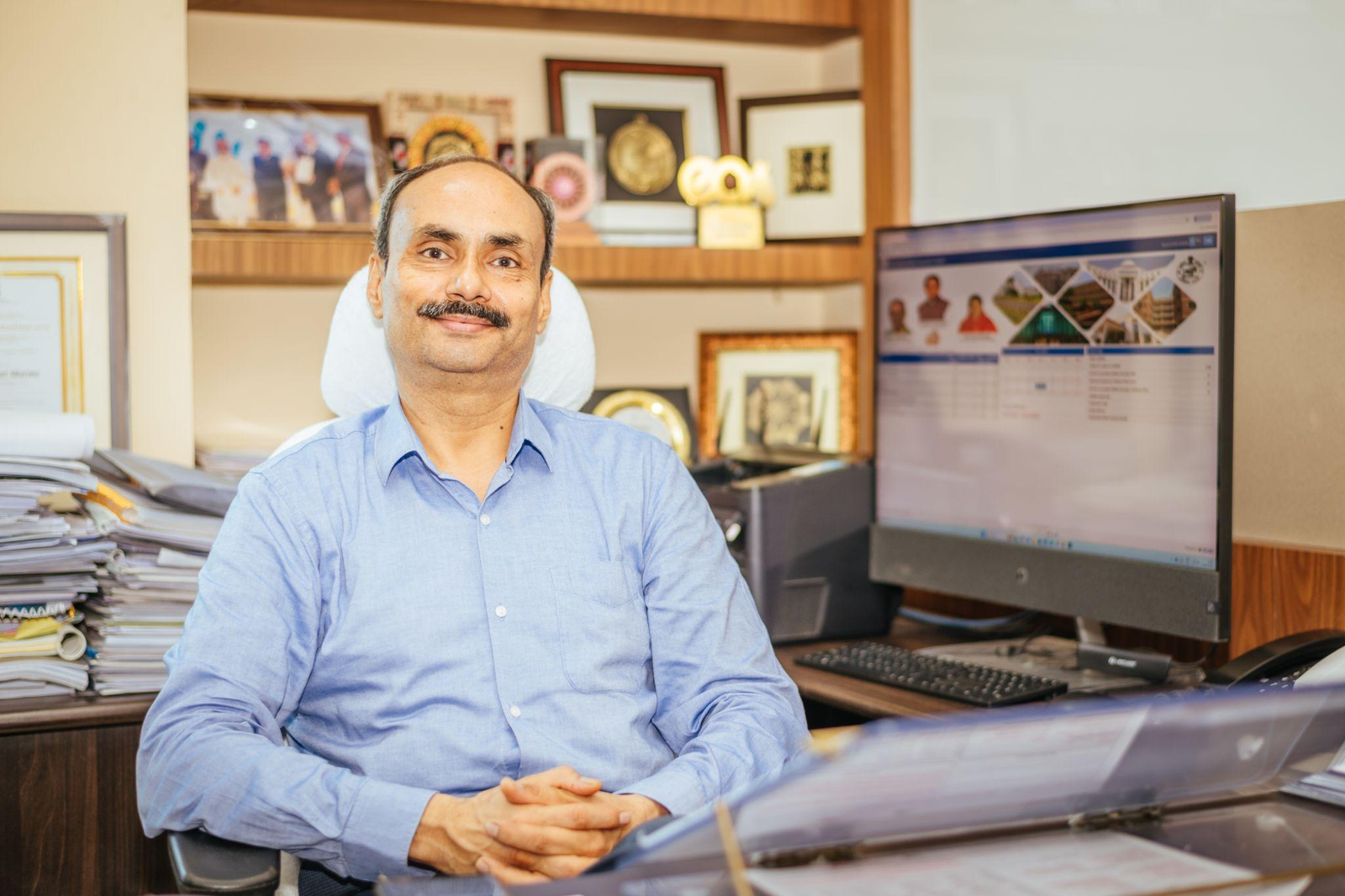
Sanjay Koul
Chairman and Managing Director
President – India and Southeast Asia, and Managing Director – Timken India
He oversees business and manufacturing operations, financial performance, and growth acceleration across the Indian market. He assumed this role in September 2022, and in January 2025, his responsibilities were expanded to include sales management for the Middle East and Africa.
Koul joined Timken in 1990 as a Production Engineer and was among the first set of employees of the company in India. Since then, he has served in additional positions within the rail and supply chain & Sales organizations. In 2007, he was named general manager of the Jamshedpur Plant. Two years later, he was named general manager of supply chain operations in Asia, working out of Wuxi, and in 2011, he was named director of manufacturing and supply chain management for Asia. He was named managing director of all operations in India in October 2012. Before joining Timken, Koul served with Union Carbide India Ltd. as a production supervisor and as an engineer with an urban environmental agency of India.
Koul holds a bachelor’s degree in mechanical engineering from the Birla Institute of Technology and Science and a master’s degree in business management from Xavier Labour Relations Institute. He completed the EDGE executive development program for senior Timken leaders at the University of Virginia Darden School of Business in 2008. He was conferred with an honorary PhD this year by CIAC in collaboration with the University of South Korea. He sits on the Executive Committee of AMCHAM India and on the Board of ELCIA, apart from being involved with the manufacturing committee of CII.