As India accelerates its push towards self-reliance in defence and advanced manufacturing, states are competing to position themselves as strategic industrial anchors. Odisha, long recognised for its mineral strength and metallurgical base, is now undertaking a decisive shift towards value-added precision manufacturing in aerospace, defence, EV and advanced component ecosystems. The state is laying the groundwork to emerge as the focal manufacturing hub for East-Central India.
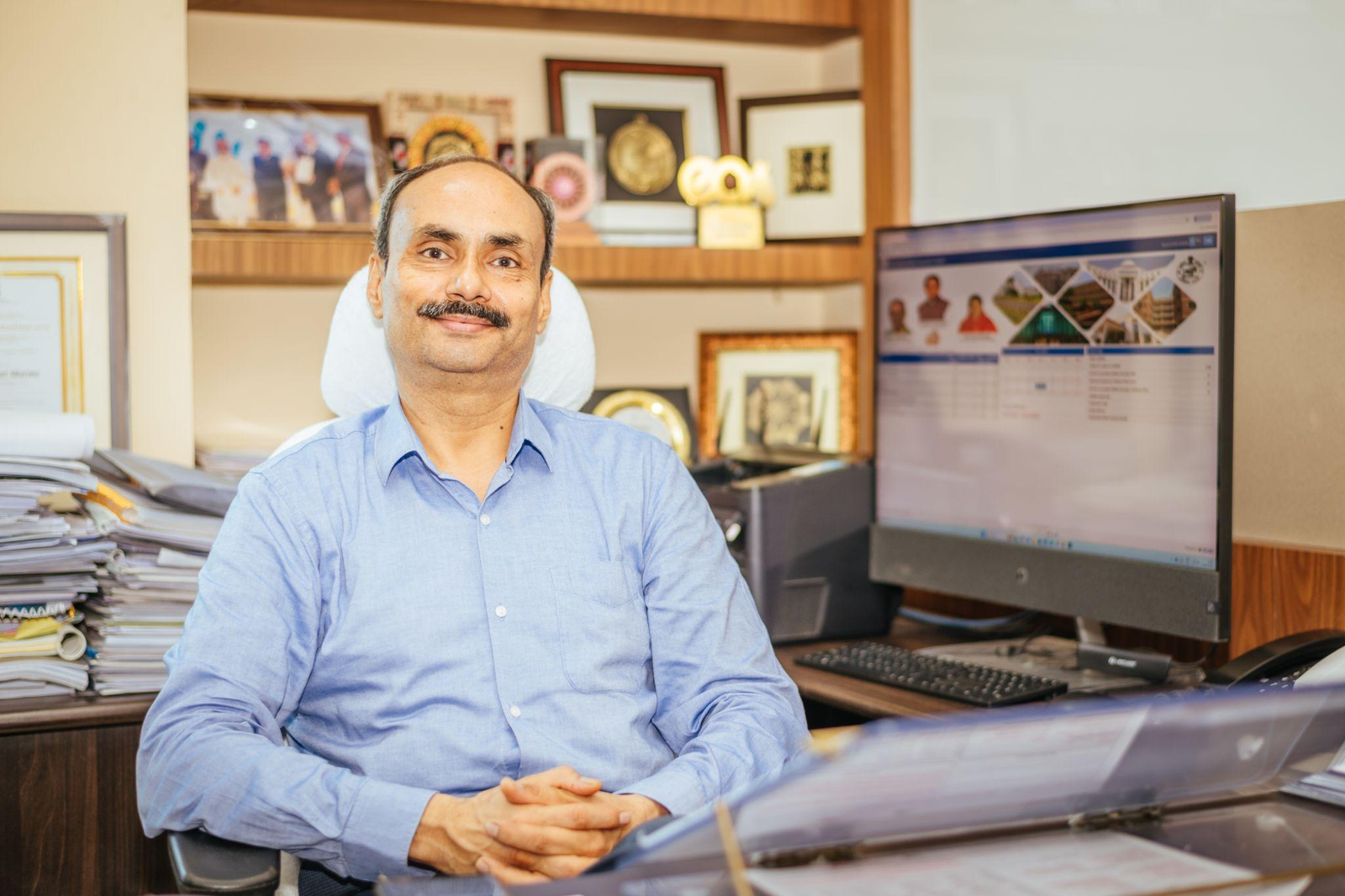
Shri Hemant Sharma, IAS, Additional Chief Secretary, Home, Industries and I&PR Department, Government of Odisha, in this exclusive conversation with Shriyal Sethumadhavan, outlines the policy thinking, ecosystem strategy and long-term vision driving Odisha’s transformation into a nationally significant aerospace and defence manufacturing destination.
Odisha is known for minerals and heavy industry. What is driving its shift towards defence and advanced engineering manufacturing?
One big factor enabling this transition is the government’s focus on value addition. Odisha has traditionally been known for mining and mineral-based industries, which means we have a strong presence in steel, stainless steel, aluminium, ferro-chrome and ferro-alloys. This has been our traditional strength, similar to what we share with Jharkhand, Chhattisgarh and parts of West Bengal.
In the last few years, the government is focusing more on encouraging further value addition. The starting point of much of the metallurgy used in aerospace, defence, auto components and other sectors lies in precision alloys, speciality steels and super alloys. So, the government’s focus has shifted drastically from 2023-24 towards this segment. We continue to attract mineral-based industries because of the raw material advantage. But to draw this industry further, we need to make additional efforts.
That effort is towards value addition – encouraging companies for whom we already have the base raw materials, such as steel ingots, stainless steel, aluminium and ferro-alloys – and examining whether super alloys and other specialised alloys required for advanced applications can be promoted here. So, the focus on value addition is leading this shift.
Modern defence and aerospace platforms rely heavily on high-precision gear systems, transmission assemblies, propulsion components and advanced metallurgy. How is Odisha building capabilities in this space?
High-precision gear systems, transmission assemblies and propulsion components depend on two critical enablers: advanced skills and a strong manufacturing ecosystem.
First, skilling. These industries require precision-trained professionals, not conventional ITI-level manpower. Odisha has invested heavily in advanced technical training, anchored by the World Skill Centre at Mancheswar. Developed with support from the Singapore government and ITE Education Services as the technology partner, the centre represents an investment of nearly Rs 1,500 crore. Diploma and engineering graduates undergo an additional year of specialised training on sophisticated precision equipment, making them industry-ready for defence, aerospace and auto-component manufacturing. The model is now being expanded with centres in Berhampur and Sambalpur, alongside structured industry placement tie-ups.
Second, ecosystem development. Odisha is systematically attracting precision engineering manufacturers. Companies such as Kalyani Steels, Bharat Forge, Jupiter Wagons and Amsted Industries are establishing operations in the state. The initial focus has been on railway components, a logical entry point given proximity to Kolkata, a major rail equipment hub. Firms such as Texmaco and Premium Transmission are also progressing with investments, while global engineering players like Danieli Corus are in discussions. Aerolloy Technologies has recently received land for aerospace component manufacturing. The objective is to build integrated engineering clusters anchored by leading precision manufacturers.
In essence, the strategy is twofold: deepen value addition in precision metals and superalloys, and attract expansion-oriented manufacturers to create a sustainable high-precision defence and aerospace ecosystem.
Several companies, including Kalyani Steels, Premier Explosives Ltd, Anadrone Systems, IG Drones and Inventgrid have received approvals in Odisha. What do these new investments mean for Odisha’s defence manufacturing ambitions?
Defence and aerospace manufacturing in India is still emerging. For decades, the country relied heavily on imports. That is now changing, and we are positioning Odisha to participate meaningfully in this shift.
Our strategy has been to attract technology-driven domestic players who can scale with rising opportunities. Companies such as Bharat Forge and the Kalyani Group were initially encouraged to set up base material and superalloy facilities. After assessing our policy support, infrastructure and skilled workforce availability, they expanded into machining, forging and casting. Through these anchor investments, we have drawn companies like Amsted Industries and Aerolloy Technologies, gradually building a broader ecosystem.
Our objective is to develop the full value chain – from bulk materials to precision assemblies and sub-assemblies.
To enable cluster-based growth, we have earmarked 1,500 acres near Angul, with 560 acres allotted to Kalyani. The location is strategic: in the heart of the metal belt, within two hours of the state capital and Paradip Port, ensuring logistical advantages for exports and imports. Clusterisation is critical; dispersed units cannot create ecosystem efficiencies.
Unlike established hubs such as Chennai or Bengaluru, which evolved from automotive ecosystems into aerospace and defence, Odisha is building this sector from the ground up. Our approach is to anchor large investments first and allow ancillary growth to follow.
Policy support underpins this strategy. Aerospace and defence are classified as thrust sectors under our industrial policy, eligible for a 30 per cent capital investment subsidy without an upper cap, extendable up to 11 years, including phased investments.
We recognise that aerospace and defence manufacturing scales gradually. Companies expand component by component, facility by facility. Our policy framework is designed to support this phased growth and long-gestation investment cycle.
Defence manufacturing depends on strong Tier-II and Tier-III supplier networks, particularly in precision components and transmission systems. What steps is Odisha taking to integrate MSMEs into these high-value supply chains?
In the cluster we are developing, we have earmarked 300 acres exclusively for MSME vendors. For instance, some of these MSMEs may already have business relationships with Kalyani, Bharat Forge or Bharat Dynamics. We have also reached out to CPSUs in neighbouring states like Andhra Pradesh and Telangana and examined their vendor base. Hindustan Aeronautics Ltd, which has a major facility in southern Odisha, also has a large vendor base. We have assessed where they source their components from and whether those MSMEs would like to relocate closer to this emerging ecosystem.
Our strategy is twofold: first, attract anchor tenants such as Kalyani; and second, develop smaller land parcels and plug-and-play facilities around them for their vendors.
Our direct outreach to MSMEs may be limited, but the outreach of companies like Kalyani or Sharpex can be far more impactful, because they can provide business. The government can provide facilities and incentives, but anchor companies can provide sustained orders. That is our strategy.
A similar approach has worked well in the metallurgy space. Today, in the steel ancillary ecosystem, around 35 companies have either migrated or set up operations in Odisha. Earlier, they were based in Jamshedpur, Pune or Hyderabad. They were brought in by Tata Steel, as they were its vendors.
We are replicating this model in the aerospace and defence cluster as well. We have created a dedicated facility for MSMEs that is highly subsidised and incentivised – even more than what is offered to large industries – so that this vendor base can gradually develop and strengthen.
With India’s push towards Aatmanirbhar Bharat, how can states like Odisha reduce import dependence in critical areas such as gears, driveline systems and specialised mechanical assemblies?
This can only be done by encouraging and incentivising domestic manufacturing.
To reduce import dependence, we must be cost-competitive. If we are not cost-competitive, nobody will buy from us. Import substitution essentially requires both cost competitiveness and quality. While state governments cannot directly influence quality, as that depends on the vendors and the technology they adopt, we can certainly influence the cost component.
We can make industries cost-competitive by offering land at lower prices, providing power at subsidised rates, incentivising skill development, and reducing or reimbursing taxes wherever possible. This enables them to compete effectively and participate in the Government of India’s import substitution efforts. We believe that our focus on MSMEs, combined with incentive support, will certainly help in this regard.
How is Odisha enabling startups and academia to drive next-generation motion technologies?
Without technical support, startups cannot grow. Our strategy is to encourage incubators housed within specialised technical institutions. For instance, at IIT Bhubaneswar, we have set up an AI–ML research lab. The state government has funded this initiative with Rs 25 crore, and its services are available free of cost to registered startups. IG Drones and BonV Aero, which are into drone manufacturing, have benefited significantly from this support.
Similarly, in private sector institutions like KIIT, we have supported the establishment of a technology-based incubator. KIIT TBI is now one of the most renowned science and technology incubators and provides strong technical support to emerging startups. BonV Aero, for example, was initially incubated there.
We are also leveraging government institutions, including CTTC Bhubaneswar. A dedicated centre has been created where technical support is available free of cost to aerospace and defence startups. If a startup wants to participate in a Ministry of Defence tender and requires technical assistance, CTTC provides that support.
Additionally, support for design certification and related requirements is available free of cost to startups registered in Odisha – not only through CTTC, but also through CIPET and our NABL-accredited standard testing laboratories.
By encouraging private sector incubators like KIIT TBI and partnering with institutions such as IIT Bhubaneswar, CTTC and CIPET, we are building strong linkages between startups, academia and industry.
Aerospace and defence production requires highly skilled engineers and technicians trained in precision engineering and advanced manufacturing processes. How is the state aligning its skilling ecosystem to meet these demands?
This was in fact the first step we took. Without specialised skills, no company can survive, whether in Pune or in Odisha. Since setting up new institutions from scratch would have taken much longer, we identified some of our stronger existing institutions. For instance, IIT Bhubaneswar has now been converted into a university called Odisha University of Technology and Research (OUTR); and another well-rated engineering college at Burla.
At these three institutions, we have established Centres of Excellence in precision engineering. In Bhubaneswar, this has been done with the support of Larsen & Toubro. At another location, it has been set up with support from the Tata Group. In this way, we are creating centres that function like finishing schools. Students who complete a three-year diploma can undergo an additional six months to one year of training focused entirely on sophisticated machines. The equipment has been selected based on consultations with industry, so that it reflects what is currently used in manufacturing, rather than standard teaching lab equipment.
In addition, we have established an exclusive Centre for Precision Engineering at the World Skill Centre in Bhubaneswar. This is a 4-acre facility with a capacity of 500 seats on a rolling two-year basis, dedicated entirely to precision engineering. It has been set up with the assistance of the Government of Singapore and in collaboration with the Asian Development Bank.
Looking ahead to Viksit Bharat 2047, what is Odisha’s long-term vision for defence and aerospace manufacturing?
We are positioning ourselves as the hub for East-Central India. As per the Government of India’s strategy, this industry should not be concentrated in one geography for strategic reasons. These are strategic clusters that are exposed to geopolitical and other risks. Therefore, the Government of India wants this industry to be geographically distributed. Our opportunity lies in Eastern and East-Central India, covering Bihar, Jharkhand, Chhattisgarh, West Bengal and the Northeast. We aim to become the focal point.
Just as Pune serves as a focal point in Western India, we would like Odisha, particularly the Angul-Dhenkanal belt, where we are developing our aerospace and defence cluster, to emerge as the focal point in Eastern India. From there, we want to grow as a solution provider for aerospace and defence manufacturing.
If we can establish ourselves as the focal point in Eastern India, we will naturally become an integral part of the Government of India’s Viksit Bharat 2047 vision. In fact, we are receiving guidance from the Government of India to emerge as this focal point in the East.
We have the advantages of ports, strong connectivity, a robust metallurgical base, and now a focused policy and skilling ecosystem. These factors together will help us emerge as a leader in Eastern India.