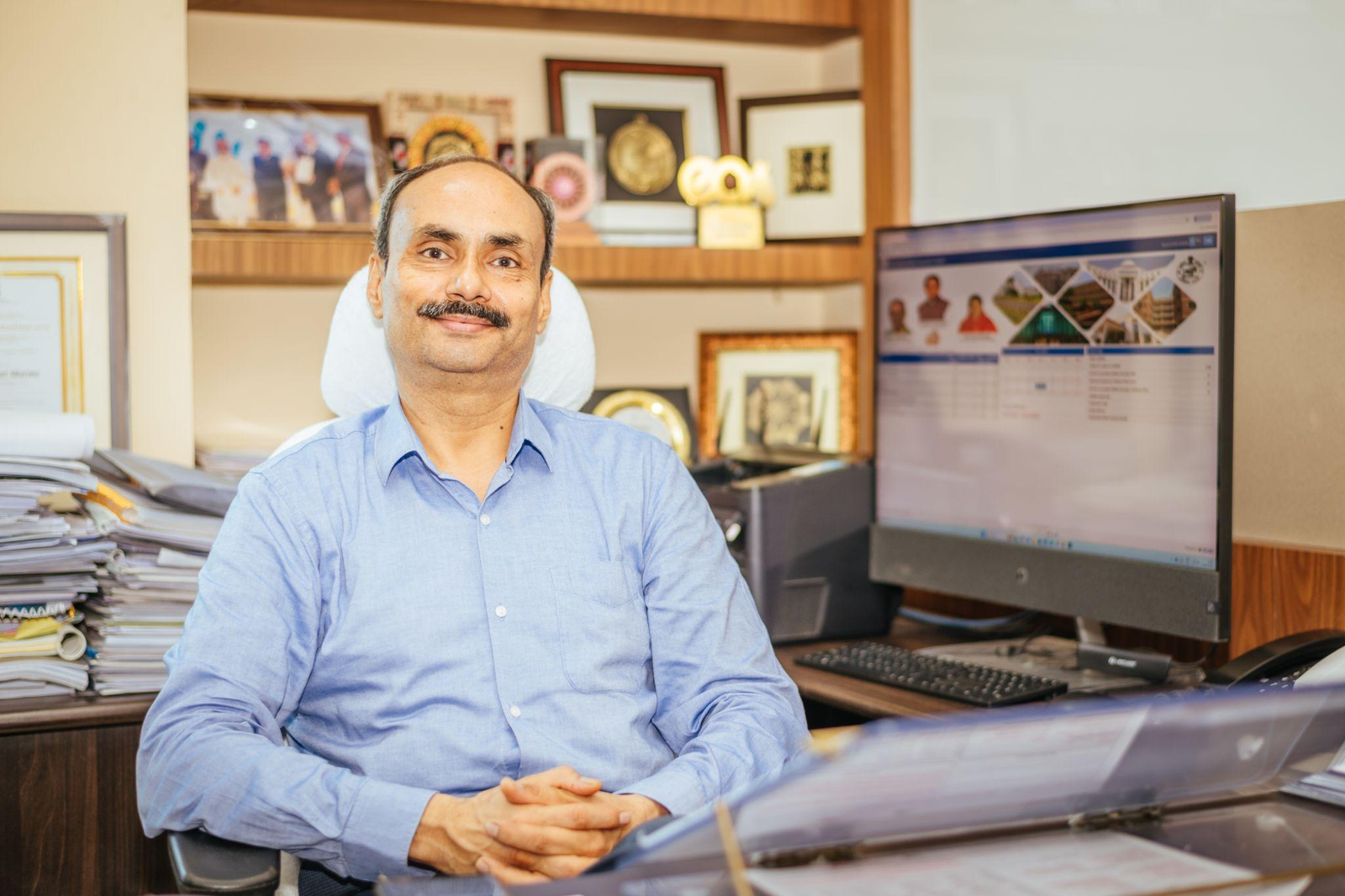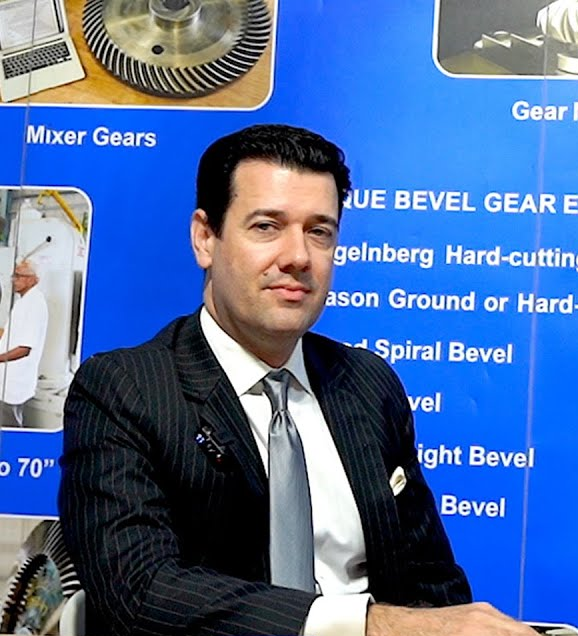
In this exclusive interaction, Mushtaq Jamal, Director – Engineering & Business Development at Bevel Gears India Pvt Ltd, shares his perspectives on the company’s evolving journey in high-precision bevel gear manufacturing. In conversation with Sushmita Das, Editor of Gear Technology India, he reflects on BGI’s strategic focus on niche applications, advanced CNC technologies, dual-system expertise, and global market expansion. The discussion offers valuable insights into innovation, custom engineering, leadership, and the future of bevel gear manufacturing in an increasingly digital and competitive landscape.
BGI’s focus shift over the last five years was based on diversifying business applications and entering multiple global markets. The thrust remains niches – both technical and customer-driven, specialised spaces – rather than high volume products. The technical focus is now on providing bevel gear solutions using CNC bevel gear technology, which begins with the software, CNC grinding, and CNC gear metrology, giving the customer a comprehensive solution. The customer offering has been enhanced by producing an extremely wide range of parts, by global standards, of bevel gears from 5 mm to 1,600 mm in diameter.
Today, we offer customers two hard finishing solutions. The first is CNC bevel gear grinding, which we began 20 years ago. Our multiple CNC bevel machine range starts at sub 1-module and includes high ratio hypoids (HRH ® ) and will be increased from 650 mm to 850mm by June 2026 with the introduction of a Klingelnberg Oerlikon G80. The second option is hard finishing upto 1,700 mm diameter on our 5-axis DMG.
In the past decade, the shift within the company was from a generalist bevel gear manufacturer to more specific application knowledge for aerospace, mining, crushing, performance motorsport, and optical control devices, to name a few. BGI has watched technology evolve and carefully selected equipment to enhance the focus on high-precision bevel gear manufacturing. While consumer electronics evolve rapidly, and many cases annually, gear equipment is purchased with a usable life of 15 to 20 years, so the equipment selection has to be very well thought out.
Reverse engineering is a facet of custom gear solutions, albeit from a different lens. We look at a bouquet of applications which have drastically different realisation timeframes from a few months to 5 years, so we have to be nimble and reverse engineering plays a key role. In several instances, we reverse-engineered multiple international MNCs’ own parts because they were either locked in with a supplier, and thus had limited gear information, or they lost their internal talent over the years or both. For these companies, it is essential to find a partner that can re-evaluate what they have been sourcing for decades, offer improvement suggestions, and reverse engineering services prove essential and lead to long-term contracts for custom bevel gears.
The transition to offering both Gleason and Klingelnberg bevel gear tooth-forms was customer-driven. While the end application is a bevel gear, the technology, equipment, and calculations behind it differ significantly between the two systems, and this is appreciated by the discerning gear buyer. There was a strategic decision by BGI over a decade ago, since globally, very few companies offer both systems comprehensively. We offer an array of cutting systems, including straight bevel Coniflex ®, spiral bevel 5-cut spread blade, duplex / completing, and cyclo-palloid.
Offering both systems has been welcomed by international and domestic customers because they can purchase the same established high precision components as before, and they do not have to perform arduous and time-consuming verification or life cycle tests when changing systems.
Alternatively, some customers benefit from having the option to choose if the project is starting. We put forth both options, so they can select what suits them and the application best.
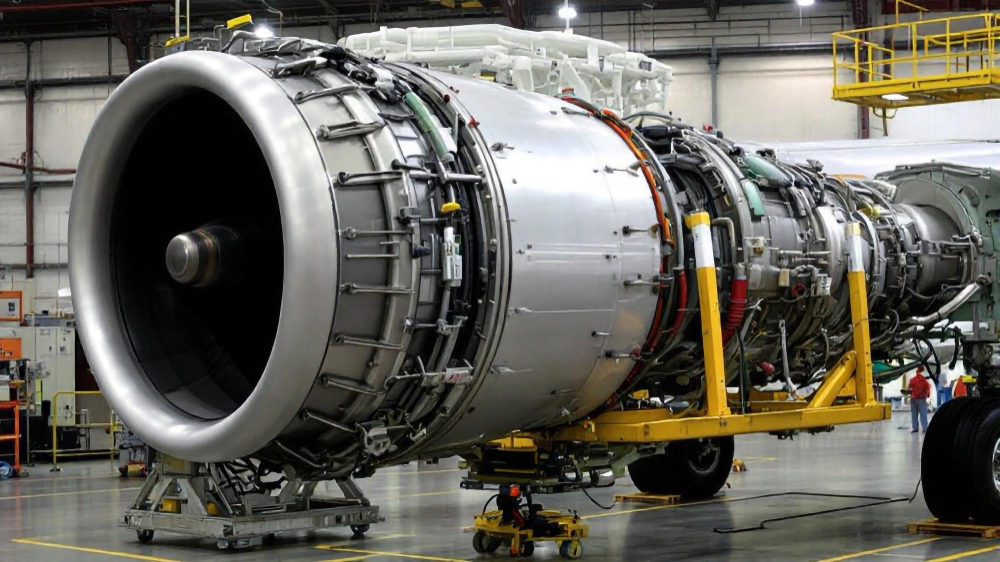
For that question to be answered, we would need a page just for this query! We successfully developed motorsport parts for extreme use, which required DIN 4 hypoid gears which had previously been failing quite spectacularly. To withstand the incredible 5,000 hp, this challenge brought together material selection, heat treatment, special coating processes and, of course, technical hypoid grinding experiments. We continue to benefit from taking on this program because what we learnt lends itself to many of the other applications we continue to make.
Another challenge during an international technology transfer project can arise from perceptions and cultural differences. Subtle differences in the usage of a word in a drawing can have a massive impact on the technology level required. We spend a fair bit of time with customers to ensure they get what they want, and that can extend beyond just the print.
Both automation and digitisation are going to be essential on the shop floor and in the office alike. Flexible automation is playing an increasingly interesting role that will bring tangible benefits. The challenges of the West, where people retire, and knowledge is lost whilst wages rise, will present themselves rapidly in India, so embracing what technology has to offer is a logical step.
Additive technologies are still rapidly evolving as well. Who knows what the environment will look like in 5 years, but it will certainly be a different landscape.
If a product is specialised enough, the marketplace is global rather than solely local. With this in mind, we began our export marketing decades ago, and today we continue to look for positions in different markets. The challenges will always remain, but we prefer to look at the opportunities and how we can make them happen. The time to develop supply lines is significant, and changing suppliers is not a trivial task, so getting involved with multiple projects is essential and ongoing.
In one line: do what others do not. Manufacturing is essential and will endure for generations, so find your own niche. If you are involved and passionate about something, go ahead and give it your best shot, and you will be surprised by what you learn about yourself and business during the journey.