1. Where do broaches and hobs stand today in terms of strategic importance?
Broaches and hobs remain central to high-volume, high-precision gear manufacturing. Wherever manufacturers seek consistent quality, tight tolerances, low cost per gear and fast delivery, these tools play a critical role, even though the initial tooling investment can be high.
Across the global gear industry, precision cutting tools are no longer viewed as simple consumables. They are increasingly treated as part of an integrated manufacturing system that directly influences productivity, quality, and total cost of ownership. This aligns closely with Addison’s philosophy of “Tools for a Changing World”, where our focus is on enabling customer competitiveness in demanding and evolving applications.
2. Which end-use industries are shaping demand for gear-cutting tools?
Any application involving motion, power transmission or moving components depends on gears. Automotive, off-highway equipment, industrial machinery, and energy applications continue to be the primary demand drivers.
More recently, electric and hybrid drivetrains have accelerated the need for customised gear solutions, lower noise, higher efficiency, and longer service life. This has driven greater adoption of advanced finishing technologies such as PCBN and diamond honing, as well as hard-turning tools. OEMs today expect cutting tools not only to deliver dimensional accuracy but also to ensure surface integrity and process stability.
3. What trends will shape the future of broaches and hobs?
The future will be shaped by the rapid growth of EVs, increasing automation, including LCSA (Low-Cost Simple Automation), disruptive drivetrain architectures and the continuous demand for higher productivity, better quality, and faster manufacturing cycles.
Key technical trends include higher dimensional accuracy, dry and near-dry machining, and wider adoption of advanced hard-finishing technologies. Hard finishing using PCBN is increasingly being applied alongside, or in some cases instead of, grinding to improve energy efficiency and throughput.
With Van Moppes as a strategic partner for PCBN and PCD technologies, Addison is well-positioned to support these developments. We continue to invest in gear-cutting technologies, and several new solutions aimed at EV and high-precision applications will be introduced in the coming years.
4. How has the gear-cutting tool segment evolved within Addison’s overall business?
Over the last decade, gear-cutting tools at Addison have evolved from a supporting product line into one of our most important and fastest-advancing technology portfolios. As drivetrains across automotive, off-highway and industrial sectors have become more performance-driven, customers are no longer looking for tools alone — they expect application-specific solutions that improve accuracy, productivity, and cost per gear.
Rather than attempting to cover every gear-manufacturing operation, Addison has taken a focused strategic approach. Today our core strength lies in broaches, selective hobs, PCBN and diamond honing tools for gear finishing, and PCBN tools for hard turning of gears — the stages where precision and process stability have the greatest influence on final gearbox performance.
We also offer re-grinding of broaches of any make, helping customers significantly reduce tooling cost, especially in markets where imported broaches are expensive and subject to long lead times.
While our current hob manufacturing range is selective, Addison is actively working with suitable overseas partners to bring new technologies and design perspectives to gear manufacturers, and to expand our hob manufacturing capability over the next few years.
In addition, Addison is evaluating the introduction of gear shaving cutters through overseas partners to address high-precision finishing requirements for advanced gear applications.
5. What core design and performance aspects define Addison’s broaches and hobs?
Addison’s broaches and hobs are engineered to deliver high precision, stability, and predictable life. Key elements include:
• Selection of application-specific raw materials
• In-house tool design by a dedicated engineering team
• Optimised tooth geometry for smooth chip flow
• High profile accuracy and pitch control
• Stable cutting edges for vibration-free machining
• Long and predictable tool life
• Application-specific performance coatings
• In-house validation before release to customers
In gear manufacturing, Addison’s broaching solutions cover all critical internal and form features, including:
• Internal gear teeth (spur and helical)
• Splines and serrations in gear hubs
• Keyways for torque transmission
• Form and tooth-space broaching for special gear profiles
• Ratchet and pawl profiles
• Special internal geometries and face-gear features
These broaches are widely used in automotive transmissions, planetary gear sets, differential gears, and high-volume drivetrain components, where accuracy, repeatability, and throughput are essential.
Manufacturing is carried out on advanced Japanese and German machines, ensuring high precision and repeatability. All broaches and hobs are validated on in-house inspection and test platforms to confirm profile, pitch, and functional accuracy before release to customers.
Indicative capability:
• Broaches: Diameter from 15 mm to 150 mm; length up to 2000 mm
• Hobs: Diameter up to 180 mm; length up to 150 mm; module range 1 to 8
We also have in-house coating capability for broaches up to limited sizes, with larger tools supported through qualified coating partners.
6. What ensures consistent quality in tight gear tolerances?
Consistent quality is achieved through a disciplined and systemised approach—well-maintained machines, robust in-process quality controls, and continuous improvement across all operations.
Equally important is the ability to anticipate customer requirements, comply with evolving standards and adopt new technologies quickly. At Addison, this is driven by our strong belief in FANTA—Faster Adoption of Newer Technological Advancements.
7. What role do materials and coatings play in tool performance?
Materials and coatings are fundamental to tool performance. Based on the application, different substrate grades are selected to balance toughness and wear resistance.
Advanced coatings significantly extend tool life, enable higher cutting speeds, and reduce cost per component. They also support eco-friendly machining such as dry and MQL processes, helping customers lower energy use and environmental impact. In demanding gear-cutting applications, substrate quality and coating technology are among the most critical performance drivers.
8. How does Addison balance tool life, accuracy, and productivity?
This balance is achieved through a holistic, systemised approach—application-specific materials, intelligent tool design, optimised manufacturing processes, performance coatings, continuous R&D and stringent in-process quality control.
In-house validation, careful handling, and protective packaging further ensure that customers receive tools capable of high cutting speeds, tight tolerances, and predictable tool life, resulting in a lower cost per gear.
9. How does Addison approach customised gear-cutting solutions?
Customisation is a key strength at Addison. With an established national footprint, a dedicated application team and close collaboration with research institutions, we work closely with customers to tailor tools to their specific processes.
In broaching and finishing, where imported tools often carry a high landed cost, Addison focuses on locally engineered tools, optimised processes, re-grinding support, and continuous performance improvement to deliver a strong cost-performance advantage.
Our portfolio includes PCBN, PCD, diamond and honing tools for superior gear finishing and surface integrity.
10. How is digitalisation influencing gear-cutting tools?
Digitalisation has become essential in modern gear manufacturing. Digital tools are used to optimise tool design, predict cutting behaviour, and analyse field performance, reducing development time and improving first-time-right outcomes.
Simulation and digital-twin technologies are becoming standard practice in advanced gear-manufacturing environments, enabling consistent processes, high repeatability, improved reliability, and lower overall cost.
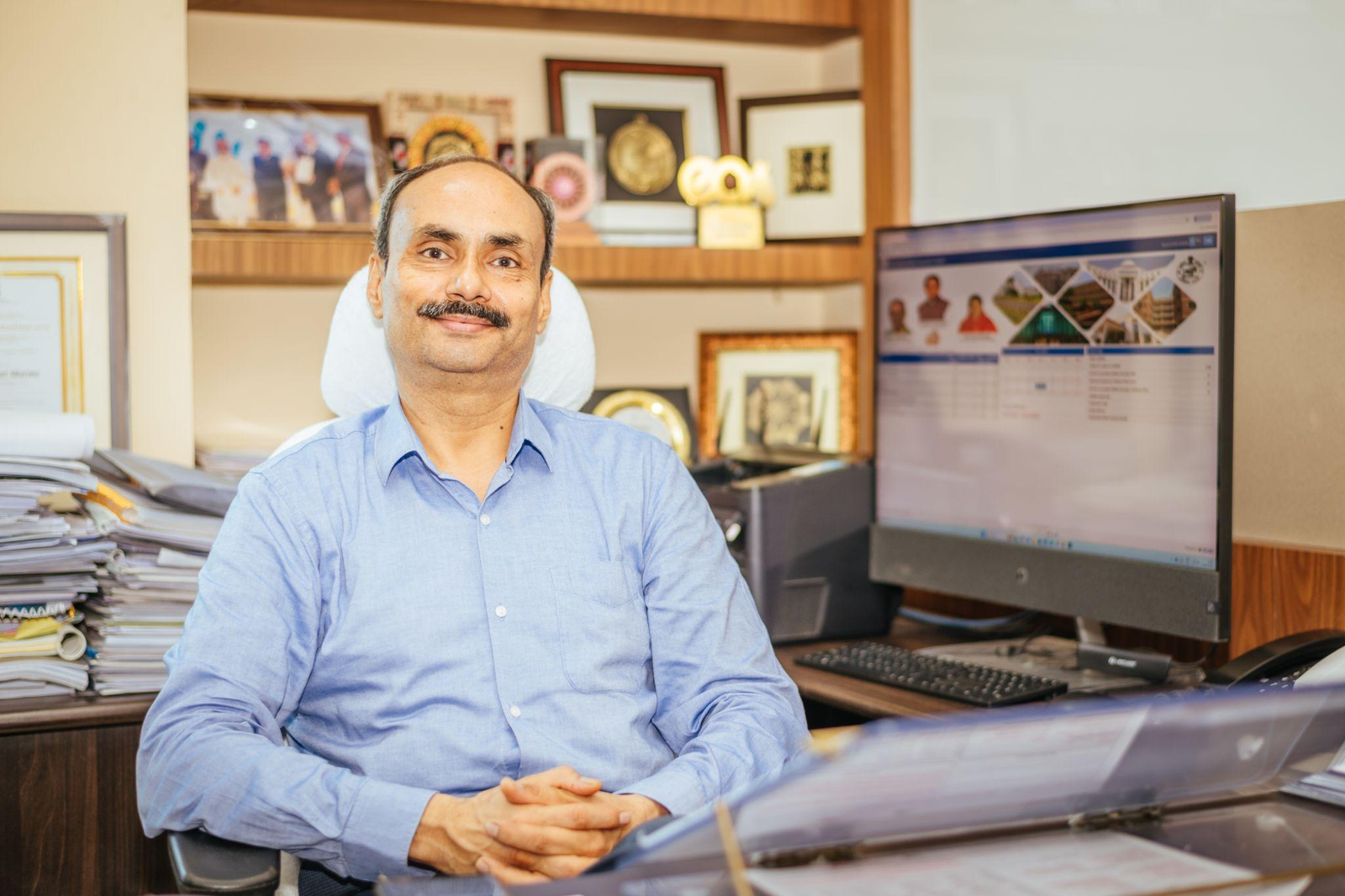
G. Giridhara Gopal
Director & Chief Executive
Addison & Company Limited,
G. Giridhara Gopal is the Director & Chief Executive of Addison & Company Limited, a flagship company of the Amalgamations Group. With a strong blend of technical and financial expertise, he brings a balanced and strategic approach to leadership and business growth.
He holds an Engineering degree from Guindy Engineering College, Chennai, one of India’s premier institutions, and has also pursued Cost and Management Accounting (CMA) from the Institute of Cost Accountants of India, equipping him with deep insights into manufacturing, operations, finance, and corporate governance.Under his leadership, Addison & Company Limited continues to strengthen its legacy of precision, quality, and innovation, while adapting to evolving industry needs and global standards. His vision is focused on sustainable growth, operational excellence, and long-term value creation for customers, employees, and stakeholders alike.