The demand on India’s gear manufacturers is intense: tighter tolerances, accelerated delivery schedules, and the consistency required for export-grade production are now standard expectations. A significant challenge lies within the industry, the conventional cylindrical grinders (such as Jones & Shipman, Parishudh, or HMT). While mechanically robust, these machines present clear limitations in automation, digital control, and process repeatability.
New CNC grinding technology delivers the necessary precision, yet its capital expense often renders it unviable for many Micro, Small, and Medium Enterprises (MSMEs).
Retrofitting provides a strategic, cost-effective compromise. By integrating modern systems, including CNC/PLC controls, servo drives, advanced feedback loops, and intuitive Human-Machine Interfaces (HMIs), into existing equipment, a shop achieves three major benefits:
– Extended Asset Life: Maximises the utility of a dependable machine base.
– Better & Controlled Processes: Enhances size accuracy and eliminates high reliance on operator skill.
– Better Efficiency: Reduces setup times significantly, boosting overall throughput.
This approach is highly consistent with the national push for industrial modernisation and digital readiness, specifically aligning with the “Make in India” and “Smart Factory” initiatives. For the majority of Indian gear manufacturers, retrofit automation represents more than just a simple cost aspect; it is practical, immediate, and a way to improve reliability and sustained competitiveness without demanding a disruptive total machine replacement.
Understanding Retrofit Automation Kits for Cylindrical Grinders
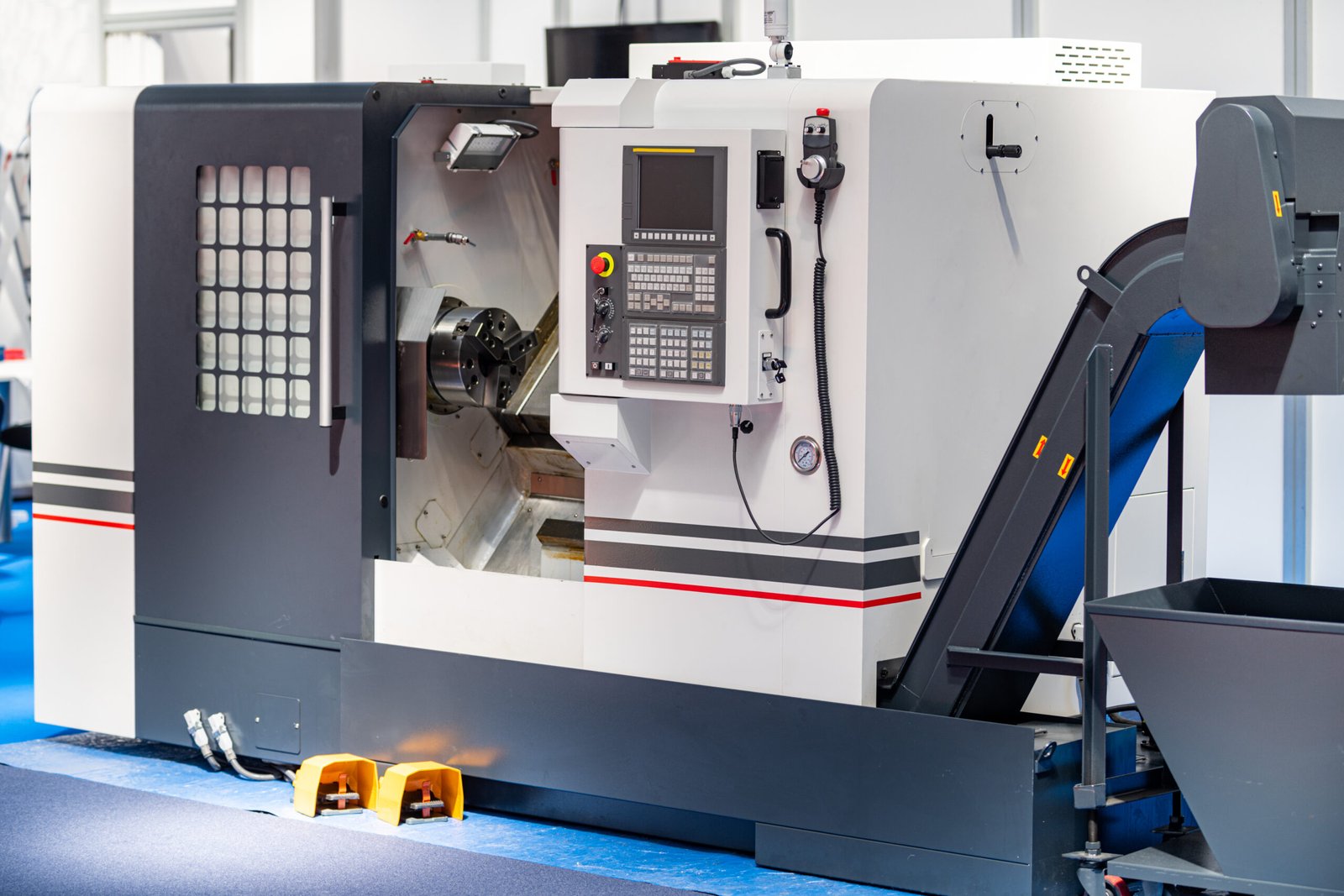
A refit kit signifies the digital upgrade package that can breathe new life into a vintage grinder. In most cases, the components that make up the solutions are linear encoders, servo drives, a new control system (either CNC or PLC), and an HMI panel for both monitoring and programming, which is modern and user-friendly. Even the oldest machines of the particular type can be turned into almost new CNC versions with the help of additional features like automation interfaces, load monitoring, and gauging sensors.
Among the advantages of improved repeatability, reduced setup and cycle times, and the ability to record process data for traceability, the most visible ones are seen in real-world scenarios. Management gets visibility, while operators get consistency. Nonetheless, it is integration that poses the greatest challenge. Most of the old machines are equipped with mechanical or hydraulic feed systems, which means that they require not only new servo controls but also the existing motion assemblies to be very carefully aligned. The space constraints, grounding issues, and electrical noise are common problems in Indian workshops.
For the entire process of refitting an old grinder, which is still able to last long politically, into a digitally competent production asset, integration experience and calibration are asserted as necessary as the hardware itself.
Vendor Landscape: Evaluating Indian and Global Players
Retrofit automation is presently positioned at the convergence of global technology and Indian market insight. On one side, businesses such as Grind Master, Lokesh Machines, Micromatic, and Precitech, which are Indian professionals, offer affordable, fast turnaround solutions and comprehend the Indian shop floor scenario. Indian manufacturers such as Fanuc, Siemens, and Marposs, on the other hand, equip their local partners with data-driven capabilities, remote diagnostics, and advanced control systems.
Even though the technology offerings may be limited to retrofitted CNCs and PLC systems, local providers usually offer more adaptability, quicker service, and lower prices. Global players still provide better control architectures and engagement with Industry 4.0 tools despite higher prices and longer delivery times. A local vendor could be the best choice for a small batch or precision repair, depending on the application; this is often a hybrid partnership, taking into account the need for export-quality consistency, which is the best option for factories. The collaborations of vendors that are well-balanced are exemplified by HMT G9 retrofits, which resulted in 20% reductions in cycle time.
Planning, timing, and validation are more critical for a successful refit than adding new components. The first phase in the procedure is a baseline audit, which looks at spindle runout, slide wear, and backlash to determine whether the machine’s mechanical foundation is worth updating.
The next stage is to determine the retrofit target. Clarity guides all technological decisions, regardless of priority—faster cycle time, better accuracy, or data acquisition. The choice between open-architecture CNCs and PLC-based control system kits is based on long-term flexibility and complexity; PLCs are better suited to simpler automation, whilst CNCs give precision and programmability.
Electrical and servo integration requires careful matching of new drives with existing motors and feedback systems; this is typically a make-or-break stage. To enable future scaling, modularise automation add-ons such as robotic loading, coolant monitoring, and gauging.
Finally, testing and validation ensure that the updated grinder works as intended by comparing trial pieces, recording results, and retraining operators. A well-organised and documented approach takes a retrofit from an experiment to a successful model that can be repeated.
Cost–Benefit Snapshot & ROI Perspective
For most Indian gear makers, retrofitting is a good investment. Though retrofitting a CNC or PLC machine with servo drives, control panel, encoders, and HMI usually costs from ₹8 to ₹20 lakh, depending on the size of the machine and the extent of automation, the data from IMTMA Technology Trends (2023) and vendor benchmarks from Micromatic Grinding Technologies, Grind Master, and Precitech support this figure.
A new CNC cylindrical grinder with similar capacity from companies like Micromatic, Smithson, or Junker is priced between ₹80 lakh to ₹1.2 crore, according to Modern Manufacturing India and Industrial Products Finder (2024). A payback period of 12 to 24 months is reported by most medium-sized gear shops that benefit from 15-30% reductions in cycle time, fewer rejections, and improved process repeatability as a result of the adoption of the technologies demonstrated at IMTEX 2023 and IMTMA modernisation seminars. Among the indirect benefits are decreased operator reliance, export compliance traceability, and longer machine life.
The modernisation programs of MSME provide additional support, which amounts to 15-25% of the retrofitting costs. The schemes that form part of the Make in India initiative include the Credit-Linked Capital Subsidy Scheme (CLCSS) and the Technology Upgradation Fund (TUFS). It is a smart, fast-track, and economic way to modernise through grinding an existing machine rather than a mere cost-saving strategy; retrofitting becomes a performance gap bridging between the digitally competent production systems and the legacy hardware.
Insights and the Path Forward
Ignoring the fundamentals can cause even well-planned retrofits to fail. The main causes of project failure include ignored mechanical degradation, miscalculated downtime, and vendor lock-in due to proprietary software. Long-term benefits are also limited by integration gaps between new control systems and existing MES or ERP platforms.
The next level of development is digital retrofitting, which involves IoT-enabled grinders that include data analytics, predictive maintenance, and remote diagnostic capabilities. These clever retrofit modules are already available from several Indian integrators, including AceMicromatic and Grind Master. The most practical method for gear makers to attain Industry 4.0 capability while protecting their current capital assets is to follow a staged roadmap that begins with control enhancements and advances to full automation.
A Pragmatic Approach to Modernisation
The main focus of retrofitting is to extract new performance from existing machines and setups rather than simply replacing the entire system and hardware. Retrofit automation provides a financially viable link between vintage reliability and modern capability for India’s gear makers seeking global accuracy and uniformity, which is very important for the current Indian gear manufacturing context.
To be successful, such programs require disciplined integration, appropriate vendor partnerships, and well-defined targets. A well-executed retrofit improves quality, productivity, and digital readiness while going beyond a simple upgrade. This balance of development and practicality is what will keep Indian gear shops viable on a global scale in a competitive manufacturing environment.